Key takeaways
- Know which technology you’re buying: Compressor units with auto-evaporation genuinely lower temperature and vent hot air through a window kit. Evaporative coolers add moisture and only feel cold in dry climates, so skip them if you live somewhere humid.
- Match BTUs to square footage, then add margin: Roughly 8,000 BTU suits a 250 sq. ft. bedroom, 10,000 BTU handles medium rooms near 450 sq. ft., and 12,000 BTU covers open layouts up to 600 sq. ft. Sun-facing rooms and top floors need the next size up.
- Check the drainage promise carefully: “Auto evaporation” usually means self-managing in moderate humidity and manual draining on muggy days. Look for a bottom drain port and a full-tank shutoff so you aren’t mopping.
- Read noise in context, not decibels alone: Compressors cycle, so a sleep mode that drops fan speed overnight matters more than a headline dB rating. Tower-style coolers run quieter simply because there’s no compressor at all.
- Plan the install before you buy: Confirm your window is the right style and width for the exhaust kit, measure the hose run, and note that every portable AC needs a nearby outlet on a circuit it doesn’t share with a space heater.
What's inside
Summer heat rarely arrives on schedule, and neither does the budget for ducted air. That leaves most of us shopping for a cooling unit that can live in a bedroom corner, roll to a home office, and disappear into a closet by October. The catch is a vocabulary problem: shoppers searching for a “self evaporative portable air conditioner” land on two entirely different machines. One is a compressor-based portable AC that recycles condensate internally so you never carry a drip tray to the sink. The other is an evaporative cooler, sometimes called a swamp cooler, which chills a room by pulling air across a wet medium. Both are portable, both say evaporative on the box, and they behave nothing alike.
This guide sorts the category by what each design actually does in a real room. Below you’ll find our picks for 2026, a short buying framework covering room size, drainage, humidity, and noise, and honest notes on where each unit earns its footprint. The goal is a purchase that fits your floor plan and your climate, not just your cart.
As an Amazon Associate we earn from qualifying purchases.


How to Choose a Self Evaporative Portable Air Conditioner (2026)
- Know which technology you’re buying: Compressor units with auto-evaporation genuinely lower temperature and vent hot air through a window kit. Evaporative coolers add moisture and only feel cold in dry climates, so skip them if you live somewhere humid.
- Match BTUs to square footage, then add margin: Roughly 8,000 BTU suits a 250 sq. ft. bedroom, 10,000 BTU handles medium rooms near 450 sq. ft., and 12,000 BTU covers open layouts up to 600 sq. ft. Sun-facing rooms and top floors need the next size up.
- Check the drainage promise carefully: “Auto evaporation” usually means self-managing in moderate humidity and manual draining on muggy days. Look for a bottom drain port and a full-tank shutoff so you aren’t mopping.
- Read noise in context, not decibels alone: Compressors cycle, so a sleep mode that drops fan speed overnight matters more than a headline dB rating. Tower-style coolers run quieter simply because there’s no compressor at all.
- Plan the install before you buy: Confirm your window is the right style and width for the exhaust kit, measure the hose run, and note that every portable AC needs a nearby outlet on a circuit it doesn’t share with a space heater.
The Best Self Evaporative Portable Air Conditioner (2026)s Reviewed
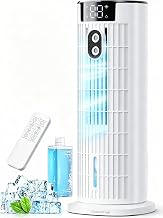
3000 CFM Swamp Cooler & Evaporative Air Cooler
With a 6.87-gallon reservoir and 3,000 CFM of airflow, this is the pick for garages, workshops, and dry-climate patios where a vent hose isn’t practical. The 120-degree oscillation and 15-hour timer make it a legitimate whole-room solution, though it will raise humidity noticeably in a closed bedroom.
Newair 8,000 BTU Portable Air Conditioner
Newair’s compact unit is the most sensible choice for a single bedroom or a small rental, pairing real compressor cooling with self-evaporative condensate handling and a built-in dehumidifier. The narrow cabinet is the quiet win here, since it tucks beside a nightstand instead of dominating the wall.
10,000 BTU 3-in-1 Portable AC
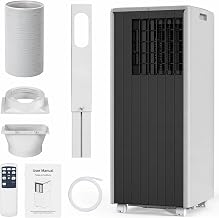
Rated for medium rooms up to 450 sq. ft., this three-mode unit covers cooling, dehumidification, and fan-only shoulder-season use without changing settings all day. The auto-evaporation system is the practical draw for anyone who’s tired of emptying a tank mid-heatwave.
12000 BTU Smart Portable Air Conditioner
The most capable unit on this list, reaching roughly 600 sq. ft., which makes it the right answer for studio apartments and open living-dining spaces. Smart controls, a genuinely usable silent sleep mode, and the included ventilation kit mean setup takes an afternoon and nothing more.
4-in-1 Portable AC Fan with USB-C
This desktop evaporative cooler is a personal-comfort tool, not a room solution, and it’s excellent at that job with a 1,500 ml tank, three speeds, and two mist modes. USB-C power makes it the obvious travel and camping companion.
Frequently Asked Questions
Do self-evaporative portable ACs ever need draining?
Most handle their own condensate in average conditions, but in high humidity the system can’t evaporate water fast enough. Expect occasional manual draining through the bottom port during the wettest weeks of summer.
Is an evaporative cooler the same as a portable air conditioner?
No. Evaporative coolers add water vapor to the air and lower temperature only when the air is dry, while portable ACs use a refrigerant compressor and vent heat outdoors. Humid regions should choose the compressor route.
Can I use one without a window?
Evaporative coolers, yes, since they don’t produce exhaust. Compressor-based portable ACs need a window, sliding door, or through-wall vent, otherwise they dump their own waste heat back into the room.
How much does one cost to run?
An 8,000 to 12,000 BTU portable typically draws 800 to 1,300 watts while the compressor runs. Evaporative coolers use a fraction of that, often under 100 watts, which is their strongest argument in dry climates.
Final Thoughts
For most bedrooms, the Newair 8,000 BTU is the balanced buy: real cooling, self-evaporative convenience, and a footprint that respects small rooms. Larger open spaces are better served by the 12,000 BTU Smart Portable, while dry-climate garages and workshops will get more comfort per dollar from the 3000 CFM Swamp Cooler.