Key takeaways
- Frame material and rib count: Fiberglass ribs flex and rebound instead of creasing, which is why they outlast steel in gusty sites. Look for eight ribs minimum on a 9-foot canopy; fewer means each one carries more load, and aluminum poles resist corrosion better than powder-coated steel near saltwater or chlorine.
- Vent architecture: A single-vent canopy bleeds pressure adequately. Double-top and three-tier constructions release far more, which is the practical reason they stay open in conditions that flip a flat canopy. Treat venting as the primary wind feature, not a styling detail.
- Canopy weight and fade rating: 180 GSM is a reasonable baseline; 240 GSM solution-dyed fabric holds color and resists stretch through multiple seasons. A UV50+ rating matters for shade quality, but GSM tells you more about how the canopy will behave under load.
- Base weight, not base looks: Freestanding 9-foot umbrellas want 50 pounds or more. Cantilever models need 150 to 220 pounds, typically a cross base loaded with pavers or sand. Undersized bases cause the majority of wind failures we hear about.
- Tilt and crank mechanism quality: Push-button tilt and a smooth crank make daily adjustment likely rather than aspirational. On cantilever designs, 360-degree rotation lets you chase shade without moving furniture, and a cast handle signals a mechanism built to be used often.
What's inside
A patio umbrella lives or dies by its worst afternoon. Most shoppers choose one on a calm day, in a showroom or on a screen, and never think about the gust that funnels between the house and the fence at four o’clock. Then a rib snaps, a canopy inverts like a cheap street umbrella, and the whole thing becomes a $200 lesson in aerodynamics. The failure is rarely the fabric. It’s the frame geometry, the vent design, and whether the base was ever heavy enough to matter.
This guide looks at wind resistance as a system rather than a spec on a box. Below you’ll find the models we’d actually specify for exposed decks, poolside seating, and open backyards in 2026, plus the structural details that separate an umbrella you can leave open through a breezy evening from one you’ll be closing every twenty minutes.
As an Amazon Associate we earn from qualifying purchases.


How to Choose a Wind Resistant Patio Umbrella (2026)
- Frame material and rib count: Fiberglass ribs flex and rebound instead of creasing, which is why they outlast steel in gusty sites. Look for eight ribs minimum on a 9-foot canopy; fewer means each one carries more load, and aluminum poles resist corrosion better than powder-coated steel near saltwater or chlorine.
- Vent architecture: A single-vent canopy bleeds pressure adequately. Double-top and three-tier constructions release far more, which is the practical reason they stay open in conditions that flip a flat canopy. Treat venting as the primary wind feature, not a styling detail.
- Canopy weight and fade rating: 180 GSM is a reasonable baseline; 240 GSM solution-dyed fabric holds color and resists stretch through multiple seasons. A UV50+ rating matters for shade quality, but GSM tells you more about how the canopy will behave under load.
- Base weight, not base looks: Freestanding 9-foot umbrellas want 50 pounds or more. Cantilever models need 150 to 220 pounds, typically a cross base loaded with pavers or sand. Undersized bases cause the majority of wind failures we hear about.
- Tilt and crank mechanism quality: Push-button tilt and a smooth crank make daily adjustment likely rather than aspirational. On cantilever designs, 360-degree rotation lets you chase shade without moving furniture, and a cast handle signals a mechanism built to be used often.
The Best Wind Resistant Patio Umbrella (2026)s Reviewed
PURPLE LEAF Cantilever 10′ x 10′ Square Double Top
The double-top canopy and rated 35 MPH wind-resistant frame make this the pick for exposed patios where a center pole would be in the way. Assembly runs about half an hour and the offset arm clears a full dining set, though you’ll need to budget for a properly weighted cross base.
PURPLE LEAF 10′ x 10′ Heavy Duty Frame
A triangle-braced aluminum frame with five tilt positions and 360-degree rotation, wrapped in 240 GSM UV-resistant fabric. The cast handle is the detail worth noting here: it turns adjustment into a two-second move, which means the umbrella actually gets angled into the sun instead of left in one position all summer.
9ft 3-Tier Patio Umbrella with 8 Ribs (Navy)
Three stacked vents give this one genuine pressure relief at a modest price, and the navy canopy hides pollen and dust better than lighter shades. A strong choice for pool decks and porches where gusts arrive in bursts rather than steady pressure.
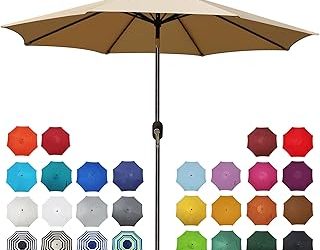
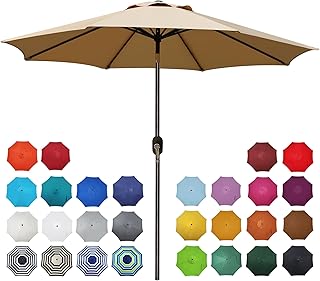
Ayge 9 FT Fiberglass Frame Umbrella (Beige)
Fiberglass ribs are the story: they bow under load and spring back rather than taking a permanent set. The 180G UV50+ canopy is lighter than premium options, but for a mid-size deck or garden table this is the most forgiving frame at its price.
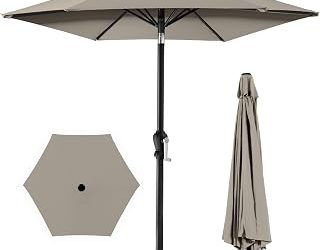
9′ Market Umbrella with 8 Sturdy Ribs and Crank Tilt
A straightforward, well-proportioned market umbrella that suits café tables and balcony corners. Wind performance is respectable for the category, though we’d close it ahead of any real weather rather than trusting it unattended.
Frequently Asked Questions
What wind speed can a patio umbrella actually handle?
Well-built vented models manage roughly 20 to 35 MPH when correctly weighted. Ratings assume ideal base loading, so treat them as a ceiling rather than a promise, and close the canopy before storms.
Are cantilever umbrellas less stable in wind?
Not inherently, but they’re less tolerant of mistakes. The offset arm creates leverage that a heavy cross base must counteract, so follow the manufacturer’s weight spec exactly.
Does a double-top canopy really help?
Yes. The gap between layers lets air escape upward instead of building pressure under the canopy, which is what causes inversion.
Can I leave the umbrella open overnight?
We advise against it. Overnight gusts and morning storms account for most damage, and closing the canopy also extends fabric life.
Final Thoughts
For exposed sites with real wind exposure, the PURPLE LEAF Cantilever 10′ x 10′ Double Top is the most capable option here, with the PURPLE LEAF 10′ x 10′ Heavy Duty Frame close behind if you prefer a center pole and a heavier 240 GSM canopy. On a tighter budget, the 9ft 3-Tier navy model delivers the venting that matters most.