Key takeaways
- Base mechanism: Look for a separate swivel plate stacked under a glider or rocker mechanism. Combined units feel loose within a year, while layered hardware keeps the rotation smooth and the rocking motion independent.
- Recline clearance: Manual recliners typically need 4 to 12 inches behind the backrest at full extension. Measure from the wall before you commit, and remember that a swivel base means the chair sweeps a circle, not a rectangle.
- Seat depth and back height: Deep seats above 21 inches suit taller frames and long lounging sessions; shallower seats keep shorter legs from dangling. High backs with defined head support matter most if you plan to nap or nurse in the chair.
- Upholstery character: Chenille reads soft and textural and hides light wear well. Leathaire and bonded leather wipe clean quickly, which is the practical choice around kids, pets, or coffee. Genuine leather costs more but develops the patina designers actually want.
- Assembly and weight rating: Most models arrive in two or three pieces with a snap-in backrest. Check the stated capacity — 250 to 350 pounds is standard — and confirm the swivel ring is metal rather than reinforced plastic.
What's inside
Swivel recliners occupy a strange middle ground in the furniture market. They promise the lounge-chair comfort of a full recliner and the light-footed mobility of a swivel base, but plenty of them deliver a compromised version of both: a seat that rotates with a gritty wobble, a backrest that dumps you at an awkward angle, and a footprint that swallows a small living room whole. Add the fact that most listings photograph beautifully and describe themselves identically, and the shopping process starts to feel like guesswork.
This guide sorts the current crop by the things that actually shape daily use — base mechanics, seat geometry, upholstery behavior over time, and how much wall clearance each chair genuinely needs. Below you’ll find the standouts for compact apartments, nursery duty, leather-forward living rooms, and full-recline lounging, along with a short framework for matching a chair to your room rather than the other way around.
As an Amazon Associate we earn from qualifying purchases.


How to Choose a Swivel Recliner Chair (2026)
- Base mechanism: Look for a separate swivel plate stacked under a glider or rocker mechanism. Combined units feel loose within a year, while layered hardware keeps the rotation smooth and the rocking motion independent.
- Recline clearance: Manual recliners typically need 4 to 12 inches behind the backrest at full extension. Measure from the wall before you commit, and remember that a swivel base means the chair sweeps a circle, not a rectangle.
- Seat depth and back height: Deep seats above 21 inches suit taller frames and long lounging sessions; shallower seats keep shorter legs from dangling. High backs with defined head support matter most if you plan to nap or nurse in the chair.
- Upholstery character: Chenille reads soft and textural and hides light wear well. Leathaire and bonded leather wipe clean quickly, which is the practical choice around kids, pets, or coffee. Genuine leather costs more but develops the patina designers actually want.
- Assembly and weight rating: Most models arrive in two or three pieces with a snap-in backrest. Check the stated capacity — 250 to 350 pounds is standard — and confirm the swivel ring is metal rather than reinforced plastic.
The Best Swivel Recliner Chairs (2026), Reviewed
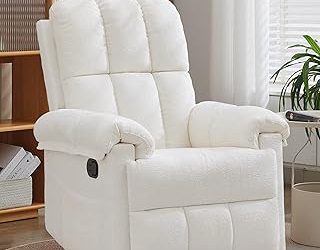
Korser Swivel Rocking Recliner in Chenille
This is the one I’d point most apartment dwellers toward: the chenille upholstery gives it a soft, current look that sits comfortably next to boucle or linen, and the sculpted armrests keep the profile from reading bulky. The rock-plus-swivel action is quiet enough for a nursery, and the compact footprint makes it usable in rooms where a traditional recliner would dominate.
Harkawon Swivel Rocker Recliner
The high back and deep seat here are the draw — this is a chair built for long stretches rather than quick sits, with enough shoulder and head support to make it a legitimate nap spot. The neutral beige fabric is flexible across styles, though it rewards a fabric protector if the chair lives in a high-traffic room.
Pemberly Row Stressless Recliner with Ottoman
For anyone who wants their recliner to look intentional rather than utilitarian, the brown leather and matching ottoman deliver a mid-century-adjacent silhouette that holds its own in a styled living room. The separate ottoman means a cleaner recline geometry and better long-term durability than an integrated footrest, and the leather will only improve with use.
Ketaiyou Rocker Swivel Recliner with Massage and Heat
The overstuffed proportions and built-in massage and lumbar heat make this the most indulgent pick of the group, and the lime-gray fabric is a smarter neutral than it sounds — cool enough to pair with charcoal, warm enough to sit beside wood tones. Reserve it for rooms with real square footage; it needs space to look right.
Leathaire Swivel Glider Recliner
Leathaire splits the difference between fabric breathability and leather cleanup, which makes this glider a practical choice for nurseries and family rooms alike. The soft backrest and smooth gliding motion do the quiet work well, and the brown finish stays forgiving as the room evolves around it.
Frequently Asked Questions
Do swivel recliners feel less stable than fixed models?
A well-built swivel base is just as stable — the difference comes down to hardware. Metal swivel rings with sealed bearings hold steady under full recline; lighter plastic assemblies are where wobble develops.
Are these chairs actually suitable for nursing?
Yes, and several here are designed for it. Prioritize a high back, a glider rather than a hard rocker, and side pockets — the Korser variant with side storage is a useful option if you want somewhere to stash a bottle or burp cloth.
How much space should I leave around the chair?
Plan for the full swivel circle plus recline depth. As a working rule, allow the chair’s widest dimension plus 8 to 12 inches on all sides where possible.
Manual or power recline?
Manual mechanisms are simpler, cheaper, and have fewer failure points, which is why most models in this category use them. Power makes sense mainly for users with limited upper-body strength.
Final Thoughts
If your priority is a compact chair that still looks designed, the Korser chenille swivel rocker is the most versatile buy here. Choose the Pemberly Row leather recliner with ottoman when the chair needs to anchor a room aesthetically, and the Ketaiyou massage-and-heat model if comfort features matter more than footprint.