Key takeaways
- Reclined footprint: Measure the depth a chair occupies at full recline, not folded. Most need 60 to 70 inches front to back plus clearance behind the headrest. Chalk the outline on your floor before committing to an oversized model.
- Fabric and colorway: Textilene mesh reads as outdoor furniture in bright colors and reads as neutral upholstery in charcoal, graphite, or warm grey. A removable padded cushion in a matte woven fabric does more to soften the look than any frame finish.
- Floor protection: Check the feet. Wide plastic caps distribute load across hardwood and tile; narrow metal tube ends do not. Budget for felt pads on any frame that contacts the floor at four small points.
- Lock and recline range: A friction or ratchet lock that holds anywhere in the range beats a two-position notch system for reading and working. Models advertising a 0–170° sweep give you an upright posture as well as a flat one.
- Capacity and cushion depth: A 500-pound rating signals a heavier gauge tube and less flex over time, which matters more for daily indoor use than occasional patio use. Pair it with a cushion at least an inch thick to avoid mesh imprinting.
What's inside
Zero gravity chairs were engineered for the patio, and it shows. Most are cut from marine-grade textilene in colorways that read as poolside rather than living room, and their frames are sized for open decks instead of a rug that stops 18 inches short of the wall. Bring one inside and the compromises surface fast: powder-coated tube feet that mark engineered hardwood, a recline arc that collides with the console table, and a cup holder tray that looks conspicuously out of place beside a linen sofa. The neutral-fabric, tidy-footprint versions exist, but they sit alongside dozens of near-identical listings that make no distinction between backyard duty and interior use.
This guide approaches the category the way you would approach any other piece of seating for the home: proportion first, material second, mechanism third. Below are the indoor-friendly zero gravity recliners worth considering in 2026, along with the specifications that actually govern whether one integrates into a room or fights it — reclined depth, fabric weave and colorway, frame contact points, lock behavior, and cushion quality. Each review is short and specific, so you can match a chair to your square footage and your palette rather than to a marketing claim.
As an Amazon Associate we earn from qualifying purchases.



How to Choose a Indoor Zero Gravity Chair (2026)
- Reclined footprint: Measure the depth a chair occupies at full recline, not folded. Most need 60 to 70 inches front to back plus clearance behind the headrest. Chalk the outline on your floor before committing to an oversized model.
- Fabric and colorway: Textilene mesh reads as outdoor furniture in bright colors and reads as neutral upholstery in charcoal, graphite, or warm grey. A removable padded cushion in a matte woven fabric does more to soften the look than any frame finish.
- Floor protection: Check the feet. Wide plastic caps distribute load across hardwood and tile; narrow metal tube ends do not. Budget for felt pads on any frame that contacts the floor at four small points.
- Lock and recline range: A friction or ratchet lock that holds anywhere in the range beats a two-position notch system for reading and working. Models advertising a 0–170° sweep give you an upright posture as well as a flat one.
- Capacity and cushion depth: A 500-pound rating signals a heavier gauge tube and less flex over time, which matters more for daily indoor use than occasional patio use. Pair it with a cushion at least an inch thick to avoid mesh imprinting.
The Best Indoor Zero Gravity Chairs Reviewed (2026)
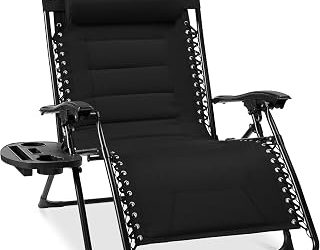
33″ XXL Oversized Zero Gravity Chair, 500 lb Capacity
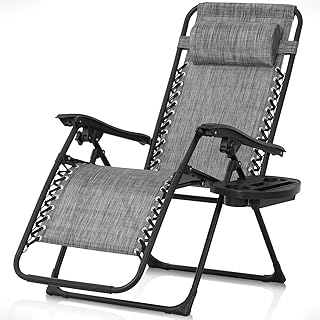
The widest seat here at 33 inches, with a heavy-duty frame and a removable cushion, headrest, and cup holder that let you strip it back to a cleaner silhouette indoors. Reserve it for rooms with real breathing space, since the reclined footprint is substantial and the black frame anchors visually.
CAPHAUS Grey Zero Gravity Recliner
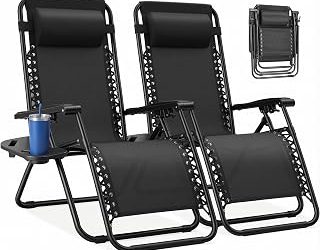
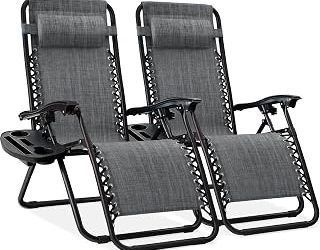
The most interior-appropriate option of the group, largely because of the grey colorway and the restrained side tray, which reads closer to a small accent table than a beach accessory. A sound choice for a sunroom or reading corner where the chair needs to coordinate with existing upholstery.
VEVOR 26″ Zero Gravity Recliner
At 26 inches wide it fits apartments and narrow alcoves where the oversized models simply do not work, yet it retains the 500-pound rating along with a cushion, headrest, footrest, and cupholder. The best balance of capacity to footprint in this roundup.
Slsy Zero Gravity Chair, 0–170° Recline
The 0–170° adjustment range is the standout feature, moving from near-upright to nearly flat with genuine positions in between rather than a couple of fixed stops. The removable cushion and tray plus the folding frame make it practical in a room that has to serve more than one purpose.
NEWBULIG Folding Zero Gravity Recliner
A lean, portable design in black with dual cup holder trays, built to fold flat and disappear into a closet between uses. Choose it if storage matters more than plushness, since it is the least padded of the picks.
Frequently Asked Questions
Will a zero gravity chair damage hardwood floors?
It can, if the frame ends in bare metal or hard plastic that concentrates weight at four points. Check for wide molded feet and add adhesive felt pads regardless. Also avoid dragging the chair while it is reclined, which shifts load onto the rear tubes.
How much space do I need behind the chair?
Plan on 12 to 18 inches of clearance behind the headrest, plus the reclined depth of the chair itself. Most models need a total of roughly six feet front to back to reach full recline without touching a wall.
Are these chairs suitable for daily use?
The heavier-gauge frames rated to 500 pounds hold up well to daily cycling, though mesh will relax over a few years and cushions compress. They are not a substitute for a properly upholstered recliner if you sit for many hours at a stretch.
Can I wash the cushions?
Removable cushions on these models are generally spot-clean only, with covers that may be surface-washed and air-dried. The textilene mesh itself wipes down with mild soap and water, which is one advantage over fabric upholstery indoors.
Final Thoughts
For most interiors, the CAPHAUS Grey Zero Gravity Recliner is the easiest to live with, since the grey palette and modest tray blend into a furnished room instead of announcing themselves. If space is tight, the VEVOR 26″ Zero Gravity Recliner delivers the same load rating in a narrower frame, and the 33″ XXL Oversized Zero Gravity Chair remains the pick when seat width and long-term frame rigidity outweigh footprint concerns.