Key takeaways
- Scrubbing mechanism: Rotating dual pads suit open expanses and textured stone, since the pads self-feed dirt into the fibers rather than smearing it forward. A fixed pad with high steam pressure handles tight galley kitchens and stair landings better because the head stays predictable underfoot.
- Steam control: Look for at least two or three output settings. Engineered wood and laminate want the lowest setting and quick passes; sealed tile and grout benefit from sustained high output. A single-temperature machine gives you no way to protect the more delicate finish.
- Tank size versus balance: An XL reservoir means fewer refills across an open-plan level, but the weight sits high on the handle. If you clean in short sessions or carry the unit between floors, a mid-size tank is easier on the wrist.
- Cord length and reach: Corded units deliver constant steam, which is the whole point, so cord length is your real range limit. Twenty feet or more lets you cover a typical living and dining area from one outlet without replugging.
- Attachments you will genuinely use: A carpet glider and a grout brush earn their keep. Garment and window tools are a bonus, not a reason to pay more. Confirm the pads are washable and sold as replacements before you commit.
What's inside
Sealed hardwood, honed marble, large-format porcelain with narrow grout lines: the floors that define a well-considered interior are also the ones that punish careless cleaning. A standard steam mop pushes vapor into the surface and drags a flat pad across it, which loosens grime but rarely lifts it. What you get is a floor that looks clean while it is wet and dull once it dries, plus a haze of residue that builds along traffic paths. Scrubbing steam mops answer that gap by adding mechanical action, either through spinning pads or an oscillating head, so heat and friction work together instead of relying on heat alone.
This guide looks at the scrub steam mops worth owning in 2026, evaluated the way a home stylist would assess any tool that touches a finished surface: how gently it treats a factory seal, how evenly it distributes moisture, how quickly pads come off for laundering, and whether the machine can move under a console table without scuffing the base. Below you will find the current picks, followed by a buying framework, short expert notes on each model, and answers to the questions that come up most often once a steam mop is actually in the house.
As an Amazon Associate we earn from qualifying purchases.


How to Choose a Scrub Steam Mop (2026)
- Scrubbing mechanism: Rotating dual pads suit open expanses and textured stone, since the pads self-feed dirt into the fibers rather than smearing it forward. A fixed pad with high steam pressure handles tight galley kitchens and stair landings better because the head stays predictable underfoot.
- Steam control: Look for at least two or three output settings. Engineered wood and laminate want the lowest setting and quick passes; sealed tile and grout benefit from sustained high output. A single-temperature machine gives you no way to protect the more delicate finish.
- Tank size versus balance: An XL reservoir means fewer refills across an open-plan level, but the weight sits high on the handle. If you clean in short sessions or carry the unit between floors, a mid-size tank is easier on the wrist.
- Cord length and reach: Corded units deliver constant steam, which is the whole point, so cord length is your real range limit. Twenty feet or more lets you cover a typical living and dining area from one outlet without replugging.
- Attachments you will genuinely use: A carpet glider and a grout brush earn their keep. Garment and window tools are a bonus, not a reason to pay more. Confirm the pads are washable and sold as replacements before you commit.
The Best Scrub Steam Mops (2026) Reviewed
H2O X5 5-in-1 Steam Mop & Handheld Cleaner
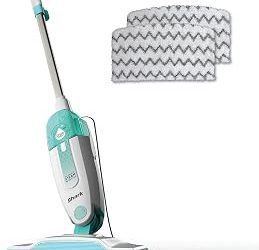
The X5 is the most versatile pick here, splitting into a handheld unit that reaches shower grout, appliance seals, and upholstery seams. Its included carpet glider makes it a sensible single purchase for homes that mix rugs with hard flooring, though the flat head asks for a slower pass on set-in kitchen grease.
Kenmore S300 Steam Spin Mop
Kenmore’s spin mop combines genuine scrubbing rotation with a swivel neck that tracks cleanly around table legs and island corners. The XL tank and LED headlights make it the strongest choice for large tiled floors and for spotting dried spills under low cabinetry, where overhead light rarely reaches.
DEVOAC VM6 Scrubbing Steam Mop
The VM6 balances rotating pads against a genuinely light chassis, which is the compromise most spin mops miss. Three steam modes give you a soft setting for laminate and marble, and the ten included accessories cover detail work without turning the closet into a parts bin.
PurSteam 10-in-1 Steam Mop
PurSteam’s detachable handheld and dirt-grip pads make this the practical workhorse for mixed-material homes with stone counters and tile backsplashes. Steam output is steady rather than aggressive, which suits sealed hardwood and anyone nervous about over-wetting a finish.
Steam Cleaner F6 Scrubbing Mop
The F6 solves the small annoyances: it stands on its own between rooms, adjusts in height for taller users, and runs a 23-foot cord that clears most main floors from one outlet. Rotating reusable pads and a large tank make it well suited to long, uninterrupted cleaning sessions.
Frequently Asked Questions
Are scrub steam mops safe on hardwood?
On properly sealed hardwood, yes, provided you use the lowest steam setting and keep the head moving. Avoid steam entirely on unsealed, waxed, or oiled wood and on floors with lifting seams, since moisture will find the gaps.
Do rotating pads scratch marble or luxury vinyl?
Microfiber pads themselves will not scratch these surfaces. Damage comes from trapped grit, so vacuum thoroughly first and swap to a clean pad once the current one looks loaded.
Should I add cleaning solution to the tank?
No. Detergent clogs the boiler and voids most warranties. Use distilled or filtered water to limit mineral scale, and pretreat stubborn spots directly on the floor instead.
How often should pads be replaced?
Wash after every session and expect roughly fifty to eighty cycles before the fibers flatten and stop holding debris. Keeping three or four pads in rotation extends the life of the whole set.
Final Thoughts
For most homes, the Kenmore S300 offers the best combination of real scrubbing power, maneuverability, and tank capacity on wide tile and hardwood. The DEVOAC VM6 is the smarter pick if weight and easy handling matter more than capacity, and the H2O X5 remains the one to choose when you want a floor steamer and a handheld detail cleaner in a single tool.