Key takeaways
- Clearance on all sides: Leave at least 6 to 12 inches of open space around the intake and exhaust. Central placement in a room beats a tight corner every time, even if the corner looks tidier.
- Match capacity to square footage: A 95oz compact unit suits a single bedroom or bathroom. Anything above 1,500 sq ft — open-plan basements, whole floors — needs a compressor model rated 34 pints or more.
- Drainage dictates position: If you want continuous operation, the unit must sit near a floor drain, sink, or sump. Gravity hoses need the machine slightly elevated, so plan for a plinth or shelf.
- Noise tolerance by room: Bedrooms call for sleep modes and dimmable lighting. Utility spaces can take a louder compressor without anyone noticing.
- Source proximity: Position the unit near the moisture origin — the bathroom doorway, the laundry rack, the coolest exterior wall — rather than in the middle of the driest part of the house.
What's inside
Damp air rarely announces itself politely. It shows up as a wardrobe that smells like an old paperback, a plaster wall that darkens near the skirting board, or a bedside table that feels faintly tacky in August. Most people respond by buying a dehumidifier and setting it wherever there’s a free socket — which is exactly why so many units underperform. A machine tucked behind an armchair or shoved into a corner cupboard is fighting its own airflow, and no amount of extra capacity will fix a bad position.
This guide approaches the question from a room-design perspective rather than a purely technical one: where the unit belongs relative to your furniture, your walls, and the way air actually moves through a home. Below you’ll find our picks for 2026 across compact bedroom units and higher-capacity basement machines, plus placement rules that make each one work harder without running longer.
As an Amazon Associate we earn from qualifying purchases.


How to Choose a Where Is The Best Place To Put Dehumidifier (2026)
- Clearance on all sides: Leave at least 6 to 12 inches of open space around the intake and exhaust. Central placement in a room beats a tight corner every time, even if the corner looks tidier.
- Match capacity to square footage: A 95oz compact unit suits a single bedroom or bathroom. Anything above 1,500 sq ft — open-plan basements, whole floors — needs a compressor model rated 34 pints or more.
- Drainage dictates position: If you want continuous operation, the unit must sit near a floor drain, sink, or sump. Gravity hoses need the machine slightly elevated, so plan for a plinth or shelf.
- Noise tolerance by room: Bedrooms call for sleep modes and dimmable lighting. Utility spaces can take a louder compressor without anyone noticing.
- Source proximity: Position the unit near the moisture origin — the bathroom doorway, the laundry rack, the coolest exterior wall — rather than in the middle of the driest part of the house.
The Best Where Is The Best Place To Put Dehumidifier (2026)s Reviewed
95OZ Dehumidifier with 7-Color Ambient Light (Black)
The matte black casing disappears against dark joinery, which matters when a unit needs to sit out in the open on a bedroom floor rather than hidden behind a chest of drawers. Auto shut-off handles the overnight cycle, and the ambient light can be dialled down to something closer to a nightlight than a display.
ToLife 95 oz Dehumidifier with Sleep Mode
Our pick for bedrooms where the dehumidifier has to live within a few feet of the bed. Sleep mode drops both fan speed and light output, so you can place it beside a nightstand on the cooler exterior wall — the spot where condensation typically forms first — without it becoming a distraction.
1000 Sq. Ft. Dehumidifier with 95oz Tank (Grey)
Grey reads as a neutral in most contemporary interiors, making this the easiest of the compact trio to leave on display in a hallway or landing. That’s a genuinely useful position, since a central corridor lets one small unit serve two or three adjoining rooms with the doors open.
KNKA 34-Pint 2500 Ft² Dehumidifier
The included drain hose is the reason to choose this over a tank-only model: set it near a floor drain and you never touch it again. Three modes and a 24-hour timer let you run it hardest overnight, which suits basements and laundry areas where nobody’s listening.
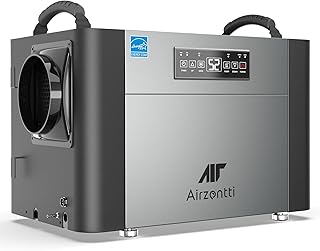
4500 Sq. Ft. Compressor Dehumidifier with Drain Hose
Compressor technology holds its efficiency in cool basement air where smaller thermoelectric units lose ground. Position it centrally on the slab with clearance around the swing vents, and intelligent humidity control will manage the cycling for you.
Frequently Asked Questions
Where should a dehumidifier go in a bedroom?
Near the coolest exterior wall, ideally a few feet from the bed and clear of curtains or bedding. Cold surfaces are where moisture condenses, so that’s where the air needs the most help.
Can I put a dehumidifier against the wall?
Only if the intake and exhaust both face open room. Most models draw air from the back, so flush placement chokes them. A hand’s width of clearance is the minimum.
Should the door be open or closed?
Closed if you’re targeting one problem room. Open if you’re positioning a single unit in a hallway to serve several spaces, which works best with a higher-capacity model.
Does floor or shelf placement matter?
Humid air pools low, so floor level is generally correct. Raise the unit only when a gravity drain hose requires the fall.
Final Thoughts
For bedrooms, the ToLife 95 oz Dehumidifier earns its place on the floor beside you thanks to a genuinely quiet sleep mode, while the grey 1000 Sq. Ft. model is the one to position in a hallway where it’s visible. For basements and lower floors, the Waykar 80 Pint Energy Star unit handles whole-house work with continuous drainage — set it centrally, give it clearance, and let it run.