Key takeaways
- Microfiber: captures fine dust more effectively than a bare feather duster.
- Washable pads: reduce ongoing waste and let you start fresh next time.
- Flexible head: helps the duster follow the angle of a blade.
- Locking extension pole: prevents sections from twisting or collapsing during use.
What's inside
A ceiling fan can quietly collect an impressive layer of dust, especially along the upper edges of its blades where it is difficult to see. When the fan runs, that buildup can scatter through the room, dull the fixture’s appearance, and settle onto furniture and floors. Regular cleaning also helps preserve the finish on the blades and keeps the fan looking intentional rather than overlooked.
This guide explains the safest, least messy way to clean a ceiling fan, from choosing the right duster to handling high ceilings and washable tools. You will learn when to use a dry microfiber head, when a slightly damp cloth is appropriate, and which features matter when buying an extension-pole cleaner.
As an Amazon Associate we earn from qualifying purchases.



1. Switch Off the Fan and Prepare the Area
Turn the fan off at the wall switch and, ideally, at the circuit breaker if you will be working near the motor housing or using a damp cloth. Wait until every blade has stopped moving. Do not rely on a remote control alone, since someone could accidentally reactivate the fan.
Clear the space below the fixture and place a sheet, towel, or old shower curtain over nearby furniture. A pillowcase is useful for containing loose dust, while a vacuum with a soft brush attachment can collect anything that falls. If you need a ladder, set it on a level surface and ask another adult to steady it.
2. Choose a Cleaner That Matches Your Ceiling Height
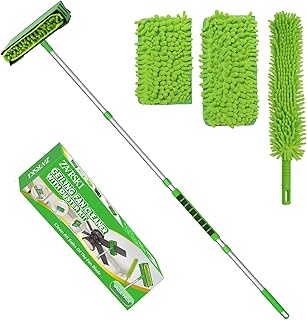
For standard-height rooms, a reusable microfiber duster with an adjustable pole is usually the most practical option. The DRQ Ceiling Fan Cleaner Duster extends from 13 to 48 inches and has removable dusters, making it useful beyond the fan for bookshelves, doors, and upper trim. The similar FONUNO Ceiling Fan Duster reaches up to 50 inches and is designed for furniture and wall surfaces as well.
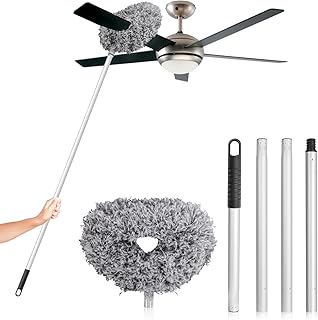
If you want extra reach without bringing out a ladder, consider a six-foot model such as the Ceiling Fan Cleaner Duster with 6 Ft/72″ Extension Pole. For very tall rooms, the LAANPOLE 26FT Reach Ceiling Fan Cleaner Duster is designed around a longer, multi-section pole. That added reach is convenient, but it also creates more leverage, so use slow movements and avoid pressing hard against the blades.
- Microfiber: captures fine dust more effectively than a bare feather duster.
- Washable pads: reduce ongoing waste and let you start fresh next time.
- Flexible head: helps the duster follow the angle of a blade.
- Locking extension pole: prevents sections from twisting or collapsing during use.
3. Dust the Blades Without Spreading Debris
Begin with the upper surface of the blade closest to you. Slide the microfiber head over the blade rather than flicking it, keeping the head in contact with the surface as you move from the center toward the tip. If the cleaner is shaped like a sleeve, enclose the blade gently and pull it toward you; this traps dust on both sides instead of pushing it into the room.
Clean one blade at a time and rotate the fan by hand only when the power is off. Support the blade near its base if necessary, but never pull, twist, or lean your weight on it. Work around the fixture methodically so you do not lose track of which blades have been cleaned.
4. Clean the Motor Housing and Light Fixture Carefully
After the blades, use the microfiber duster on the motor housing, downrod, canopy, and any exposed decorative details. A dry tool is safest around electrical components. For stubborn marks on a blade, use a barely damp microfiber cloth after removing loose dust, then dry the surface immediately. Avoid spraying cleaner directly onto the fan; liquid can enter the motor or drip into the light kit.
Check the manufacturer’s care instructions before using a cleaning solution. Painted, wood-look, and metal finishes can react differently to household sprays. If the fan has a glass shade, remove it only if the fixture is fully off and cool, then wash and dry the shade separately according to its instructions.
5. Wash and Store the Cleaning Tool
Shake or vacuum the duster outdoors before laundering it. Follow the care label, but microfiber pads generally perform best when washed separately or with other lint-free fabrics. Avoid fabric softener and high heat, which can coat or damage the fibers and reduce their ability to attract dust. Let the pad dry completely before storing it.
The SetSail Ceiling Fan Cleaner Duster is a useful choice if washable pads and a 13-to-48-inch pole are priorities. The Ceiling Fan Cleaner Duster with Adjustable 13-to-49.7-Inch Pole offers another compact, reusable format for fans, furniture, and upper surfaces. Store the pole collapsed and the clean pad in a sealed bag so it is ready for the next cleaning.
Tips
- Clean ceiling fans every four to eight weeks in dusty rooms, and more often during allergy season.
- Use a dry duster first; damp cleaning is easier and safer after loose dust has been removed.
- Keep the duster head level with the blade to reduce pressure on the blade brackets.
- Clean the fan before vacuuming or mopping so fallen dust can be removed afterward.
Frequently Asked Questions
Can I clean a ceiling fan while it is running?
No. Turn it off completely before cleaning. A moving blade can catch the tool, damage the fixture, or cause an injury.
What is the best way to clean a very dusty fan?
Use a dry microfiber blade sleeve or duster first, working slowly from the blade base to the tip. For heavy buildup, vacuum loose debris with a soft brush attachment before wiping marks with a slightly damp cloth.
Do I need a ladder to clean a ceiling fan?
Not always. An extension-pole duster can handle many standard and moderately high ceilings from the floor. For vaulted or exceptionally tall ceilings, choose a purpose-built long-reach kit or hire a professional rather than stretching from an unstable ladder.
How often should ceiling fan duster pads be replaced?
Replace a pad when the microfiber becomes flattened, permanently soiled, torn, or no longer picks up dust after washing. With routine laundering and gentle use, a quality reusable pad can last through many cleaning cycles.
Conclusion
The best way to clean a ceiling fan is a controlled, dry-first routine: switch off the fixture, contain falling dust, use a flexible microfiber duster, and avoid putting pressure on the blades or moisture near the motor. A washable extension-pole cleaner makes the job faster and safer, while choosing the right reach ensures the tool suits both your ceiling height and the rest of your home.