Key takeaways
- Oil versus sealer: Penetrating oils soak in, keep the grain visible, and never peel, but expect to redo them once or twice a season. Film-forming sealers with polyurethane last far longer and shed water better, though they can crack or flake if the wood moves underneath.
- UV protection: Sunlight, not rain, is what fades wood to grey. Look explicitly for UV absorbers or trans-oxide pigments in the formula. Clear finishes without them will keep water out and still let your teak go silver.
- Your wood species: Teak and acacia are oily and dense, so they take teak oil beautifully but resist thick film coats. Cedar, pine, and eucalyptus are thirstier and benefit from linseed-based or general-purpose outdoor oils that penetrate deeply.
- Coverage math: A 16 oz bottle typically handles one dining set with two coats. If you’re finishing a full patio suite plus a deck, buy by the gallon; running out mid-project leaves lap marks that are hard to blend.
- Drying time and weather window: Fast-drying formulas let you finish a set in a single afternoon. Slower-curing oils need dry, mild conditions for 24 hours or more, so check the forecast before you open the can.
What's inside
Wood patio furniture asks for something no indoor piece ever does: it has to hold its own against UV, humidity swings, and the slow grey creep that turns a warm teak armrest into driftwood. Most people notice too late. By the time the surface feels chalky and the grain has lifted, you’re no longer maintaining, you’re restoring, and that’s a weekend you didn’t plan on. The finish you choose is less a cosmetic decision than a maintenance schedule you’re committing to for the next several years.
This guide sorts the field into what it actually is: penetrating oils that feed the wood and need reapplying, and film-forming sealers that build a barrier and last longer between coats. Below you’ll find the products worth considering in 2026, what each one is genuinely good at, and how to match a finish to your species, climate, and tolerance for upkeep.
As an Amazon Associate we earn from qualifying purchases.



How to Choose a Finish For Wood Patio Furniture (2026)
- Oil versus sealer: Penetrating oils soak in, keep the grain visible, and never peel, but expect to redo them once or twice a season. Film-forming sealers with polyurethane last far longer and shed water better, though they can crack or flake if the wood moves underneath.
- UV protection: Sunlight, not rain, is what fades wood to grey. Look explicitly for UV absorbers or trans-oxide pigments in the formula. Clear finishes without them will keep water out and still let your teak go silver.
- Your wood species: Teak and acacia are oily and dense, so they take teak oil beautifully but resist thick film coats. Cedar, pine, and eucalyptus are thirstier and benefit from linseed-based or general-purpose outdoor oils that penetrate deeply.
- Coverage math: A 16 oz bottle typically handles one dining set with two coats. If you’re finishing a full patio suite plus a deck, buy by the gallon; running out mid-project leaves lap marks that are hard to blend.
- Drying time and weather window: Fast-drying formulas let you finish a set in a single afternoon. Slower-curing oils need dry, mild conditions for 24 hours or more, so check the forecast before you open the can.
The Best Finish For Wood Patio Furniture (2026)s Reviewed
Star Brite Premium Golden Teak Oil
Developed for marine use, this blends tung oil polymers with UV absorbers, which is the combination that actually slows fading rather than just repelling water. It leaves a warm golden tone and dries quickly enough for multiple coats in a day, making it my default recommendation for teak and other fine hardwoods.
Seal-Once Nano+Poly Penetrating Sealer
A hybrid that penetrates like an oil but leaves a polyurethane film, giving you genuine multi-year protection instead of seasonal touch-ups. The two-gallon cedar-tinted size is aimed at people finishing furniture alongside a deck or fence, and it’s water-based, so cleanup is straightforward.
LinSheen Boiled Linseed Oil
The traditional choice, and still the most economical way to revive thirsty softwoods, cedar planters, and older pieces that have dried out. It penetrates deeply and restores depth to faded grain, though it offers less UV defense than purpose-built teak oils, so plan on reapplying more often in full sun.
RMP Finishes Outdoor Defense Oil
A versatile outdoor oil that moves easily between furniture, fencing, and raised garden beds, which makes it practical if you’d rather stock one product than three. The finish stays natural and low-sheen, and it handles rough-sawn cedar as capably as smooth-planed furniture.
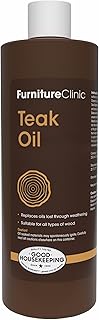
Furniture Clinic Teak Oil
This one cleans while it conditions, lifting surface grime as you work it in, which saves a separate prep step on furniture that’s been sitting out all winter. The natural matte result suits people who want protection without the glossy look, and it performs equally well on indoor pieces and shower benches.
Frequently Asked Questions
How often should I reapply finish to outdoor wood furniture?
Penetrating oils generally need refreshing every three to six months in full sun, or annually in shaded or covered areas. Polyurethane-based sealers can go two to four years. The test is simple: sprinkle water on the surface, and if it soaks in rather than beading, it’s time.
Do I need to sand before applying a new coat?
Not for oil-on-oil maintenance. Clean thoroughly, let the wood dry completely, and apply. Sanding is only necessary when you’re removing a failed film finish, addressing raised grain, or stripping heavy grey weathering back to sound wood.
Can I use teak oil on acacia or eucalyptus furniture?
Yes. Teak oil isn’t made from teak, it’s a blend formulated for dense tropical hardwoods, and it works well on acacia, eucalyptus, and iroko. Products like the Nordicare teak oil are explicitly formulated for that broader range.
What happens if I just leave the wood untreated?
Teak and cedar will weather to grey without structural failure, which some people prefer aesthetically. Less durable species will check, splinter, and eventually rot. Untreated wood also absorbs stains far more readily.
Final Thoughts
For most teak and hardwood patio sets, the Star Brite Golden Teak Oil offers the best balance of UV defense, warm colour, and quick application. If you’d rather finish once and forget it for a few years, the Seal-Once Nano+Poly is the more durable investment, and the Furniture Clinic Teak Oil is the smart pick when your furniture needs cleaning and conditioning in the same pass.