Key takeaways
- Footprint versus recline arc: Measure the wall clearance a chair needs when fully reclined, not just its standing dimensions. Compact models designed for small spaces typically want 4 to 8 inches behind them, while full-depth recliners can need well over a foot.
- Base construction: A metal swivel ring with sealed bearings turns quietly and stays level. Look for a wide base plate relative to the seat width; narrow bases are the usual culprit behind that unsettling tip-forward feeling when you stand up.
- Seat depth and back height: Anyone over 5’9″ should prioritize a high back with genuine head support. Deep seats read as luxurious in photos but can leave shorter sitters perched with unsupported thighs, so match the dimensions to the primary user.
- Upholstery behavior: Chenille is soft and forgiving on pet hair; corduroy brings visible texture and reads more design-forward; performance polyester blends clean up fastest. Consider how the fabric will look under the room’s actual light, since beige shifts noticeably between warm and cool bulbs.
- Assembly and mechanism type: Manual recliners have fewer failure points than powered ones and need no outlet nearby. Most of these ship in two or three pieces with a slot-together back, which means a solo setup in under 30 minutes.
What's inside
A swivel rocker sits in an awkward spot on most shopping lists. It has to move in two directions without wobbling, hold up to nightly use, and still look like furniture rather than equipment. Most listings blur that line, so buyers end up sorting through near-identical beige upholstery photos with no real sense of how the base is built, how deep the seat sits, or whether the recline mechanism will still feel smooth after a year of 2 a.m. feedings.
This guide narrows the 2026 field to six chairs that earn their footprint: compact recliners for apartments, high-back gliders sized for taller frames, and one texture-forward accent piece for rooms where the chair is the focal point. Below you’ll find the specs that actually predict comfort, short reviews of the standouts, and answers to the questions that come up after the box is opened.
As an Amazon Associate we earn from qualifying purchases.


How to Choose a Chair Swivel Rocker (2026)
- Footprint versus recline arc: Measure the wall clearance a chair needs when fully reclined, not just its standing dimensions. Compact models designed for small spaces typically want 4 to 8 inches behind them, while full-depth recliners can need well over a foot.
- Base construction: A metal swivel ring with sealed bearings turns quietly and stays level. Look for a wide base plate relative to the seat width; narrow bases are the usual culprit behind that unsettling tip-forward feeling when you stand up.
- Seat depth and back height: Anyone over 5’9″ should prioritize a high back with genuine head support. Deep seats read as luxurious in photos but can leave shorter sitters perched with unsupported thighs, so match the dimensions to the primary user.
- Upholstery behavior: Chenille is soft and forgiving on pet hair; corduroy brings visible texture and reads more design-forward; performance polyester blends clean up fastest. Consider how the fabric will look under the room’s actual light, since beige shifts noticeably between warm and cool bulbs.
- Assembly and mechanism type: Manual recliners have fewer failure points than powered ones and need no outlet nearby. Most of these ship in two or three pieces with a slot-together back, which means a solo setup in under 30 minutes.
The Best Chair Swivel Rocker (2026)s Reviewed
Korser Swivel Rocker Recliner in Chenille
The strongest all-rounder here: chenille upholstery that stays soft against bare arms, a manual recline that stops where you leave it, and side pockets that keep a bottle or remote off the floor. Its scaled-down proportions make it a genuine option for reading corners and nurseries where a standard recliner would swallow the room.
Harkawon Swivel Rocker Recliner Glider
Built for people who find most nursery gliders too small, with a tall back and a deep seat that supports a full lean-back rather than a perch. The glide is notably smooth through its full travel, and the neutral beige fabric moves easily from nursery to home office once the nursery phase ends.
White Swivel Rocker Recliner Nursery Glider
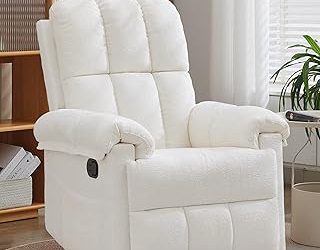
A clean, low-contrast choice for pale rooms where a dark chair would break the palette. The manual recline and quiet swivel handle night duty well, though white upholstery asks for a fabric protector if toddlers or pets share the space.
Corduroy Swivel Rocker Accent Chair in Grey
The design pick of the group. Wide-wale corduroy gives the high back real visual weight, and because it swivels rather than reclines, it fits comfortably against a wall in a living room or bedroom where floor space is tight.
Korser 360 Swivel Rocker Recliner
A full 360-degree swivel paired with a rocking motion, wrapped in a compact frame that suits studios and narrow bedrooms. It reclines less dramatically than the chenille version, which is precisely why it works closer to a wall.
Frequently Asked Questions
What’s the difference between a glider and a swivel rocker?
A glider travels forward and back on a fixed track, producing a level, pendulum-like motion. A rocker pivots on curved supports or a spring base, tilting slightly as it moves. Swivel rockers add a rotating base on top of either mechanism.
Will a swivel rocker recliner work in a nursery long term?
Yes, and that’s the practical argument for choosing one in a neutral fabric. Once the feeding years pass, the same chair reads as a reading chair or a bedroom accent seat without looking like leftover baby gear.
Do these chairs make noise over time?
Squeaks usually trace back to loose bolts rather than worn bearings. Retighten all hardware after the first month and again annually; a small amount of silicone lubricant on the swivel ring resolves most remaining noise.
How much clearance do I need behind the chair?
Plan on 4 to 8 inches for the compact models and closer to 12 inches for deeper recliners. If you’re tight on space, a swivel accent chair without a recline function can sit nearly flush to the wall.
Final Thoughts
For most rooms, the Korser chenille swivel rocker recliner delivers the best balance of comfort, compact sizing, and everyday durability. Taller sitters should go with the Harkawon high-back glider recliner for its deeper seat and head support, while the grey corduroy swivel accent chair is the one to choose when texture and silhouette matter more than reclining.