Key takeaways
- Blade Span and Airflow: For ceilings above 9 feet, aim for at least 60 inches of blade span. Rooms exceeding 12 feet in height benefit from 72 inches or more, measured tip-to-tip. Look for cubic-feet-per-minute (CFM) ratings above 5,000 on high to guarantee genuine circulation at floor level.
- Downrod Length: The fan’s mounting point should sit roughly 8 to 9 feet above the floor. That means a 10-foot ceiling needs a 12-inch downrod, while a 14-foot vault calls for a 48- or even 72-inch downrod. Verify that the fan you choose ships with — or accommodates — the length you need.
- Motor Type and Noise: Brushless DC motors have become the standard for large-diameter fans because they deliver higher torque at lower decibel levels. Anything rated below 35 dB at cruising speed will blend into the background of a living room or bedroom.
- Light Output and Color Temperature: Many buyers pair a ceiling fan with a fixture, but an integrated LED module eliminates the need. Look for tunable CCT (correlated color temperature) in the 2700K–6000K range so you can shift from warm ambient to cool task lighting from the couch.
- Finish, Blade Count, and Style Fit: More blades move air more quietly; fewer blades move air more forcefully. Match the fan’s finish to your room’s hardware and trim — matte black reads contemporary, walnut tones warm up transitional spaces, and reversible blade faces let you experiment without buying twice.
What's inside
High ceilings create gorgeous volume and light in a home—but they also leave you with a stubborn problem: hot air trapped at the top of the room and a ceiling fan that barely stirs the air below. Standard 42-inch fans simply can’t push air downward through 10 or 12 feet of space, so you need a fan engineered with serious airflow capacity, an extended downrod, and a motor that won’t sound like a helicopter when it’s finally doing its job.
This guide walks through the best ceiling fans sized and built for high-ceiling rooms in 2026, from industrial-scale 96-inch powerhouses to elegant modern pieces that look as intentional as your furnishings. Below you’ll find quick-pick cards for each recommendation, followed by a buyer’s guide, in-depth mini-reviews, and answers to the questions we hear most often.
As an Amazon Associate we earn from qualifying purchases.


How to Choose a Fan for High Ceilings (2026)
- Blade Span and Airflow: For ceilings above 9 feet, aim for at least 60 inches of blade span. Rooms exceeding 12 feet in height benefit from 72 inches or more, measured tip-to-tip. Look for cubic-feet-per-minute (CFM) ratings above 5,000 on high to guarantee genuine circulation at floor level.
- Downrod Length: The fan’s mounting point should sit roughly 8 to 9 feet above the floor. That means a 10-foot ceiling needs a 12-inch downrod, while a 14-foot vault calls for a 48- or even 72-inch downrod. Verify that the fan you choose ships with — or accommodates — the length you need.
- Motor Type and Noise: Brushless DC motors have become the standard for large-diameter fans because they deliver higher torque at lower decibel levels. Anything rated below 35 dB at cruising speed will blend into the background of a living room or bedroom.
- Light Output and Color Temperature: Many buyers pair a ceiling fan with a fixture, but an integrated LED module eliminates the need. Look for tunable CCT (correlated color temperature) in the 2700K–6000K range so you can shift from warm ambient to cool task lighting from the couch.
- Finish, Blade Count, and Style Fit: More blades move air more quietly; fewer blades move air more forcefully. Match the fan’s finish to your room’s hardware and trim — matte black reads contemporary, walnut tones warm up transitional spaces, and reversible blade faces let you experiment without buying twice.
The Best Fans for High Ceilings (2026) Reviewed
ZMISHIBO 96-Inch Industrial DC Fan
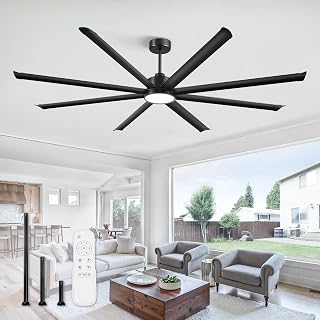
The biggest fan in this roundup earns its spot through raw coverage. Its 8 reversible aluminum blades move air across shops, garages, and double-height living spaces with industrial efficiency, while the quiet DC motor and 3-CCT lighting keep it livable for residential settings. This is the one to buy when square footage and ceiling height both exceed what most fans can handle.
84-Inch Walnut and Black Ceiling Fan
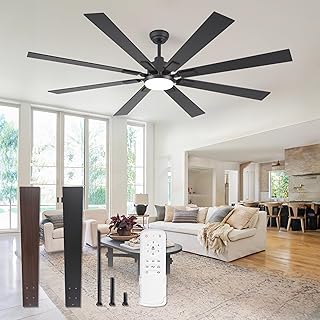
Where most high-ceiling fans lean utilitarian, this 84-inch model leans warm. The walnut-finished blades pair with a matte black housing to complement mid-century and contemporary rooms alike, and the memory function remembers your last speed and light setting after a power cycle — a small touch that makes daily use noticeably smoother.
ZMISHIBO 72-Inch Dual-Finish Fan
A genuinely versatile pick. At 72 inches, this fan fits high-ceiling bedrooms, covered patios, and standard great rooms without overwhelming the ceiling plane. The dual-finish blades give you two aesthetics in one box, and the damp rating means it transitions from a living room to a screened porch without hesitation.
ZMISHIBO 65-Inch 8-Blade Fan
Eight blades are unusual at this price tier, and the payoff is whisper-quiet airflow with wide distribution. The dimmable 3000–6000K LED covers the full range from candlelit dinner party to bright afternoon work mode, and the reversible motor lets you push air downward in summer and recirculate warm air in winter.
60-Inch Wood Propeller Fan
Designed with commercial exteriors in mind but perfectly at home on a covered patio or vaulted porch, this three-blade wood propeller pairs natural material with smart-home integration via Alexa and a dedicated app. It is a strong choice for anyone building an outdoor living room that demands both technology and tactile warmth.
Frequently Asked Questions
What size ceiling fan do I need for a 12-foot ceiling?
A blade span of at least 60 inches is recommended, though 72 inches or above will produce more noticeable airflow at floor level. Pair the larger fan with a 24-inch downrod to position the blades roughly 8 feet above the floor for optimal circulation.
Are DC motors better than AC motors for large ceiling fans?
Yes. DC motors are typically 30 to 50 percent more energy efficient, run quieter, and allow more speed options — often six or seven versus three or four with AC. For high-ceiling rooms where the fan may run for extended periods, the energy savings and reduced noise justify the modest price premium.
Can I use a high-ceiling fan on a standard 8-foot ceiling?
Some models allow flush-mount or short-downrod installation, but most large-diameter fans require at least 8 to 10 feet of clearance below the blades for safety and airflow performance. Check the manufacturer’s minimum ceiling height before purchasing.
How important is the damp rating for an outdoor ceiling fan?
If the fan will be on a covered patio, a damp rating is essential — it means the motor and electronics are sealed against moisture in the air. For fully exposed locations, you need a wet-rated fan instead, which can handle direct contact with water.
Final Thoughts
For sheer power across the largest rooms, the ZMISHIBO 96-Inch is hard to beat. If you want elevated style that works hard without shouting, the 84-Inch Walnut and Black earns its spot. And for homeowners who need one fan to move between an indoor great room and a covered porch, the ZMISHIBO 72-Inch Dual-Finish delivers the most flexibility per dollar.