Key takeaways
- Blade span versus square footage: Rooms over 400 square feet want a minimum 62-inch sweep; anything past 600 square feet or with a ceiling above 10 feet is genuinely 72- to 84-inch territory. Undersizing is the single most common mistake.
- CFM over RPM: Cubic feet per minute tells you how much air actually moves. A slow, wide fan pushing high CFM will always feel better than a small fan spinning fast, and it will be quieter doing it.
- DC motor as the baseline: DC motors draw substantially less power, run near-silently, offer more speed steps, and reverse cleanly for winter downdraft. At this size, they are worth the small premium.
- Damp or wet rating for anything covered: Porches, gazebos, and three-season rooms need at least a damp rating. Indoor-only fans placed outside will corrode at the motor housing within a season or two.
- Light output and color temperature: If the fan is your primary fixture, look for dimmable 3CCT or 6CCT LEDs so you can shift from crisp 5000K task light to a warm 3000K evening tone without changing bulbs.
What's inside
Big rooms break ordinary ceiling fans. A 52-inch blade span that feels generous over a queen bed disappears entirely in a 20-foot great room with vaulted ceilings, leaving you with a fan that spins politely and moves almost nothing. The result is the complaint we hear constantly from clients: air that stratifies, warm pockets near the rafters, cold corners by the sofa, and an HVAC system working overtime to compensate for poor circulation rather than poor insulation.
The fix is a matter of scale and torque, not marketing. This guide looks at the current generation of extra-large fans, 62 to 84 inches, built around DC motors that deliver high airflow without the hum older AC models are known for. Below you will find the picks worth considering for open-plan living rooms, covered patios, lofts, and workshops, plus the specifications that actually determine whether a fan will make your space feel different.
As an Amazon Associate we earn from qualifying purchases.


How to Choose a Ceiling Fan For Big Room (2026)
- Blade span versus square footage: Rooms over 400 square feet want a minimum 62-inch sweep; anything past 600 square feet or with a ceiling above 10 feet is genuinely 72- to 84-inch territory. Undersizing is the single most common mistake.
- CFM over RPM: Cubic feet per minute tells you how much air actually moves. A slow, wide fan pushing high CFM will always feel better than a small fan spinning fast, and it will be quieter doing it.
- DC motor as the baseline: DC motors draw substantially less power, run near-silently, offer more speed steps, and reverse cleanly for winter downdraft. At this size, they are worth the small premium.
- Damp or wet rating for anything covered: Porches, gazebos, and three-season rooms need at least a damp rating. Indoor-only fans placed outside will corrode at the motor housing within a season or two.
- Light output and color temperature: If the fan is your primary fixture, look for dimmable 3CCT or 6CCT LEDs so you can shift from crisp 5000K task light to a warm 3000K evening tone without changing bulbs.
The Best Ceiling Fans for Big Rooms (2026) Reviewed
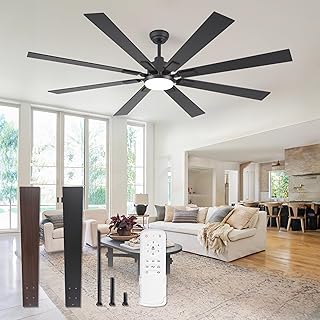
ZMISHIBO 72″ Ceiling Fan with Light
This is the most versatile pick on the list, pairing a genuinely quiet DC motor with a dual-finish blade set that reads as intentional design rather than hardware-store default. The 24W 3CCT LED is bright enough to serve as a primary fixture in a living room, and the damp rating means it moves outdoors to a covered patio without hesitation.
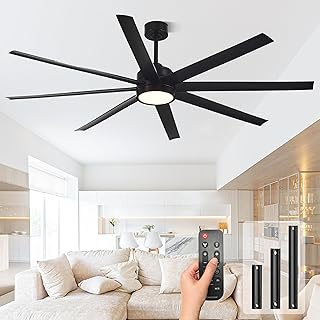
ZMISHIBO 84″ Industrial 8-Blade Fan
Eight reversible aluminum blades across a 7-foot span put this in a different category, and it is the one we specify for double-height great rooms, workshops, and large gazebos where lesser fans simply give up. Six speed steps let you dial it down to a whisper, which matters because at full output this thing genuinely moves air.
84″ Extra Large Fan, No Light, Deep Walnut
For rooms where the lighting plan is already resolved, the three-blade propeller silhouette in deep walnut is the more architectural choice, closer to an aircraft prop than a fixture. High CFM, DC motor, outdoor-ready, and it looks considered over a long dining table or a covered deck.
62″ Large Fan in Brushed Nickel
The most restrained option here, and the right call for bedrooms and mid-sized living rooms where an 84-inch sweep would overwhelm the ceiling. Dual-color blades and a memory function that recalls your last setting make it an easy daily driver.
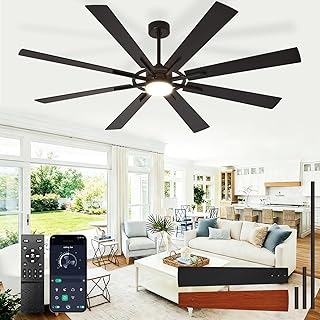
Modern 72″ 8-Blade Fan with App Control
App and remote control put this ahead if you want scheduling or you are folding the fan into a broader smart-home setup. The all-black eight-blade profile is the most contemporary look in the group, and the six-speed reversible DC motor covers both summer downdraft and winter mixing.
Frequently Asked Questions
What size ceiling fan do I need for a large living room?
For 400 to 600 square feet, plan on 62 to 72 inches. Above 600 square feet, or in any room with vaulted ceilings, step up to 72 to 84 inches. Two smaller fans can work in long, narrow rooms where one central fan leaves the ends untouched.
Are DC motor fans actually worth it?
Yes, particularly at large diameters. They use roughly 60 to 70 percent less energy than comparable AC motors, run quieter under load, and give you finer speed control. Over a fan’s decade-plus lifespan, the efficiency difference is real.
Will a large fan work with a low ceiling?
You need at least seven feet of clearance from floor to blade. Under nine-foot ceilings, use the shortest downrod or flush-mount option available, and be honest about whether an 84-inch span suits the room’s proportions.
Should the fan run in winter?
Reverse it to pull air upward at low speed. This displaces the warm air trapped at the ceiling without creating a draft, and in tall rooms it can meaningfully reduce heating demand.
Final Thoughts
For most large open-plan spaces, the ZMISHIBO 72″ is the balanced choice, delivering serious airflow, usable light, and a finish that works indoors or under cover. Go with the ZMISHIBO 84″ 8-blade if your ceiling height or square footage demands industrial-grade output, and choose the 84″ no-light Deep Walnut model when the room already has its lighting sorted and you want the fan to read as sculpture.