Key takeaways
- Height versus reach: Anything past 50 inches puts the top drawer above comfortable sightline for shorter users. A 43-to-48-inch chest is the sweet spot for daily clothing; reserve 55-inch towers for folded storage you access less often.
- Footprint math: Measure depth before width. A 15-to-16-inch cabinet clears most doorways and bed frames, while an 18-inch body eats circulation space in rooms under 12 feet across.
- Drawer mechanics: Metal ball-bearing slides are worth the premium on a tall unit — they keep heavy drawers tracking straight instead of dragging on wooden runners that swell with humidity.
- Anti-tip hardware, no exceptions: Every vertical chest should be wall-anchored, especially in homes with kids or pets. Confirm the kit is included and that the back panel has a solid rail to screw into.
- Surface language: Fluted and reeded fronts read as texture rather than pattern, so they layer well with busy bedding. Flat slab fronts in oak or walnut stay quieter and pair better with gallery walls.
What's inside
Floor space is the scarcest material in a modern bedroom. Once the bed, nightstands, and a walking path are accounted for, a wide six-drawer chest rarely fits — and the ones that do tend to swallow the wall. That’s why the tall dresser has quietly become the default storage piece in apartments, guest rooms, and narrow primary suites: it stacks capacity vertically, leaves the floor visually open, and gives a room a strong anchor at eye level. The trouble is that “tall” also amplifies every weakness in a cheap build. Thin laminate boxes rack under load, drawer bottoms bow, and a top-heavy frame becomes a genuine safety issue when a drawer is fully extended.
This guide looks at tall dressers through a design-first lens, then pressure-tests the practical details: cabinet depth versus stability, drawer glide quality, handle finish, and how each silhouette behaves in a real room. Below are the models worth considering in 2026, followed by a buying framework and answers to the questions that come up most often.
As an Amazon Associate we earn from qualifying purchases.


How to Choose a Tall Dresser (2026)
- Height versus reach: Anything past 50 inches puts the top drawer above comfortable sightline for shorter users. A 43-to-48-inch chest is the sweet spot for daily clothing; reserve 55-inch towers for folded storage you access less often.
- Footprint math: Measure depth before width. A 15-to-16-inch cabinet clears most doorways and bed frames, while an 18-inch body eats circulation space in rooms under 12 feet across.
- Drawer mechanics: Metal ball-bearing slides are worth the premium on a tall unit — they keep heavy drawers tracking straight instead of dragging on wooden runners that swell with humidity.
- Anti-tip hardware, no exceptions: Every vertical chest should be wall-anchored, especially in homes with kids or pets. Confirm the kit is included and that the back panel has a solid rail to screw into.
- Surface language: Fluted and reeded fronts read as texture rather than pattern, so they layer well with busy bedding. Flat slab fronts in oak or walnut stay quieter and pair better with gallery walls.
The Best Tall Dressers of 2026, Reviewed
Aitjunz Modern 7-Drawer Dresser
At 55 inches with seven drawers, this is the capacity champion here, and the curved side profile keeps that height from feeling like a filing cabinet. The natural oak finish and soft radius edges make it a good fit for warm minimalist rooms — just commit to the wall anchor, since the narrow footprint and tall stack demand it.
Furniway Walnut Tall Dresser
The most polished piece in this group: deep walnut tones, slim golden pulls, and smooth slides across all five drawers at a well-judged 47.2 inches tall. Its 15.7-inch depth is genuinely apartment-friendly, and the hardware gives it enough presence to work in a living room or entry rather than being hidden in a closet.
Decofy Fluted 5-Drawer Dresser
Fluted fronts are the defining bedroom detail of the moment, and Decofy executes them cleanly with rounded corners and restrained metal handles that keep the texture from tipping into pastiche. At 48 inches it reads tall without dominating, and the walnut finish photographs beautifully against pale walls.
Garvee 5-Drawer Tall Dresser
A sensible mid-height option at 43.3 inches, which means the top surface actually functions as a usable landing zone for a lamp, tray, or plant. The natural oak is light and neutral enough to disappear into a hallway or entryway when a bedroom isn’t the destination.
Sweetcrispy 8-Drawer Black Dresser
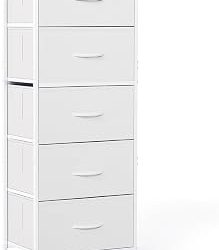
This one plays a different game: a steel frame with fabric drawers and a wood top, which makes it dramatically lighter and easier to relocate than a solid cabinet. It’s the pragmatic choice for closets, rentals, and dorms where eight compartments matter more than a furniture-grade shell.
Frequently Asked Questions
What counts as a tall dresser?
Generally anything above 40 inches. Standard chests sit in the 30-to-38-inch range, so tall models trade width for stacked drawers — usually five to eight — while keeping the footprint under three feet wide.
Do I really need to anchor it to the wall?
Yes. A narrow, drawer-heavy cabinet shifts its center of gravity forward the moment a loaded drawer is opened. Anchoring takes ten minutes and eliminates the single biggest risk of this furniture category.
Can a tall dresser work as a TV stand?
Only with lower units. A 46-inch fluted six-drawer chest can hold a screen if your seating is elevated, but at 55 inches the viewing angle becomes uncomfortable. Match the top surface to roughly eye level when seated.
How much assembly should I expect?
Most flat-pack tall dressers take 60 to 120 minutes for one person. Building the carcass on carpet or a blanket helps keep panels square, which is what determines whether the drawers glide freely afterward.
Final Thoughts
For maximum storage in the smallest footprint, the Aitjunz 7-drawer chest is the clear pick. If you want the piece to carry the room’s design weight, the Furniway walnut dresser delivers the most refined finish and hardware, while the Decofy fluted chest offers the best balance of texture, proportion, and everyday usability.