Key takeaways
- Power off the fan and wait for the blades to stop completely. If you’ve recently used the heater, give the blades a few minutes to cool — warm surfaces release dust differently than cold ones.
- Lay a drop cloth or old sheet directly under the fan. Even with an enclosed duster head, some debris will escape. A towel on the floor saves you a second round of cleanup.
- Slide the microfiber sleeve over the blade frame and extend your pole to the correct length. Grip the handle at chest height for the steadiest control.
- Work one blade at a time from the motor housing outward. One slow, firm pass in each direction is enough — pressing too hard bends the blade and stresses the motor mount.
- Flip or remove the sleeve when it becomes visibly loaded with dust. Shaking it outside before reusing extends its effective life between washes.
What's inside
A ceiling fan running through a still summer evening is one of the quiet luxuries of home design — until you glance up and notice a gray film caked along every blade. Dust accumulation doesn’t just look neglected; it throws off a room’s airflow balance, forces the motor to work harder, and sends fine particles drifting right back into the space you’re trying to keep comfortable. Staying on top of fan maintenance protects the appliance and keeps your ceiling line looking as intentional as the rest of your décor.
In this guide you’ll learn exactly which approach works best for fan blades at any height, which materials protect the finish, and what a solid cleaning routine looks like from start to finish. We’ve also included our recommended gear so you can grab everything you need in one go.
As an Amazon Associate we earn from qualifying purchases.


Why Ceiling Fans Collect So Much Grime
A spinning blade pulls air downward in a cone pattern. As it does, airborne dust, pet dander, and cooking residue settle on the upward-facing surface — the side you never see. The static charge of most blade finishes (painted wood, plastic, or brushed nickel) acts like a magnet for those particles. Over weeks, what starts as a barely visible film builds into a thick, uneven coat. In homes with central HVAC or open-plan kitchens, the accumulation accelerates noticeably.
The Right Method: Enclosed Microfiber on an Extension Pole
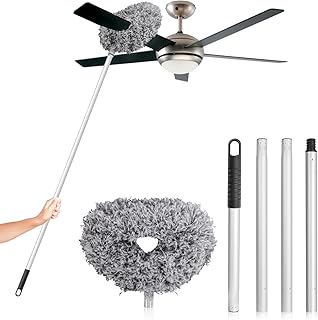
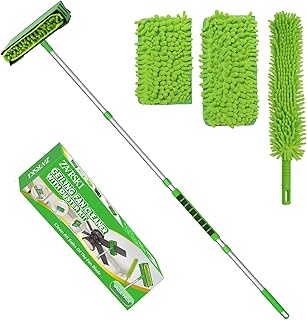
Reaching up with a loose rag on a stepladder sounds simple, but it is inefficient and risky. Microfiber dusters designed with a U-shaped or sleeve-style head wrap around the blade and trap dust inside the fiber rather than launching it into the air below. Pair that head with an adjustable extension pole — most quality options reach from roughly 13 inches up to 48–50 inches — and you can clean every blade while standing firmly on the floor. Products like the DRQ Ceiling Fan Cleaner Duster and the SetSail Ceiling Fan Cleaner Duster both follow this exact design principle: a removable microfiber sleeve slides onto a bendable frame, and a telescoping pole extends to whatever ceiling height you’re working with.
Choosing the Right Tool for Your Ceiling Height
Measure from your eye level to the fan before buying. Standard 8-foot ceilings need a pole of roughly 3–4 feet; vaulted or cathedral ceilings may require a model that stretches to six feet or beyond. The Ceiling Fan Cleaner Duster with the 6-foot extension pole was built specifically for high-ceiling spaces, giving you nearly seven feet of total reach without a ladder. If your ceilings are standard height but you also want to dust shelves and door frames, a mid-range option like the FONUNO Ceiling Fan Cleaner Duster (adjustable from 13 to 50 inches) covers both tasks comfortably.
Microfiber vs. Disposable: What Actually Works
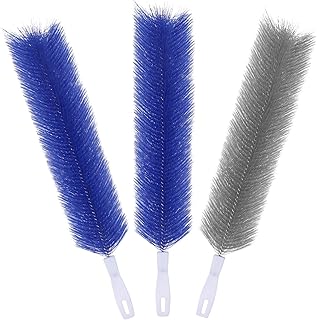
Disposable electrostatic sheets trap light dust but shred against sharp edges and offer no grip on heavier grime. Microfiber, by contrast, holds particles through both mechanical entanglement and static attraction — and it does it repeatedly. A good microfiber duster head can be washed hundreds of times. The 3 Pcs Fan Cleaning Brush set uses bendable microfiber heads that conform to curved blades, making them especially useful on fans with rounded profiles rather than flat, paddle-style blades. For most households, a reusable microfiber tool pays for itself within a single season.
Step-by-Step: Cleaning Your Fan the Right Way
- Power off the fan and wait for the blades to stop completely. If you’ve recently used the heater, give the blades a few minutes to cool — warm surfaces release dust differently than cold ones.
- Lay a drop cloth or old sheet directly under the fan. Even with an enclosed duster head, some debris will escape. A towel on the floor saves you a second round of cleanup.
- Slide the microfiber sleeve over the blade frame and extend your pole to the correct length. Grip the handle at chest height for the steadiest control.
- Work one blade at a time from the motor housing outward. One slow, firm pass in each direction is enough — pressing too hard bends the blade and stresses the motor mount.
- Flip or remove the sleeve when it becomes visibly loaded with dust. Shaking it outside before reusing extends its effective life between washes.
Tips
- Rotate the fan to its lowest speed, then power it off — this lets you clean blades that are naturally spaced at comfortable angles without manually repositioning the motor.
- Wash removable microfiber heads in warm water with a mild detergent; skip fabric softener, which clogs the fibers and reduces dust-trapping performance.
- Spray a tiny amount of furniture polish onto the duster (not the blade) for a light protective finish that repels future dust buildup.
- Set a recurring reminder every two to four weeks during peak seasons — maintenance cleans take under five minutes once you own the right tool.
Frequently Asked Questions
Can I clean fan blades with a regular feather duster?
A feather duster redistributes dust rather than capturing it. The feathers lack the mechanical grip of microfiber and will scatter particles across the room. An enclosed microfiber head is a meaningful upgrade in both cleanliness and air quality.
Do I need to remove the blades from the fan to clean them?
For routine dust removal, no. An extension-pole duster keeps you on the ground and handles surface grime effectively. You should remove blades only for deep cleaning — washing with soap and water — or if you notice warping or damage at the mounting bracket.
How often should I clean my ceiling fans?
In most climates, every three to four weeks is ideal during months of regular use. Homes with pets, smokers, or open kitchens may benefit from a weekly pass. The visual test is simple: if you can see a dust line along the blade edge, it’s time.
Will these dusters scratch a glossy or lacquered blade finish?
High-quality microfiber is non-abrasive by design. Avoid using any tool with hard plastic teeth or metal frames directly against a finished surface. Always inspect your duster head for embedded grit before each use, and replace it if the fibers are matted or worn flat.
Conclusion
A clean ceiling fan is a small detail that quietly elevates an entire room — better airflow, sharper aesthetics, and cleaner indoor air with almost no ongoing effort. With an enclosed microfiber duster on an extension pole, the job takes minutes, keeps your feet on the floor, and delivers results that a rag and ladder simply cannot match.