Key takeaways
- Measure the open footprint, not the closed one: A 59-inch loveseat that opens to 71 inches needs clear floor in front of it. Chalk or tape the flat dimensions on your floor before ordering — walkways and door swings are where these purchases go wrong.
- Backrest positions matter more than plushness: Multi-angle mechanisms let one piece function as upright seating, a lounge chair, and a bed. Two-position hinges force you to choose between sitting and sleeping comfort.
- Look for removable or slim armrests: Detachable arms can reclaim eight to twelve inches of width, which is often the difference between fitting a wall and blocking a doorway.
- Check the fill, not just the fabric: Memory foam layers hold up to nightly conversion far better than loose polyester batting, which compresses into ruts within months of regular use.
- Think about visual weight: Low, boneless designs read as floor cushions and keep sightlines open, while raised legs make a room feel taller. Both work — pick the one that matches your ceiling height and clutter tolerance.
What's inside
Square footage has a way of exposing every furniture decision you make. In a studio or a 600-square-foot one-bedroom, a sofa isn’t just a sofa — it’s also the guest room, the reading nook, and sometimes the desk chair. The trouble is that most convertible seating still gets designed for the showroom floor rather than the apartment: bulky arms that eat six inches on each side, backrests that only lock in two positions, and mattresses thin enough that anyone sleeping on them will mention it in the morning.
This guide narrows the field to futons that genuinely earn their footprint. I’ve weighted three things heavily: the ratio of seated width to sleeping length, how the piece reads visually in a tight room (leg height, seat depth, silhouette), and whether the fold mechanism holds up to daily use rather than occasional overnight guests. Below you’ll find picks spanning low-profile floor styles to compact loveseat sleepers, plus the specs worth checking before you commit.
As an Amazon Associate we earn from qualifying purchases.




How to Choose a Futon For Small Spaces (2026)
- Measure the open footprint, not the closed one: A 59-inch loveseat that opens to 71 inches needs clear floor in front of it. Chalk or tape the flat dimensions on your floor before ordering — walkways and door swings are where these purchases go wrong.
- Backrest positions matter more than plushness: Multi-angle mechanisms let one piece function as upright seating, a lounge chair, and a bed. Two-position hinges force you to choose between sitting and sleeping comfort.
- Look for removable or slim armrests: Detachable arms can reclaim eight to twelve inches of width, which is often the difference between fitting a wall and blocking a doorway.
- Check the fill, not just the fabric: Memory foam layers hold up to nightly conversion far better than loose polyester batting, which compresses into ruts within months of regular use.
- Think about visual weight: Low, boneless designs read as floor cushions and keep sightlines open, while raised legs make a room feel taller. Both work — pick the one that matches your ceiling height and clutter tolerance.
The Best Futon For Small Spaces (2026)s Reviewed
COMHOMA 72″ Convertible Futon Sofa Bed
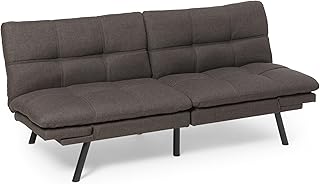
The most conventional-looking pick here, and the strongest all-rounder: a 72-inch frame with genuine multi-angle recline and breathable upholstery that won’t trap heat during summer overnights. Best suited to rooms where you have a full wall to dedicate and want something that still reads as a proper sofa.
Grey Linen Futon Sofa Bed with Memory Foam
Adjustable backrest and armrests give this one unusual flexibility for its size, and the memory foam layer is what separates it from thinner competitors in the same class. The neutral linen weave is forgiving in rooms where you’re already balancing several textures.
MeMoreCool 59″ Boneless Couch Bed
A 59-inch loveseat that unfolds to 59 by 71 inches — just shy of a queen — with a corduroy cover that adds warmth without visual bulk. The boneless build means no frame to work around, so it slots into awkward corners and alcoves that rigid futons can’t reach.
Amazon Basics Convertible Futon Sofa Bed
Straightforward memory foam construction with adjustable positions and dark grey linen that hides wear well — a sensible choice for home offices and guest rooms where the piece needs to disappear into the background. Assembly is refreshingly quick.
Flamaker Faux Leather Convertible Loveseat
The removable armrests and integrated cup holders make this the most practical option for a media corner, and the faux leather wipes clean in seconds. Choose it if your futon doubles as movie-night seating more often than it does a bed.
Frequently Asked Questions
Can a small-space futon work as a full-time bed?
Some can. Prioritize memory foam fill and a sleeping length of at least 70 inches. Loose-batting models are better reserved for occasional guests.
What’s a boneless futon?
It’s a frameless design built entirely from foam and fabric, like the MeMoreCool or the low-profile COMAX. They’re lighter, easier to move up stairs, and sit closer to the floor — which makes ceilings feel higher.
How much clearance do I need in front of the sofa?
Budget roughly 30 to 40 inches of open floor beyond the closed depth, depending on the model’s fold direction. Flat-fold styles need less than pull-out mechanisms.
Do these fit through narrow doorways?
Most ship in flat boxes with sectional assembly, so the doorway question applies to the packaging, not the finished piece. Frameless models are the safest bet for tight stairwells.
Final Thoughts
For most small-space buyers, the COMHOMA 72″ delivers the best balance of sofa presence and sleeping comfort. If your floor plan is tighter or more irregular, the MeMoreCool 59″ boneless model adapts where frames can’t, and the Flamaker loveseat is the one to pick if lounging outranks overnight guests in your weekly routine.