Key takeaways
- Heat output vs. usable radius: BTU ratings up to 70,000 sound dramatic, but radiant heat from a vertical tube drops off quickly. Plan on a comfortable three-to-six-foot ring and arrange seating inward rather than expecting whole-yard coverage.
- Column construction: Borosilicate glass gives you the clean, uninterrupted flame vortex that makes these heaters worth looking at. Mesh and perforated steel are more forgiving of knocks but read as utilitarian. If you want the sculptural effect, pay for the glass.
- Hopper capacity and burn time: Ask how long one fill lasts, not how many pounds it holds. Two to four hours per load is typical; anything shorter means you’ll be refilling mid-conversation.
- Mobility and footprint: Lockable caster wheels and a carry handle turn a 50-pound column into something you can reposition alone. Also check the base diameter against your walkways before it becomes permanent furniture.
- Ash and weather management: A removable ash tray saves you from tipping the whole unit, and a stainless rain cap lets you leave it out between gatherings without water pooling in the burn chamber.
What's inside
Propane mushroom heaters have had a long run, and most of us are ready to move on. They eat tank space, wash the patio in flat orange light, and rarely look like they belong next to a well-considered sectional or a low concrete table. Wood pellet patio heaters have stepped into that gap: a slim vertical column, a live flame you can actually watch, and no valve-and-regulator ritual before guests arrive. The catch is that the category matured faster than its marketing. Listings quote BTU numbers without burn duration, describe glass tubes without naming the glass, and use “smokeless” as though it were a fixed property rather than a function of pellet quality and airflow.
This guide sorts the field by the things that actually change your evening: how long a single hopper load burns, how the flame column is built, whether the unit rolls where you need it, and how much cleanup waits for you the next morning. Below are the pellet patio heaters worth shortlisting for 2026, followed by a buying framework and answers to the questions that come up once the box is open.
As an Amazon Associate we earn from qualifying purchases.




How to Choose a Pellet Patio Heater (2026)
- Heat output vs. usable radius: BTU ratings up to 70,000 sound dramatic, but radiant heat from a vertical tube drops off quickly. Plan on a comfortable three-to-six-foot ring and arrange seating inward rather than expecting whole-yard coverage.
- Column construction: Borosilicate glass gives you the clean, uninterrupted flame vortex that makes these heaters worth looking at. Mesh and perforated steel are more forgiving of knocks but read as utilitarian. If you want the sculptural effect, pay for the glass.
- Hopper capacity and burn time: Ask how long one fill lasts, not how many pounds it holds. Two to four hours per load is typical; anything shorter means you’ll be refilling mid-conversation.
- Mobility and footprint: Lockable caster wheels and a carry handle turn a 50-pound column into something you can reposition alone. Also check the base diameter against your walkways before it becomes permanent furniture.
- Ash and weather management: A removable ash tray saves you from tipping the whole unit, and a stainless rain cap lets you leave it out between gatherings without water pooling in the burn chamber.
The Best Pellet Patio Heaters (2026) Reviewed
70″ Pellet Patio Heater with Glass Tube Flame
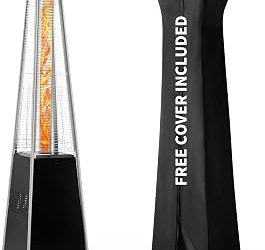
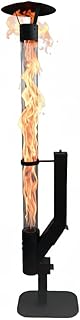
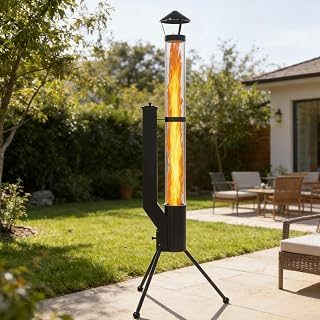
At 70 inches, this is the tallest of the group, and the extra height lifts the flame closer to standing eye level, which reads far more like an architectural feature than a fire pit. The rocket-stove draft keeps the column bright and steady, making it the strongest choice for patios where the heater doubles as the focal point.
70,000 BTU Pellet Patio Heater with Viewing Window
The highest-output model here, with a viewing window instead of a full glass tube and wheels sturdy enough for regular repositioning. The black finish and commercial-grade build suit restaurant terraces and larger, more exposed yards where raw heat matters more than a delicate silhouette.
BPS 56″ Smokeless Patio Pellet Heater
A well-balanced mid-size unit that pairs a long, slow burn with a rain cap and viewing window, so it handles unpredictable shoulder-season weather without fuss. The 56-inch height suits smaller courtyards and covered porches where a seven-foot column would feel overbearing.
64.5″ Pellet Torch Heater with Ash Tray
The torch-style proportions and full glass tube deliver a tall, narrow flame with almost no visual bulk, which works beautifully flanking a doorway or bracketing a seating area in pairs. The pull-out ash tray makes routine cleaning a two-minute job.
64″ Pellet Heater with Stainless Rain Cap
This one is built for people who actually use their patio year-round: lockable casters, a carry handle, an adjustable air inlet for dialing in flame height, and a stainless rain cap for off-season storage outdoors. It is the most practical package in the lineup without sacrificing the glass-column look.
Frequently Asked Questions
How much area will a pellet patio heater actually warm?
Expect meaningful radiant warmth within roughly three to six feet, depending on output and wind. These heaters warm people, not air, so a tight seating arrangement matters more than a high BTU figure.
Are they genuinely smokeless?
Close, once running. Hardwood pellets at low moisture content and a properly set air inlet produce a clean burn after the first few minutes of startup. Damp or filler-heavy pellets are the usual culprit behind smoke complaints.
How many pellets does one evening use?
Most units burn roughly two to four pounds per hour, so a standard 40-pound bag covers several gatherings. That generally undercuts propane on a per-hour basis.
Can I use one on a wood deck or under a covered patio?
Use a heat-resistant pad on wood or composite decking, and confirm generous overhead clearance before placing one under any roof or pergola. Check your manufacturer’s stated clearances rather than estimating.
Final Thoughts
For most patios, the 70″ glass-tube pellet heater delivers the best mix of presence and clean flame, while the 64″ model with the stainless rain cap and lockable casters is the smarter pick if you want something you can roll out weekly and leave outside. If you are heating a larger or more exposed space, or a commercial terrace, the 70,000 BTU unit is the one with the output to match.