Key takeaways
- Drawer depth over drawer count: Shallow drawers in the 2–3 inch range keep tubes and pencils in a single visible layer. Deep drawers turn into archaeology. If you paint, prioritize many thin drawers; if you sculpt or build, you need fewer, taller compartments.
- Surface chemistry: Powder-coated steel and sealed wood tops wipe clean after gesso, ink, and mineral spirits. Raw MDF and unfinished laminate swell and stain permanently, so check the interior finish, not just the exterior.
- Shelf adjustability and load rating: Paper, clay, and resin are dense. Look for adjustable shelving so you can build a tall bay for rolls and a short one for jars, and confirm per-shelf weight limits before loading ream boxes.
- Mobility versus mass: Casters let a cart follow you between table, easel, and sink, which genuinely changes how often you work. Locking wheels are non-negotiable. Fixed cabinets win when you need a stable work surface or wall-anchored height.
- Locks and light control: Solid doors slow the fading of dyes and inks and keep solvents, blades, and fixatives out of reach. A keyed lock is the simplest safety feature in a shared studio or a family home.
What's inside
Art supplies expand to fill whatever space you give them. A modest watercolor habit becomes forty tubes of acrylic, three sizes of canvas, a jar of brushes that no longer fits the jar, and a drawer of half-used oil pastels that everyone in the house has learned to avoid. The furniture problem here is specific: most storage is built for books, linens, or paperwork, not for the odd geometry of art materials, which are simultaneously tall, flat, heavy, leaky, and light-sensitive.
This guide looks at storage cabinets from a working-studio perspective rather than a showroom one. We cover shallow-drawer carts that keep pigment visible, steel cabinets that shrug off solvent spills, tall pantry-style units for bulk paper and stretched canvas, and lockable options for households where curious hands are part of the equation. Below are the picks worth your budget in 2026, followed by the criteria that actually separate them.
As an Amazon Associate we earn from qualifying purchases.


How to Choose a Storage Cabinet For Art Supplies (2026)
- Drawer depth over drawer count: Shallow drawers in the 2–3 inch range keep tubes and pencils in a single visible layer. Deep drawers turn into archaeology. If you paint, prioritize many thin drawers; if you sculpt or build, you need fewer, taller compartments.
- Surface chemistry: Powder-coated steel and sealed wood tops wipe clean after gesso, ink, and mineral spirits. Raw MDF and unfinished laminate swell and stain permanently, so check the interior finish, not just the exterior.
- Shelf adjustability and load rating: Paper, clay, and resin are dense. Look for adjustable shelving so you can build a tall bay for rolls and a short one for jars, and confirm per-shelf weight limits before loading ream boxes.
- Mobility versus mass: Casters let a cart follow you between table, easel, and sink, which genuinely changes how often you work. Locking wheels are non-negotiable. Fixed cabinets win when you need a stable work surface or wall-anchored height.
- Locks and light control: Solid doors slow the fading of dyes and inks and keep solvents, blades, and fixatives out of reach. A keyed lock is the simplest safety feature in a shared studio or a family home.
The Best Storage Cabinet For Art Supplies (2026)s Reviewed
10-Drawer Rolling Storage Cart with Wood Top (Green)
This is the closest thing to a purpose-built art cart on the list: ten shallow drawers keep an entire palette visible at a glance, and the sealed wood top functions as a mixing station or a landing pad for a laptop. Lockable casters and classroom-grade construction make it the pick for anyone who moves between easel and table.
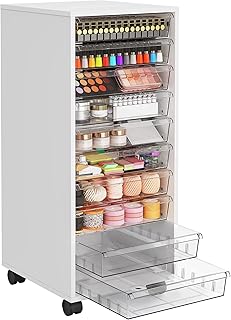
10-Drawer Rolling Storage Cabinet with Clear Drawers (White)
The transparent drawer fronts solve the labeling problem before it starts, which matters when you own six similar-looking bottles of medium. It rolls quietly, sits neatly beside a desk or vanity, and suits mixed-use spaces where craft supplies share shelf life with cosmetics and office odds and ends.
GAIOUS 75.2″ Tall Metal Storage Cabinet
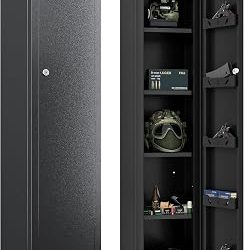
At just over six feet with five adjustable shelves, this is the vertical answer for stretched canvas, poster board, and bulk paper that has nowhere else to go. Steel construction and closed doors keep dust and daylight off finished work, and the six-tier layout lets you dedicate a full bay to tall items.
4-Door Metal Garage Storage Cabinet with Drawer
Built for tools, which makes it excellent for the messier disciplines: resin, plaster, spray finishes, and anything you would rather store behind a lock. The drawer handles small hardware, the two adjustable shelves take real weight, and the black powder coat hides the inevitable scuffs.
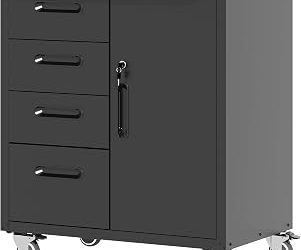
Metal Storage Cabinet with 2 Doors and Adjustable Shelf (White)
A sideboard-height steel cabinet that reads as furniture rather than equipment, so it works in a living room or hallway studio corner. The flat top gives you a staging surface at standing-friendly height, and the single adjustable shelf is enough for sketchbooks, portfolios, and boxed sets.
Frequently Asked Questions
Is metal or wood better for art supply storage?
Metal for anything involving solvents, heat, or heavy loads, since powder-coated steel cleans up and resists warping. Wood or wood-topped units feel warmer in living spaces and give you a better work surface.
Do I need a lockable cabinet?
If you store blades, fixatives, solvents, or resins and share the space with children or pets, yes. A lock also discourages the slow disappearance of good brushes in shared studios.
How do I keep paints from drying out in storage?
Store tubes horizontally in shallow drawers, caps clean and tight, away from direct sun and heating vents. Closed cabinets are better than open shelving for temperature and light stability.
What size cabinet should I buy?
Measure your tallest recurring item first, usually canvas or paper, and buy for that. Vertical height is cheaper than floor space, so a tall unit almost always beats two short ones.
Final Thoughts
For most artists, the 10-Drawer Rolling Cart with Wood Top is the best first purchase because it makes supplies visible and portable in one move. Pair it with the GAIOUS 75.2″ Tall Metal Cabinet for canvas and bulk paper, or choose the 4-Door Garage Cabinet if your practice involves solvents, power tools, and materials that belong behind a lock.