Key takeaways
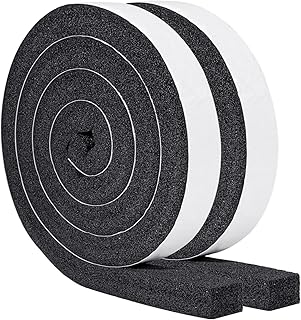
- Compression gaps (sash-to-cabinet, frame-to-chassis): closed-cell foam tape. The High Density Foam Tape Air Conditioner Window Seal in 1×1 inch handles the deep sash channel, while a Yotache Air Conditioner Window Seal Kit at the same profile gives you 13 feet across two strips, enough for a full perimeter with spare.
- Flat seams and butt joints: a wide sealing tape. SWRT 20 Mil Window Weather Sealing Tape at 3 inches spans the gap between accordion panel and frame in one pass and lifts without residue at the end of the season.
- The side panels themselves: rigid insulated covers. Window Air Conditioner Side Panels in a 17 x 9 x 1 inch pair replace the thin plastic accordions with an insulated barrier that also blocks light and sound.
- Portable units venting through a window: a fabric window kit such as the HOOMEE Universal Window Seal, which zips around the hose and seals the full opening.
What's inside
A window air conditioner does its best work when the only air moving through the opening is the air it deliberately pushes. Everything else — the finger-width gap beside the accordion panels, the seam where the lower sash meets the top of the chassis, the soft chalky perimeter where the frame no longer sits flush — is a slow leak of the comfort you just paid for. In a well-composed room, it also reads as unfinished: daylight where there should be a clean line, street noise where there should be quiet, and in August, the faint smell of outside.
Sealing a window unit properly is a thirty-minute job with a predictable result. This guide walks through where leaks actually form, which materials belong at each junction, how to insulate the side panels that manufacturers ship deliberately thin, and how to handle seasonal removal without leaving adhesive scars on the sash. You will also find our recommended picks below, chosen for durability and clean removal rather than volume.
As an Amazon Associate we earn from qualifying purchases.




Start by finding the real gaps, not the obvious ones
Run the unit for ten minutes on high cool, then trace the perimeter with the back of your hand. Warm spots tell you more than visual inspection, because the largest leaks are usually hidden: the void behind the accordion side curtains, the channel where the raised lower sash rests on the top of the cabinet, and the two small triangles at the outer corners of the window frame. On older double-hung windows, check the gap between the upper and lower sash rails at the meeting point, which opens up as soon as the lower sash is lifted. Mark each spot with painter’s tape so you are sealing intentionally rather than wrapping the whole unit in foam.
Match the material to the joint
Different gaps want different products, and using one material everywhere is why most seals fail by mid-summer.
- Compression gaps (sash-to-cabinet, frame-to-chassis): closed-cell foam tape. The High Density Foam Tape Air Conditioner Window Seal in 1×1 inch handles the deep sash channel, while a Yotache Air Conditioner Window Seal Kit at the same profile gives you 13 feet across two strips, enough for a full perimeter with spare.
- Flat seams and butt joints: a wide sealing tape. SWRT 20 Mil Window Weather Sealing Tape at 3 inches spans the gap between accordion panel and frame in one pass and lifts without residue at the end of the season.
- The side panels themselves: rigid insulated covers. Window Air Conditioner Side Panels in a 17 x 9 x 1 inch pair replace the thin plastic accordions with an insulated barrier that also blocks light and sound.
- Portable units venting through a window: a fabric window kit such as the HOOMEE Universal Window Seal, which zips around the hose and seals the full opening.
Confirm the unit is level and properly supported first
Sealing a poorly mounted unit locks in the problem. The chassis should tilt slightly toward the exterior — roughly a quarter inch of drop across the depth — so condensate drains outward rather than pooling inside the pan. Check with a short level on the top of the cabinet. If the unit sags or the sash flexes when you press on it, add a support bracket or shim before applying any tape, because a frame that shifts will break every seal you make. Well-matched units simplify this: a BLACK+DECKER 12,000 BTU Window Air Conditioner (BWAC12WTB) sized to roughly 550 square feet sits squarely in a standard double-hung opening, which means the panels extend less and there is less span to insulate.
Work from inside out, and seal the top rail last
Apply foam to the side channels first, then the accordion-to-frame seams, then the sash meeting rail. Clean each surface with isopropyl alcohol and let it dry fully; adhesive foam fails on dust and window-cleaner film more often than on cold weather. Compress the foam to about two-thirds of its thickness — enough to fill, not so much that it takes a permanent set. Finish with a strip of wide sealing tape across the top rail where the lower sash meets the upper, which is both the largest security gap and the most common draft source. A short L-bracket screwed into the upper sash track prevents the window from being lifted from outside.
Plan for removal before you commit
Choose products rated for residue-free removal on any surface you care about: painted wood, vinyl cladding, and finished trim all mark easily. Keep adhesive off the glass and off visible interior casing where possible, working instead against the sash edges and the unit’s own frame. If you leave the unit installed through winter, seal a full insulated cover over the exterior face rather than relying on the summer seal to hold; the accordion panels are the weakest thermal point in a cold-weather assembly.
Tips
- Buy roughly 1.5 times the foam you measure — corners consume more than you expect, and mid-season patching with a different product rarely matches.
- Apply tape at room temperature above 50°F. Cold adhesive never fully bonds and will peel within days.
- Slide a thin strip of rigid foam board behind each accordion panel before sealing the edges; it costs little and outperforms foam tape alone.
- Photograph the finished seal before removing the unit in autumn. Reinstallation next year takes half the time when you can see where every strip went.
Frequently Asked Questions
Can I use spray foam around a window air conditioner?
Avoid it. Expanding foam bonds permanently, can distort a vinyl sash as it cures, and makes seasonal removal destructive. Compressible foam tape and rigid panels achieve the same air seal reversibly.
How do I stop insects from getting in around the unit?
Insects almost always enter through the accordion panel folds and the corner triangles, not the main perimeter. Fill the folds with foam tape and cover the outer corners with wide sealing tape; fine mesh behind the panels adds a second layer for gnats and ants.
Does sealing an air conditioner improve efficiency measurably?
Yes. Unsealed gaps let conditioned air escape while the unit pulls warm outdoor air across its own coil, forcing longer run times. You will typically notice shorter cycles and a quieter room before you notice the utility difference.
Should I remove the unit in winter or seal it in place?
Removing it is thermally better and extends the unit’s life. If storage space or weight makes that impractical, seal the exterior face with an insulated cover and add foam behind the side panels rather than leaving the summer seal to carry the load.
Conclusion
A well-sealed window unit is mostly a matter of sequence: level the chassis, identify the real gaps by feel, then match closed-cell foam to compression joints, wide tape to flat seams, and rigid insulated panels to the accordion sides. Spend the extra ten minutes on surface prep and removal planning, and you get a quiet, tight, visually clean installation that holds through the season and comes apart cleanly when the weather turns.