Key takeaways
- Buy an independent hygrometer and place it away from the humidifier. Onboard sensors read their own output and skew high.
- Use distilled or demineralized water in ultrasonic portables to prevent the fine white mineral dust that settles on furniture surfaces.
- Keep mist output at least three feet from wood casegoods, leather, and artwork, and never aim a plume directly at a finished surface.
- Watch your windows. Persistent condensation on the glass means you are running too wet for the current outdoor temperature.
What's inside
Dry winter air is the quiet saboteur of a well-considered home. It lifts the seams on engineered flooring, opens hairline gaps in solid-wood casework, dulls the finish on a walnut dining table, and leaves upholstery feeling brittle to the touch. Long before anyone complains about static shocks or a scratchy throat, the furniture has already registered the loss. Interior moisture, held steady in the right band, is less a comfort feature than a preservation strategy for everything you have chosen to live with.
This guide walks through how whole-house humidification actually works, how to size a unit to your floor plan, and where a large-capacity portable makes more sense than a ducted install. We will also cover the controls worth paying for, the maintenance schedule most owners underestimate, and how humidity fits into a year-round plan that sometimes means removing moisture instead of adding it.
Our Recommended Picks
As an Amazon Associate we earn from qualifying purchases.


Understand the Three Ducted Formats
Whole-house humidifiers that tie into forced-air systems come in three broad types. Bypass models divert warm supply air across a wet evaporative panel and return it to the duct, using no fan of their own. Fan-powered units add a small blower, which lets them run independently of the furnace and deliver more output in a tighter footprint. Steam humidifiers boil water and inject vapor directly, which makes them the only category that performs consistently regardless of furnace runtime. The AprilAire 800 sits in that last group, rated for homes up to roughly 10,300 square feet, and it is the format to consider if you have a large or tightly sealed house, a heat pump that rarely produces hot supply air, or a humidity target that bypass units keep missing.
Size to Your Actual Envelope
Capacity claims assume conditions that rarely match a real house. Older homes with leaky windows and generous air changes need substantially more output than a new build at the same square footage, because the moisture you add keeps escaping. Ceiling height matters too: a great room with fourteen-foot ceilings holds far more air volume than the floor plan suggests. As a rule, take the manufacturer’s coverage figure as a ceiling rather than a promise, and size up one tier if your home predates 1990, has more than two exterior-facing walls per room, or runs a wood stove or vented fireplace.
When a Large-Capacity Portable Is the Smarter Buy
Not every home warrants cutting into ductwork. Renters, condo owners, and anyone heating with radiators, baseboards, or mini-splits have no duct to tap. Modern high-capacity portables have closed much of the gap. The Lacidoll 16L covers roughly 1,500 square feet and includes an extension tube that lifts the mist plume above furniture height, which reduces the damp ring that plagues floor-level units. The AreShark 4.2-gallon offers cool and warm mist with a stated 60-hour runtime and top-fill design, a meaningful convenience when you are otherwise hauling a tank to the sink nightly. For a single large bedroom or a home office, a 15L cool-mist unit rated near 800 square feet with a 350 mL/hour output is usually sufficient without dominating the room.
Controls Are Where Quality Shows
Aim for 30 to 50 percent relative humidity, and lower as outdoor temperatures drop, since warm interior moisture condenses on cold glass and can migrate into wall cavities. A unit without a humidistat forces you to guess. Look for an automatic mode that reads the room and cycles accordingly, an outdoor temperature sensor on ducted systems, and a display that shows current humidity rather than just a target. Digital control is not a luxury here; it is the difference between protecting your millwork and quietly growing mold behind it.
Plan for Maintenance Before You Buy
Every humidifier is a wet appliance, and wet appliances demand a schedule. Ducted evaporative units need an annual water panel change at minimum, sooner in hard-water regions. The AprilAire 4792 maintenance kit bundles the Water Panel Model 10 with the other wear parts for 500-series units, which is a cleaner approach than sourcing filters piecemeal. Portables need descaling every one to two weeks and a full tank wash between refills. Choose a model with a wide-mouth reservoir and few internal crevices, because a unit that is difficult to clean is a unit that goes uncleaned.
Tips
- Buy an independent hygrometer and place it away from the humidifier. Onboard sensors read their own output and skew high.
- Use distilled or demineralized water in ultrasonic portables to prevent the fine white mineral dust that settles on furniture surfaces.
- Keep mist output at least three feet from wood casegoods, leather, and artwork, and never aim a plume directly at a finished surface.
- Watch your windows. Persistent condensation on the glass means you are running too wet for the current outdoor temperature.
Frequently Asked Questions
What humidity level protects wood furniture best?
Steady is more important than exact. Most solid wood and veneered pieces are happiest between 35 and 45 percent, and rapid swings cause more damage than a slightly imperfect setpoint.
Do I need a professional to install a ducted humidifier?
For bypass and fan-powered units, a competent DIYer with sheet-metal tools can manage it. Steam models involve higher electrical loads and a dedicated circuit, so licensed installation is the right call.
Can one portable humidify an entire house?
Rarely. Moisture does not travel well through doorways and hallways. A large portable can serve an open main floor, but closed bedrooms typically need their own unit.
Why would I need a dehumidifier too?
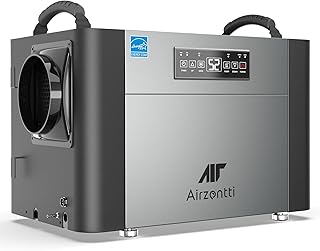
Because humidity is a two-season problem. Summer basements and shoulder-season damp call for removal, not addition. A capable unit like the hOmeLabs 4,500 sq ft model with Wi-Fi humidity control handles the other half of the year.
Conclusion
The best whole-house humidifier is the one matched honestly to your heating system, your building envelope, and your willingness to maintain it. Ducted steam earns its premium in large or tightly built homes, evaporative bypass remains the sensible default for standard forced-air setups, and today’s high-capacity portables cover the rest with far more grace than they used to. Set your target, verify it with a second sensor, keep the unit clean, and the furniture you invested in will look the same in a decade as it does today.