Key takeaways
- Combo or separates: A single 4-in-1 unit saves floor space and one power outlet, but the humidification side limits how aggressively you can run the fan. If your priority is fast particulate clearance in a large open plan, a dedicated purifier plus a standalone humidifier will outperform any hybrid.
- Coverage math, not marketing math: Square-footage claims often assume one air change per hour. For allergies, pets, or smoke, halve the stated figure to get a room size where the unit actually keeps up. AHAM Verifide ratings are the number to trust.
- Mist type matters for your surfaces: Ultrasonic mist can leave fine white mineral dust on dark wood, matte paint, and glass. Evaporative or mist-free designs push humidity through a wick instead, which protects finishes and avoids over-saturating one side of a room.
- Sensors and automation: A PM2.5 readout plus auto mode means the machine idles quietly until it has a reason to work. Auto humidity control does the same on the moisture side, holding a target range instead of running until the tank empties.
- Maintenance you’ll realistically do: Top-fill tanks get refilled; bottom-tank designs that require carrying a sloshing base to the sink get neglected. Check filter cost and replacement interval before you buy, and confirm the water path can be wiped clean.
What's inside
Dry winter air and invisible particulate load are two separate problems, which is why so many homes end up with two appliances competing for the same outlet. One machine strips dust, dander, and cooking smoke out of the air; the other puts moisture back into it. Run them badly and you get a humid corner, a filter that clogs early, and a hum that follows you around the room. Run them well and you stop noticing your air entirely, which is the point.
This guide looks at the current field from a furnishing perspective as much as a technical one: footprint, material finish, noise floor at night, and whether the unit reads as furniture or as equipment. Below you’ll find true 2-in-1 combination units for people who want one object doing both jobs, plus dedicated HEPA purifiers worth pairing with a separate evaporative humidifier when coverage matters more than consolidation.
As an Amazon Associate we earn from qualifying purchases.



How to Choose a Humidifier And Air Purifier (2026)
- Combo or separates: A single 4-in-1 unit saves floor space and one power outlet, but the humidification side limits how aggressively you can run the fan. If your priority is fast particulate clearance in a large open plan, a dedicated purifier plus a standalone humidifier will outperform any hybrid.
- Coverage math, not marketing math: Square-footage claims often assume one air change per hour. For allergies, pets, or smoke, halve the stated figure to get a room size where the unit actually keeps up. AHAM Verifide ratings are the number to trust.
- Mist type matters for your surfaces: Ultrasonic mist can leave fine white mineral dust on dark wood, matte paint, and glass. Evaporative or mist-free designs push humidity through a wick instead, which protects finishes and avoids over-saturating one side of a room.
- Sensors and automation: A PM2.5 readout plus auto mode means the machine idles quietly until it has a reason to work. Auto humidity control does the same on the moisture side, holding a target range instead of running until the tank empties.
- Maintenance you’ll realistically do: Top-fill tanks get refilled; bottom-tank designs that require carrying a sloshing base to the sink get neglected. Check filter cost and replacement interval before you buy, and confirm the water path can be wiped clean.
The Best Humidifier And Air Purifier (2026)s Reviewed
PuroAir 400 HEPA Air Purifier
Rated for rooms up to 2,000 square feet, this is the pick for great rooms, converted lofts, and open kitchen-living spaces where a smaller unit would simply never catch up. The CarbonTech layer earns its keep on cooking odors and smoke, and the air quality sensor keeps the fan low until something changes.
Dreo 338 HEPA Air Purifier
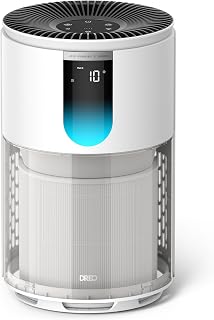
An AHAM Verifide bedroom unit with a genuinely usable quiet mode and a PM2.5 monitor on the housing, so you can see the overnight curve rather than guess at it. The built-in scent diffuser is a small luxury that keeps a separate reed diffuser off your nightstand.
4-in-1 Humidifier and Air Purifier with UV Light
The most complete single-box solution here, layering HEPA filtration, carbon, UV treatment, and humidification across rooms up to 1,035 square feet. Best suited to a den, nursery, or main bedroom where consolidating three appliances into one matters more than peak airflow.
Afloia Mist-Free Humidifier and Air Purifier
The evaporative design is the headline: 1000ml/h of output with no visible mist and no white dust settling on walnut or matte black surfaces. Four-way airflow spreads moisture evenly instead of creating a damp zone, and the top-fill tank makes the 20-hour runtime easy to sustain.
Dreo 539 HEPA Air Purifier
A step up in coverage to 1,176 square feet while keeping the same clean cylindrical profile and four-speed control set. Turbo mode clears a room quickly after cooking or a pet-heavy afternoon, then drops back to a whisper on auto.
Frequently Asked Questions
Does a humidifier reduce air purifier performance?
Not directly, but high humidity makes HEPA media damp over time, which can shorten filter life and encourage odor. Keep relative humidity in the 40 to 50 percent range and position a standalone humidifier a few feet from the purifier’s intake.
Where should I place a combo unit?
Off the wall by at least six inches, away from curtains and upholstery, and roughly at the room’s traffic path rather than tucked behind a sofa. Airflow needs a clear return, and moisture needs somewhere to disperse.
How often do filters need replacing?
Most HEPA and carbon combination filters run six to twelve months depending on pet ownership, smoke exposure, and how many hours a day the unit runs. Auto mode extends that meaningfully because the fan isn’t working at full speed unnecessarily.
Can one unit handle a whole floor?
Only in genuinely open layouts. Doorways and hallways break airflow, so two smaller units placed in the rooms you actually occupy will outperform one large unit in a central hall.
Final Thoughts
For large open living spaces, the PuroAir 400 remains the strongest performer on coverage and odor control. If you want a single appliance handling both moisture and filtration, the 4-in-1 with UV is the most complete option, while the Afloia mist-free combo is the smarter choice for bedrooms with wood furniture and dark finishes you’d rather keep free of mineral dust.