Key takeaways
- Mechanism: Manual push-back designs are simpler, cheaper to maintain, and need no outlet nearby. Power recliners give you infinite stopping points and easier operation, which matters if standing up from a low seat is difficult. Decide this first, because it narrows everything else.
- Wall clearance: Traditional recliners need 12 to 18 inches behind them to open fully. Wall-hugger and push-back styles operate in as little as four. Measure the intended spot with the chair reclined, not upright, before you commit.
- Upholstery honesty: Genuine leather develops patina and breathes well but costs more. Bonded and PU leather look sharp initially and suit low-traffic rooms. Chenille and performance woven fabrics resist cracking and stay cooler, making them the pragmatic pick for daily use or warm climates.
- Seat geometry: Check seat width, depth, and back height against your own frame. Under 5’6″, a 54-inch oversized chair will leave your feet dangling; over 6’2″, a compact model will cut off thigh support. Weight capacity is a hard limit, not a suggestion.
- Extras with actual utility: USB and USB-C ports, independent headrest tilt, and lumbar adjustment earn their keep daily. Massage and heat functions are genuinely pleasant but are the first features to fail, so treat warranty coverage on the motor as part of the price.
What's inside
Recliners have a reputation problem. For decades the category was dominated by bulky, overstuffed shapes that swallowed a room whole and clashed with everything else in it. Shoppers were forced into a trade-off: a chair that genuinely supported the body, or a chair that looked like it belonged in a considered space. That compromise is finally dissolving. The current generation of recliners borrows silhouettes from mid-century lounge seating, uses tighter tailoring, and hides the mechanical hardware inside cleaner frames.
The catch is that the market has expanded faster than the labeling has clarified. Two chairs at the same price can differ enormously in seat depth, mechanism type, upholstery grade, and how much wall clearance they demand. This guide breaks down what actually separates a recliner you’ll still like in five years from one you’ll quietly replace, then walks through the standout models worth your attention right now, from compact leather push-backs to oversized powered seating with heat and massage built in.
As an Amazon Associate we earn from qualifying purchases.




How to Choose a/an Home Furniture Recliner (2026)
- Mechanism: Manual push-back designs are simpler, cheaper to maintain, and need no outlet nearby. Power recliners give you infinite stopping points and easier operation, which matters if standing up from a low seat is difficult. Decide this first, because it narrows everything else.
- Wall clearance: Traditional recliners need 12 to 18 inches behind them to open fully. Wall-hugger and push-back styles operate in as little as four. Measure the intended spot with the chair reclined, not upright, before you commit.
- Upholstery honesty: Genuine leather develops patina and breathes well but costs more. Bonded and PU leather look sharp initially and suit low-traffic rooms. Chenille and performance woven fabrics resist cracking and stay cooler, making them the pragmatic pick for daily use or warm climates.
- Seat geometry: Check seat width, depth, and back height against your own frame. Under 5’6″, a 54-inch oversized chair will leave your feet dangling; over 6’2″, a compact model will cut off thigh support. Weight capacity is a hard limit, not a suggestion.
- Extras with actual utility: USB and USB-C ports, independent headrest tilt, and lumbar adjustment earn their keep daily. Massage and heat functions are genuinely pleasant but are the first features to fail, so treat warranty coverage on the motor as part of the price.
The Best Home Furniture Recliner (2026)s Reviewed
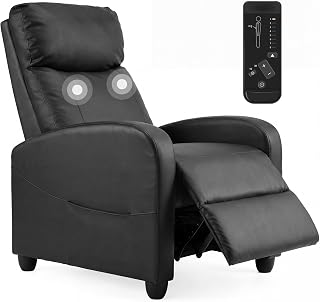
Homall PU Leather Recliner Chair
A well-judged entry point that keeps its footprint tight and its lines simple, with lumbar support that’s more substantial than the price suggests. The PU surface wipes clean easily, making this a smart choice for a media room or a second seat you don’t want to overthink.
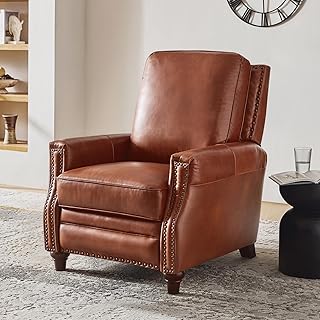
HULALA HOME Genuine Leather Push Back Recliner
The most design-forward option here, pairing real leather with solid wood legs, nailhead trim, and a mid-century profile that reads as an accent chair first and a recliner second. The push-back mechanism needs minimal wall clearance, which makes it viable in apartments where a conventional recliner simply won’t fit.
FLEXISPOT Mochi Oversized 54″ Power Recliner
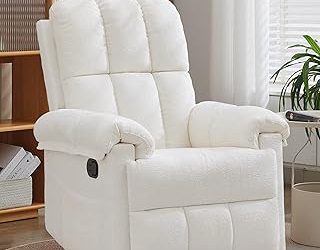
Built for big and tall bodies without resorting to a slouchy shape, the Mochi combines a genuinely wide chenille seat with USB and Type-C charging at arm’s reach. If you want one chair that functions as a reading spot, nap station, and workstation, this is the most complete answer on the list.
Signature Design by Ashley Boyington Power Recliner
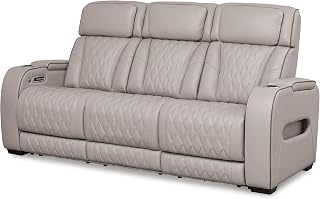
The premium selection, offering zero-gravity positioning, air massage, heat, and an adjustable headrest across a leather-upholstered frame. Note the 250-pound capacity before buying, and expect a chair that leans clinical-comfortable rather than sculptural.
Massage Recliner Chair in Ink
Fabric upholstery in a deep ink tone keeps this one visually quiet while delivering massage and lumbar support at a mid-tier price. It’s the sensible middle path for anyone who wants therapeutic features without the leather premium or the powered complexity.
Frequently Asked Questions
How much space does a recliner really need?
Plan for the reclined footprint, not the upright one. Standard models want 12 to 18 inches of rear clearance; push-back and wall-hugger designs like the HULALA HOME need only a few inches. Add six inches of side clearance for comfortable arm use.
Is genuine leather worth the upgrade over PU?
For a chair used daily, yes. Genuine leather breathes, softens with time, and resists the surface cracking that eventually appears on PU. For occasional use in a guest room or theater setup, PU delivers most of the look for a fraction of the outlay.
Are massage and heat features durable?
They’re the components most likely to fail first, typically within three to five years of regular use. Buy them from brands with clear motor warranties and treat them as a bonus rather than the primary reason for your purchase.
Manual or power for older users?
Power, generally. Manual push-back recliners require body weight and core engagement to operate, which becomes harder with limited mobility. Power models let you stop at any angle and rise from a supported position.
Final Thoughts
For most rooms, the HULALA HOME genuine leather push-back is the pick that solves the design-versus-comfort tension most gracefully, especially in tight floor plans. If you need scale and everyday utility, the FLEXISPOT Mochi is the more generous chair, and the Ashley Boyington makes sense when heat, massage, and zero-gravity positioning are the point rather than the perk.