Key takeaways
- Frame material: Powder-coated aluminum won’t rust and stays light enough for a two-person build, which matters if you plan to reposition it later. Galvanized or coated steel frames carry more weight and feel more planted in wind, but any scratch in the coating becomes a rust point. Look for post dimensions in the spec sheet — anything near 4 inches square reads as substantial in person.
- Roof construction: Double-tier galvanized steel roofs shed heat and hold up to hail, while polycarbonate panels pass filtered daylight through and keep the space from feeling like a cave. Either way, the vented upper tier is the feature to insist on; it releases trapped hot air instead of banking it under the canopy.
- Water management: Integrated gutters and post-routed downspouts keep runoff off your seating and your decking. Gazebos without them dump a curtain of water along all four edges, which erodes gravel bases and stains pavers over a season.
- Netting and curtain quality: Mesh density and fabric weight separate the models that stay usable at dusk from the ones you stop bothering to close. Textilene or comparable 200+ GSM panels resist fading and hold their shape; thin polyester curtains tend to wrinkle permanently and snag on tracks.
- Anchoring and site prep: Every model here needs to be bolted into concrete, pavers, or a reinforced deck — grass anchors alone are not sufficient. Confirm the mounting hardware included matches your surface before ordering, and check local permit rules for permanent structures.
What's inside
A 10×12 footprint is the sweet spot in the hardtop gazebo world, and it’s also where the buying decision gets murky. The dimensions are large enough to hold a six-seat dining table or a full lounge grouping, but small enough to sit inside an average suburban yard without swallowing it. The trouble is that a dozen listings look nearly identical in thumbnails: same slate-gray roof, same boxy silhouette, same tidy staged patio. The differences that actually matter — post thickness, roof panel material, how water leaves the structure, whether the frame will still be square after three winters — sit buried in spec tables.
This guide sorts the current 10×12 field by the things you’ll notice in year three rather than week one. Below you’ll find our shortlist, followed by a practical framework for choosing, individual assessments of the strongest models, and answers to the questions that come up most often once a gazebo is sitting in a shopping cart. Every pick here is a permanent or semi-permanent structure with a rigid roof, not a pop-up canopy in disguise.
As an Amazon Associate we earn from qualifying purchases.


How to Choose a 10×12 Hardtop Gazebo (2026)
- Frame material: Powder-coated aluminum won’t rust and stays light enough for a two-person build, which matters if you plan to reposition it later. Galvanized or coated steel frames carry more weight and feel more planted in wind, but any scratch in the coating becomes a rust point. Look for post dimensions in the spec sheet — anything near 4 inches square reads as substantial in person.
- Roof construction: Double-tier galvanized steel roofs shed heat and hold up to hail, while polycarbonate panels pass filtered daylight through and keep the space from feeling like a cave. Either way, the vented upper tier is the feature to insist on; it releases trapped hot air instead of banking it under the canopy.
- Water management: Integrated gutters and post-routed downspouts keep runoff off your seating and your decking. Gazebos without them dump a curtain of water along all four edges, which erodes gravel bases and stains pavers over a season.
- Netting and curtain quality: Mesh density and fabric weight separate the models that stay usable at dusk from the ones you stop bothering to close. Textilene or comparable 200+ GSM panels resist fading and hold their shape; thin polyester curtains tend to wrinkle permanently and snag on tracks.
- Anchoring and site prep: Every model here needs to be bolted into concrete, pavers, or a reinforced deck — grass anchors alone are not sufficient. Confirm the mounting hardware included matches your surface before ordering, and check local permit rules for permanent structures.
The Best 10×12 Hardtop Gazebos Reviewed (2026)
PURPLE LEAF Permanent Hardtop Gazebo 10′ x 12′ Aluminum
The 4.7-inch posts and built-in drainage put this one in a different structural class than most of the category, and the 260 GSM textilene netting is genuinely worth using rather than an afterthought. In gray aluminum it reads architectural instead of catalog-generic, which makes it the easiest pick to justify next to a contemporary house.
EROMMY 10′ x 12′ Hardtop Gazebo
A smart hybrid: aluminum frame for corrosion resistance paired with a galvanized steel double roof for impact and heat performance. Assembly documentation is clearer than average, and the curtain-and-netting set integrates cleanly rather than hanging as an accessory.
AirWire 10’x12′ Hardtop Aluminum Gazebo
The dark gray finish is the most restrained in this group, reading almost like a pergola until you notice the solid double roof. A strong choice for decks and modern patios where you want shelter without visual bulk.
Aoxun 10×12 Hardtop Gazebo, Brown
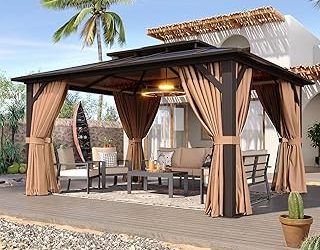
The brown colorway is a rarity here and works well against wood siding, cedar fencing, and warmer landscape palettes. Double galvanized steel roofing and a steel frame make it feel solid, with breathable netting and a privacy curtain included.
10’x12′ Hardtop Gazebo with Double Polycarbonate Roof
Polycarbonate panels let usable daylight through, so the interior stays bright and plants underneath keep growing — a meaningful difference if you’re covering a garden seating area rather than a grill station. The aluminum frame keeps long-term maintenance close to zero.
Frequently Asked Questions
Can a 10×12 hardtop gazebo handle snow?
Most rate for moderate snow loads, but ratings vary widely and none are designed to sit under an unmanaged accumulation. Clear the roof after heavy storms and check whether the manufacturer specifies a load figure in pounds per square foot rather than vague language.
How many people fit comfortably?
Plan on a six- to eight-person dining setup, or a sofa, two chairs, and a coffee table with walking room. Ten by twelve gives you about 120 square feet, which fills faster than the number suggests once curtains are drawn.
Is professional installation necessary?
Two capable people can complete most builds in four to eight hours. The parts that trip people up are leveling the base and anchoring into concrete — if your site isn’t already flat and solid, hire out the prep even if you handle the frame yourself.
Steel or aluminum frame — which lasts longer?
Aluminum wins on corrosion, particularly in coastal or high-humidity regions. Steel wins on rigidity and wind resistance. If your site is exposed and dry, steel is defensible; otherwise aluminum is the lower-maintenance answer.
Final Thoughts
For most buyers, the PURPLE LEAF 10′ x 12′ is the one to beat — the post thickness, drainage, and netting quality justify its position, and the gray finish suits contemporary exteriors. The EROMMY is the value-forward alternative with a similar material story, while the AirWire is our pick for decks and smaller yards where a lower visual profile matters more than maximum mass.