Key takeaways
- Match capacity to the room, not the label: Manufacturer square-footage figures assume eight-foot ceilings and average insulation. Vaulted ceilings, west-facing glass, or an open stairwell can cut effective coverage by a third, so size up when the space is generous or sun-exposed.
- Decide between dual-hose and single-hose: Dual-hose designs draw outside air for the condenser instead of pulling conditioned air out of your room, which means less negative pressure and steadier cooling in larger spaces. Single-hose units are lighter and simpler, and they suit bedrooms and studios well.
- Study the drainage plan before you buy: Continuous gravity drainage to a floor drain or sink is the difference between an appliance you forget about and one you empty twice a day. Self-evaporating cool modes and auto-drain systems matter most in humid climates where the bucket fills fast.
- Treat noise as a design constraint: Compressor units in open-plan rooms broadcast farther than you expect. Look for a real sleep or night mode with reduced fan speed and dimmed displays, and site the unit off a hard corner so sound is not bouncing between two walls.
- Choose a finish and footprint you can live with: These machines sit at knee height in your sightline for months. Slim white casings, recessed handles, and hidden top-mounted controls disappear into a room far better than glossy black boxes with blue LED rings.
What's inside
Summer air in a closed-up house rarely fails in just one direction. The thermostat reads a reasonable 74, and yet the room feels heavy: paperbacks curl at the corners, the leather sofa turns tacky, and a faint mineral smell drifts up from the basement stairwell. That is humidity doing the talking, not temperature. Cooling alone treats half the problem, which is why so many buyers cycle through window units and still end up disappointed by how their rooms actually feel to live in.
This guide looks at the two hardware paths that solve it: portable air conditioners with genuinely useful built-in dehumidify modes, and high-capacity standalone dehumidifiers that partner with existing cooling. We weighed coverage claims against realistic room sizes, drainage design, noise behavior in open-plan spaces, and how each unit reads in a finished interior rather than a utility closet. Below are the picks worth your floor space in 2026.
As an Amazon Associate we earn from qualifying purchases.



How to Choose a/an Air Conditioner Dehumidifier Combo (2026)
- Match capacity to the room, not the label: Manufacturer square-footage figures assume eight-foot ceilings and average insulation. Vaulted ceilings, west-facing glass, or an open stairwell can cut effective coverage by a third, so size up when the space is generous or sun-exposed.
- Decide between dual-hose and single-hose: Dual-hose designs draw outside air for the condenser instead of pulling conditioned air out of your room, which means less negative pressure and steadier cooling in larger spaces. Single-hose units are lighter and simpler, and they suit bedrooms and studios well.
- Study the drainage plan before you buy: Continuous gravity drainage to a floor drain or sink is the difference between an appliance you forget about and one you empty twice a day. Self-evaporating cool modes and auto-drain systems matter most in humid climates where the bucket fills fast.
- Treat noise as a design constraint: Compressor units in open-plan rooms broadcast farther than you expect. Look for a real sleep or night mode with reduced fan speed and dimmed displays, and site the unit off a hard corner so sound is not bouncing between two walls.
- Choose a finish and footprint you can live with: These machines sit at knee height in your sightline for months. Slim white casings, recessed handles, and hidden top-mounted controls disappear into a room far better than glossy black boxes with blue LED rings.
The Best Air Conditioner Dehumidifier Combo (2026)s Reviewed
Garvee 14,000 BTU 3-in-1 Portable Air Conditioner
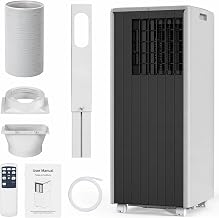
With 14,000 BTU and a stated 750 sq ft reach, this is the pick for great rooms and converted attics where one appliance has to carry the whole floor. The three-mode structure is genuinely useful year-round: cooling in July, dehumidify-only for damp shoulder seasons, and fan mode for stagnant air, all reachable from the remote with a sleep timer that keeps overnight noise in check.
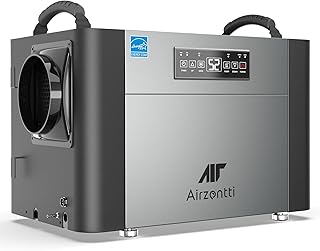
Energy Star 80 Pint/Day Dehumidifier
An Energy Star Most Efficient rating on a unit pulling up to 80 pints a day is a rare pairing, and it shows in long-run electricity costs for basements that need moisture control around the clock. The intelligent humidistat holds a set point rather than cycling blindly, and the included drain hose means you can install it once and largely stop thinking about it.
Whynter ARC-14S Dual Hose Portable AC
The ARC-14S remains the enthusiast’s answer because of its dual-hose architecture, which keeps conditioned air in the room and delivers more consistent cooling across its 500 sq ft rating than single-hose rivals at the same BTU. Built-in dehumidification with auto drain makes it a legitimate two-season appliance, and the platinum-and-black cabinet reads more studio equipment than dorm gear.
SereneLife 8,000 BTU 3-in-1 Portable AC
At 8,000 BTU and 350 sq ft, this is the right scale for a bedroom, home office, or guest suite where a 14,000 BTU unit would short-cycle and overwhelm the room acoustically. The dual-motor design, wide 64°F to 90°F range, and clean white casing make it the most livable option here for smaller, design-forward spaces.
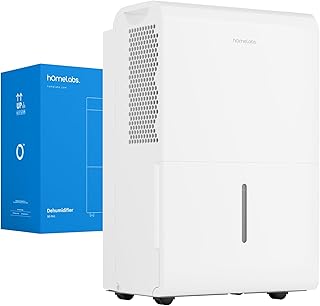
hOmeLabs 50 Pint WiFi Dehumidifier
WiFi control turns humidity management into something you monitor rather than remember, which is the real argument for this one in a basement or rental you do not visit daily. It holds a target humidity quietly across large areas, and auto shut-off plus continuous drain support keep it stable during long unattended stretches.
Frequently Asked Questions
Does an air conditioner dehumidify on its own?
Yes, but incidentally. Cooling coils condense moisture as a byproduct, so any AC lowers humidity somewhat. A dedicated dehumidify mode runs the compressor to target moisture specifically without overcooling the room, which is what you want on 68°F rainy days.
Do I need a combo unit or two separate appliances?
A combo makes sense when floor space is tight and one room drives your comfort. Separate appliances win when you need serious moisture removal in an unconditioned basement while cooling living areas upstairs, because standalone dehumidifiers pull far more water per day.
What humidity level should I target indoors?
Between 45 and 55 percent relative humidity is the practical sweet spot. It protects wood furniture and flooring from swelling, discourages mold and dust mites, and keeps the air from feeling either clammy or dry.
Can I run the exhaust hose without a window?
Portable ACs need an exhaust path, so a window, sliding door, or vented wall opening is required. Dehumidifiers do not, which is why they are the better choice for interior rooms, closets, and finished basements without accessible windows.
Final Thoughts
For a single appliance handling a large open room, the Garvee 14,000 BTU 3-in-1 offers the most coverage for the money, while the Whynter ARC-14S earns its price through dual-hose efficiency and steadier performance under load. If your real problem is dampness rather than heat, the Energy Star 80 pint dehumidifier is the smarter investment, quietly protecting the furniture and finishes you have already spent money on.