Key takeaways
- Window Dimensions: Measure both height and width of your open pane precisely. Vertical sliding windows vary wildly — some accept a standard 10,000 BTU casement unit, while narrower frames demand a compact vent kit paired with a portable AC.
- Cooling Capacity vs. Room Size: Match BTU output to square footage. A 550 sq ft living room needs roughly 12,000 BTUs, while a 350 sq ft bedroom can get by with 8,000. Oversizing wastes energy and creates a clammy, short-cycling environment.
- Seal Quality: For vertical sliders, the gap-sealing mechanism matters as much as the unit itself. Look for adjustable panel kits with reinforced foam gaskets — a loose seal means you are literally cooling your patio.
- Noise Profile: Bedrooms and home offices demand units under 50 dB. Inverter-driven models like the Midea U-shaped line operate near whisper levels, while traditional compressors can hit 55 dB or higher.
- Smart Integration: In 2026, Alexa and Google Assistant compatibility is no longer a luxury. Scheduling cooling around your routine saves meaningful energy — and means you never walk into a sweltering room after being out.
What's inside
Vertical sliding windows are a staple in mid-century and contemporary homes alike, yet they present a uniquely frustrating problem when summer arrives: most window air conditioners are designed for horizontal sash windows, leaving owners of vertical sliders scrambling for solutions that actually fit. Poorly sealed gaps, awkward bracket setups, and units that rattle against narrow frames turn what should be a simple comfort upgrade into a weekend-long headache.
This guide cuts through the noise. We evaluated the most practical cooling options for vertical sliding windows available in 2026 — from dedicated casement units and innovative U-shaped window ACs to versatile vent kits for portable systems — so you can match the right product to your space, noise tolerance, and aesthetic priorities.
As an Amazon Associate we earn from qualifying purchases.




How to Choose an Air Conditioner for a Vertical Sliding Window (2026)
- Window Dimensions: Measure both height and width of your open pane precisely. Vertical sliding windows vary wildly — some accept a standard 10,000 BTU casement unit, while narrower frames demand a compact vent kit paired with a portable AC.
- Cooling Capacity vs. Room Size: Match BTU output to square footage. A 550 sq ft living room needs roughly 12,000 BTUs, while a 350 sq ft bedroom can get by with 8,000. Oversizing wastes energy and creates a clammy, short-cycling environment.
- Seal Quality: For vertical sliders, the gap-sealing mechanism matters as much as the unit itself. Look for adjustable panel kits with reinforced foam gaskets — a loose seal means you are literally cooling your patio.
- Noise Profile: Bedrooms and home offices demand units under 50 dB. Inverter-driven models like the Midea U-shaped line operate near whisper levels, while traditional compressors can hit 55 dB or higher.
- Smart Integration: In 2026, Alexa and Google Assistant compatibility is no longer a luxury. Scheduling cooling around your routine saves meaningful energy — and means you never walk into a sweltering room after being out.
The Best Air Conditioners for Vertical Sliding Windows (2026) Reviewed
Midea 12,000 BTU U-Shaped Window Air Conditioner
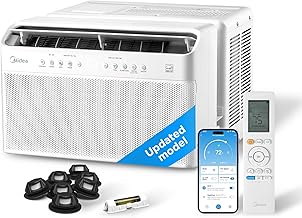
The flagship of Midea’s U-shaped line solves the vertical window problem with genuine elegance. The split chassis lets you close the window partially over the unit, maintaining a near-complete seal that most upright ACs simply cannot achieve. At 12,000 BTUs it comfortably handles rooms up to 550 sq ft while running 37% more efficiently than standard units, and the inverter compressor keeps noise low enough for a living room conversation.
Midea 8,000 BTU U-Shaped Smart Inverter Window AC
For smaller bedrooms and home offices, this compact sibling delivers the same architectural-friendly U-shaped design at a more accessible price point. It cools up to 350 sq ft with impressive quietness, and the updated 2026 model refines the install hardware for tighter fits on narrow vertical frames. Full smart-home integration means voice-controlled comfort without fumbling for a remote at 2 a.m.
Perfect Aire 10,000 BTU Casement Window AC
Purpose-built for casement and vertical sliding windows, this unit eliminates the guesswork of adapting a standard window AC. Its 23.5-inch height and narrower width are engineered specifically for these openings. The “Follow Me” remote doubles as a thermostat, adjusting output based on where you are standing rather than where the unit is mounted — a small detail that makes a noticeable comfort difference.
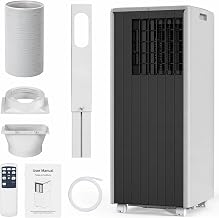
LOVIGA Portable Air Conditioner Window Vent Kit
If you already own a portable AC, the LOVIGA kit is the upgrade your vertical window has been waiting for. Adjustable from 10 to 64 inches, it accommodates even tall sliders without custom cutting. The upgraded 100% sealing waterproof gasket performs noticeably better than budget kits, and installation takes under ten minutes — no tools required. It is the kind of simple, well-made accessory that makes you wonder why you tolerated gaps for so long.
Portable AC Window Vent Kit with 5.9-Inch Hose
This no-coupler panel kit keeps things refreshingly simple. Designed for both vertical and horizontal sliding windows, its adjustable length spans roughly 17 to 62 inches. The strengthened sealing panels lock firmly into place without the wobble that plagues cheaper alternatives, and the streamlined 5.9-inch connection fits most standard portable AC hoses without adapters. It is a clean, no-fuss solution for renters who cannot modify their windows.
Frequently Asked Questions
Can I use a standard window air conditioner in a vertical sliding window?
In most cases, a standard horizontal window AC will not sit securely in a vertical slider without significant modification. The mounting brackets, side panels, and weight distribution are all designed for horizontal sash frames. Dedicated casement units or U-shaped designs like Midea’s are far more practical choices.
What BTU rating do I need for a 400 sq ft room?
For a 400 sq ft room, aim for 10,000 to 12,000 BTUs depending on ceiling height, sun exposure, and insulation quality. A room with large south-facing windows or poor insulation will push you toward the higher end of that range.
Are portable AC vent kits airtight enough to prevent cool air loss?
Quality kits with reinforced foam gaskets — like the LOVIGA and the 5.9-inch panel kit reviewed above — achieve a very tight seal when properly installed. Budget kits with thin adhesive strips are the ones that leave noticeable gaps. Spending an extra ten to fifteen dollars on a well-reviewed kit pays for itself in energy savings within the first month.
Do U-shaped window ACs actually let you close the window?
Yes. The unit’s chassis splits so the lower half sits below the sill and the window slides down into the U-shaped groove, leaving the glass mostly closed. This is one of the biggest advantages over traditional window ACs, which require the window to remain fully open — a significant security and insulation drawback.
Final Thoughts
For most vertical sliding window setups, the Midea 12,000 BTU U-Shaped stands out as the best all-around performer, balancing power, quiet operation, and a design that genuinely respects your window’s architecture. Budget-conscious shoppers in smaller rooms should look to the Midea 8,000 BTU U-Shaped, while anyone already running a portable AC will find the LOVIGA Vent Kit an immediate, worthwhile improvement. Whichever route you take, sealing the gap correctly is what separates real cooling from expensive futility.