Key takeaways
- Measure the overhang, not the counter: Standard kitchen islands run 36 inches and pair with 24 to 26 inch seats; raised bars and pub tables sit at 42 inches and need a 29 to 30 inch seat. Aim for 10 to 12 inches of clearance between seat top and counter underside so knees are not pinned.
- Treat back height as a design decision: A low back around 8 inches above the seat reads almost backless from across the room and tucks fully under an overhang. A full back adds real support but becomes part of your kitchen’s visual line, so check what it blocks before you commit.
- Match the upholstery to the traffic: Woven linen and polyester feel warmer and soften a hard-edged kitchen, but they hold oil splatter. PU leather wipes clean in one pass and suits families and high-use bars, though it can crack at seam stress points on the cheapest builds.
- Decide whether you need swivel: A 360 degree swivel makes narrow galley kitchens genuinely easier to live in, since nobody has to drag a stool back to stand up. Look for a metal swivel plate rather than a plastic ring, and expect a slight break-in period before rotation smooths out.
- Read the base and the rating together: Splayed wood legs give a mid-century look but eat floor space; slim metal frames disappear visually and usually carry a higher weight rating. Anything under a 250 pound capacity is worth skipping outright.
What's inside
Backless stools photograph beautifully and empty out fast. Anyone who has hosted a long Sunday breakfast knows the truth: the island is where people actually sit, and without something to lean into, they drift to the sofa within twenty minutes. The problem is that adding a back introduces a whole new set of variables. Suddenly the silhouette matters, the sightline across your kitchen matters, and the two inches of extra height you did not account for turn a sleek run of seating into a visual wall between the kitchen and the living room.
This guide is built around the stools that solve that tension: real lumbar support without the bulk. Below you will find our current picks across counter and bar height, in linen, boucle-adjacent woven fabric, and wipeable faux leather, in sets of two and four. We also cover the measurements that actually determine comfort, how swivel mechanisms hold up over years of daily use, and which finishes survive a household with kids or a rental turnover.
As an Amazon Associate we earn from qualifying purchases.


🛒 Best Price Today on Amazon
Prime members get fast, free shipping on everything above, plus member-only deals. New members get a 30-day free trial — cancel anytime.
How to Choose Bar Stools With Backs
- Measure the overhang, not the counter: Standard kitchen islands run 36 inches and pair with 24 to 26 inch seats; raised bars and pub tables sit at 42 inches and need a 29 to 30 inch seat. Aim for 10 to 12 inches of clearance between seat top and counter underside so knees are not pinned.
- Treat back height as a design decision: A low back around 8 inches above the seat reads almost backless from across the room and tucks fully under an overhang. A full back adds real support but becomes part of your kitchen’s visual line, so check what it blocks before you commit.
- Match the upholstery to the traffic: Woven linen and polyester feel warmer and soften a hard-edged kitchen, but they hold oil splatter. PU leather wipes clean in one pass and suits families and high-use bars, though it can crack at seam stress points on the cheapest builds.
- Decide whether you need swivel: A 360 degree swivel makes narrow galley kitchens genuinely easier to live in, since nobody has to drag a stool back to stand up. Look for a metal swivel plate rather than a plastic ring, and expect a slight break-in period before rotation smooths out.
- Read the base and the rating together: Splayed wood legs give a mid-century look but eat floor space; slim metal frames disappear visually and usually carry a higher weight rating. Anything under a 250 pound capacity is worth skipping outright.
The Best Bar Stools With Backs (2026) Reviewed
Counter Height Swivel Upholstered Barstools, Set of 2
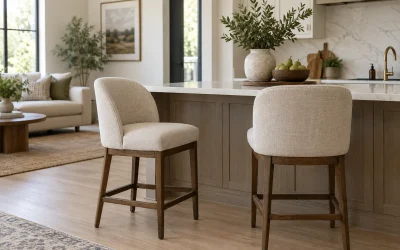
The 26 inch seat height and 360 degree swivel make this the safest bet for a standard 36 inch island, and the beige linen keeps things quiet enough to work with warm wood or cool quartz. The blackened metal legs are the detail that earns it a spot here: they hold the frame rigid without adding visual weight.
Ashley Valebeck Swivel Bar Stool
At 30 inches this is a true bar height stool, built for pub tables and raised counters where most sets fall short. The wood and engineered wood frame with linen colored polyester lands squarely in rustic farmhouse territory, and the 250 pound rating plus smooth swivel make it the most reassuring single purchase on this list.
PrimeZone 30 Inch Upholstered Bar Stools, Set of 2
The walnut and beige pairing is the most deliberately styled option we tested, with rubber wood legs that read as intentional mid-century rather than generic. Best suited to open-plan spaces where the stools are part of the room’s design language, not just seating pulled up to a counter.
FIRAVOE PU Leather Counter Stools, Set of 4
A low back and thickened metal legs make this the practical choice for a full run of four seats at 26 inches. The black PU leather handles spills without ceremony, and the shorter backrest slides cleanly under most overhangs, which keeps a four-stool lineup from visually crowding the island.
IDEALHOUSE 26 Inch Counter Stools, Set of 4
The thicker cushion is the difference here, giving noticeably more give than the flat foam pads common at this price. A solid pick for apartments and dining setups where the stools double as everyday chairs rather than occasional perches.
Frequently Asked Questions
What is the difference between counter height and bar height stools?
Counter height seats measure 24 to 26 inches and fit standard 36 inch kitchen islands. Bar height seats measure 29 to 30 inches for 40 to 42 inch raised bars. Mixing them up is the single most common return reason.
How much space should I leave between stools?
Allow 26 to 30 inches between the center of each seat, which means roughly 6 to 10 inches of gap between stool edges. Two stools suit a 5 foot island comfortably; four generally need 8 feet or more.
Are swivel stools worth it with children in the house?
They are convenient for adults but tempting for kids to spin. If that is a concern, a fixed base with a footrest offers more stability and one less moving part to loosen over time.
Will stools with backs still tuck under my counter?
Low-back designs usually will. Full-back models often sit an inch or two proud of the overhang, so measure from the floor to the top of the backrest and compare it to your counter height before ordering.
Final Thoughts
For most 36 inch islands, the swivel upholstered set in beige linen delivers the best balance of comfort, support, and restraint. If your counter runs at true bar height, the Ashley Valebeck is the more reliable build, and households seating four should look at the FIRAVOE set for its wipeable finish and low-profile back.