Key takeaways
- Chair compatibility: Measure your seat pan depth and width before buying, and check the strap length against thicker upholstered or ladder-back chairs. Many boosters are sized for slim wooden kitchen chairs and simply won’t cinch around a padded dining chair.
- Anchoring system: Look for two-point attachment, meaning both a seat strap and a backrest strap, plus a textured or rubberized underside. A single strap paired with a slick base will creep forward every time your child pushes back from the table.
- Harness type: A three-point harness is the practical standard for confident sitters, while younger or wrigglier toddlers do better with a five-point. Test the buckle yourself: it should resist small fingers but release cleanly under one hand.
- Surface material: PU leather and molded plastic wipe clean in one pass and won’t hold odors. Fabric covers look softer in a styled dining room but need machine washing, so budget for that reality or choose a removable cover.
- Height and posture: The goal is elbows level with the tabletop and a supported back, not maximum lift. Adjustable-height models extend usable life to age four or five, and ergonomic shaping matters more than most buyers assume for children who eat slowly.
What's inside
The dining table is where a home’s daily rhythm actually happens, and a toddler perched on a stack of throw pillows undermines every bit of it. Most families hit the same wall around eighteen months: the high chair has become a bulky eyesore that no longer fits the room, but a standard dining chair leaves a child eating at chin level. A booster seat solves the geometry problem, though the category is crowded with foam slabs that slide, straps that don’t reach around modern chair frames, and fabrics that surrender permanently to marinara.
This guide looks at booster seats through a design-and-durability lens rather than a spec sheet. We weighed how each one sits on an actual dining chair, how the materials hold up to repeated wiping, whether the harness system is genuinely secure, and how easily the seat folds away when guests arrive. Below are the models worth considering in 2026, followed by the criteria that separate a good booster from one you’ll replace in six months.
As an Amazon Associate we earn from qualifying purchases.



🛒 Best Price Today on Amazon
Prime members get fast, free shipping on everything above, plus member-only deals. New members get a 30-day free trial — cancel anytime.
How to Choose a Booster Seat For Dining Table (2026)
- Chair compatibility: Measure your seat pan depth and width before buying, and check the strap length against thicker upholstered or ladder-back chairs. Many boosters are sized for slim wooden kitchen chairs and simply won’t cinch around a padded dining chair.
- Anchoring system: Look for two-point attachment, meaning both a seat strap and a backrest strap, plus a textured or rubberized underside. A single strap paired with a slick base will creep forward every time your child pushes back from the table.
- Harness type: A three-point harness is the practical standard for confident sitters, while younger or wrigglier toddlers do better with a five-point. Test the buckle yourself: it should resist small fingers but release cleanly under one hand.
- Surface material: PU leather and molded plastic wipe clean in one pass and won’t hold odors. Fabric covers look softer in a styled dining room but need machine washing, so budget for that reality or choose a removable cover.
- Height and posture: The goal is elbows level with the tabletop and a supported back, not maximum lift. Adjustable-height models extend usable life to age four or five, and ergonomic shaping matters more than most buyers assume for children who eat slowly.
The Best Booster Seat For Dining Table (2026)s Reviewed
Ingenuity SmartClean Toddler Booster Seat
The most polished option here, with a molded slate finish that reads as furniture rather than baby gear and a genuinely wipeable surface with no seams to trap crumbs. It’s light enough to carry one-handed to a restaurant, and the three-point harness strikes a sensible balance for toddlers who no longer need full containment.
Upseat Boost Ergonomic Booster
Developed alongside physical therapists, this is the pick for parents who care about how their child sits, not just how high. The contoured base encourages a neutral pelvis and open hips, and the adjustable height means it grows with your child instead of being outgrown in a year.
PU Washable Double Safe Straps Booster (Grey)
A quietly good-looking grey cushion that leans on double safety straps and a non-slip bottom to stay locked to the chair. The PU surface handles daily spills without complaint, making it the low-fuss choice for open-plan kitchens where the booster is always in view.
Kitchen Chair Booster Cushion with Backrest
The backrest is the differentiator: it gives smaller toddlers something to lean into during longer family meals, and the three-point harness keeps them in position. Fold it flat and it slides into a diaper bag more easily than the profile suggests.
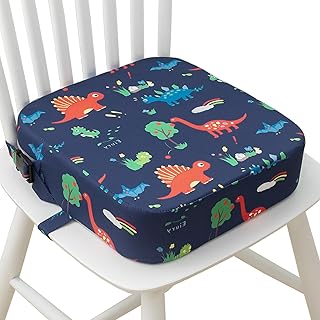
Eiury Portable Booster Seat (Blue Dinosaur)
The playful print won’t suit every dining room, but it’s a strong travel companion with reliable safety buckles and a grippy base that holds on unfamiliar restaurant chairs. Best treated as a secondary, go-anywhere seat rather than your everyday one.
Frequently Asked Questions
When can my child move to a booster seat?
Most children are ready between eighteen months and two years, once they can sit upright unassisted for a full meal and have decent trunk control. Follow the manufacturer’s minimum age and weight guidance, since these vary meaningfully between models.
Will a booster seat damage my dining chairs?
Rubberized non-slip bases are generally safe on wood, but they can leave marks on delicate finishes over time. If your chairs are an investment piece, place a thin felt or microfiber layer underneath and check the surface every few weeks.
Do I need a tray?
Only if you want your toddler eating separately from the table. Trayless boosters bring children into the meal itself, which is the point of moving on from a high chair, though they do mean more crumbs on your actual tabletop.
How long will a booster seat last?
Expect two to three years of use from a fixed-height model, and slightly longer from an adjustable one. Straps and buckles wear before the seat does, so inspect them regularly and retire anything with fraying or a sticky latch.
Final Thoughts
For most homes, the Ingenuity SmartClean is the balanced choice, offering restrained styling and effortless cleanup at a sensible price. If posture and long-term fit matter most, the Upseat Boost earns its premium through thoughtful ergonomic design, while the PU Washable Double Safe Straps booster in grey is the practical everyday option for families who want secure anchoring and a surface that wipes clean in seconds.