Key takeaways
- Third-party certification: Look for NSF/ANSI or WQA marks tied to specific contaminants, not a vague “certified components” claim. If PFAS reduction matters to you, confirm it appears in the tested claims rather than the bullet copy.
- Installation reality: Most countertop models need a cold-line connection under the sink and a nearby outlet. Measure cabinet-to-counter clearance before committing, and confirm the included tubing reaches without a splice.
- Temperature architecture: Three-temperature units add a room-temp tap, which sounds minor until you stop wasting chilled water on pasta pots and pet bowls. Instant-hot models heat on demand instead of holding a hot tank, which cuts standby draw.
- Sanitation cycle: Ozone or UV self-cleaning reduces biofilm in the internal reservoir. It does not replace filter changes, so check cartridge cost and interval before you fall for a low sticker price.
- Finish and controls: Brushed stainless reads quieter next to appliance panels than gloss plastic. If children use the dispenser, a hot-tap safety lock should be standard, not an upgrade.
What's inside
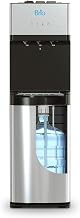
Water delivery was never a design decision. It was a default. Five-gallon jugs stacked in a pantry, a cooler humming in the corner of a mudroom, a subscription that renews whether you drink it or not. For anyone editing a kitchen down to what actually earns its place, that arrangement fails on every count: it eats floor space, it demands lifting, and it turns a utility into visual clutter. Bottleless dispensers solve the problem at the source by tapping your existing line and filtering on demand, but the category has gotten noisy. Certifications are inconsistently disclosed, “self-cleaning” means different things across brands, and footprint specs rarely tell you whether a unit will crowd your upper cabinets.
This guide narrows the field to six countertop and freestanding units worth considering in 2026, chosen for verified filtration performance, restrained industrial design, and the kind of build quality that still looks intentional three years in. Below you’ll find the picks, followed by the specifications that genuinely affect daily use and the ones that are marketing.
As an Amazon Associate we earn from qualifying purchases.


How to Choose a Bottleless Water Dispenser (2026)
- Third-party certification: Look for NSF/ANSI or WQA marks tied to specific contaminants, not a vague “certified components” claim. If PFAS reduction matters to you, confirm it appears in the tested claims rather than the bullet copy.
- Installation reality: Most countertop models need a cold-line connection under the sink and a nearby outlet. Measure cabinet-to-counter clearance before committing, and confirm the included tubing reaches without a splice.
- Temperature architecture: Three-temperature units add a room-temp tap, which sounds minor until you stop wasting chilled water on pasta pots and pet bowls. Instant-hot models heat on demand instead of holding a hot tank, which cuts standby draw.
- Sanitation cycle: Ozone or UV self-cleaning reduces biofilm in the internal reservoir. It does not replace filter changes, so check cartridge cost and interval before you fall for a low sticker price.
- Finish and controls: Brushed stainless reads quieter next to appliance panels than gloss plastic. If children use the dispenser, a hot-tap safety lock should be standard, not an upgrade.
The Best Bottleless Water Dispensers of 2026, Reviewed
Ultra Instant Hot & Cold Countertop Dispenser
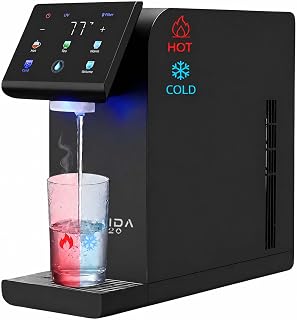
The most technically complete unit here, pairing WQA-certified multi-stage filtration with UV sterilization and near-instant heating rather than a standing hot tank. Its matte black chassis is genuinely quiet, which makes it the right call for open-plan kitchens where a compressor hum carries.
iSpring DS4S Bottleless Dispenser
Four-stage filtration handles chlorine, lead, mercury, and PFAS, and the stainless housing holds up in shared spaces better than coated alternatives. The child safety lock and self-cleaning cycle make this the most sensible pick for a household that runs a dispenser hard.
Avalon A12BLK Countertop Dispenser
Avalon’s black stainless variant is the design-forward choice, with dual filtration, three temperatures, and a built-in nightlight that earns its keep in hallways and butler’s pantries. The darker finish disguises fingerprints far better than the standard silver body.
Euhomy Bottleless Water Cooler
NSF-certified dual filters and three temperature settings at a noticeably lower entry point, with an LED indicator that tracks filter life instead of leaving you guessing. A practical option for a home office or basement bar where you want performance without a design statement.
Avalon A12 Stainless Countertop Dispenser
The A12 in brushed stainless is the safest specification for kitchens with existing stainless appliances, offering the same three-temperature self-cleaning platform in a more neutral shell. Compact enough for standard 18-inch counter depth without blocking the backsplash.
Frequently Asked Questions
Do bottleless dispensers require plumbing work?
They require a cold-water connection, typically via a saddle valve or T-fitting under the sink. Most owners handle it in under an hour with the included kit, though a plumber is worth it if your shutoff is aged or your line is copper.
How often do the filters need replacing?
Expect six to twelve months depending on local water hardness and volume. Budget for cartridges as an ongoing cost; a cheap unit with expensive proprietary filters is rarely the better value.
Is a bottleless unit cheaper than jug delivery?
Almost always, after the first year. Eliminating the per-jug fee and the delivery surcharge typically offsets the hardware cost within eight to fourteen months for a two-person household.
Will self-cleaning eliminate maintenance?
No. Ozone and UV cycles suppress bacterial growth inside the tank, but drip trays, nozzles, and exterior surfaces still need manual wiping, and filters still expire on schedule.
Final Thoughts
For the strongest overall filtration and the quietest operation, the Ultra Instant Hot & Cold dispenser is the pick worth stretching for. The iSpring DS4S is the better buy for families who want documented PFAS reduction plus a child lock, while the Avalon A12BLK remains the most design-conscious option for kitchens where the dispenser stays in view.