Key takeaways
- Cabinet material and finish: Brushed stainless reads warmer against wood and stone; matte black disappears into dark cabinetry and shows fewer fingerprints. Satin silver splits the difference and tends to sit best in mixed-metal kitchens.
- Footprint and clearance: Most units occupy roughly a 12 by 13 inch square, but the door needs swing room and the compressor needs a few inches of rear breathing space. Measure the alcove, not just the floor.
- Temperature range and delivery: Three-spout configurations covering hot, room, and cold are the standard now. Check hot-tank output if you make tea or instant coffee daily, since sub-190°F models underwhelm.
- Safety and feedback: A child lock on the hot spout is non-negotiable in a household with kids, and an empty-bottle indicator saves the pump from running dry, which is the single most common way these units fail early.
- Acoustic behavior: Compressors cycle. In an open-plan room or a home office, a unit rated for quiet operation matters more than an extra temperature preset you will rarely touch.
What's inside
Water delivery has quietly become a design problem. A five-gallon jug is a visual anchor whether you want it to be one or not, and the older top-loading coolers asked you to hoist forty pounds overhead in a hallway, a pantry, or worse, a styled kitchen corner. Bottom-loading units solved the lifting first, but the good ones went further: they hid the bottle entirely behind a cabinet door, which means the machine reads as an appliance rather than a water-cooler-shaped compromise.
This guide looks at bottom-loading dispensers through a furnishing lens as much as a functional one, weighing cabinet finish, footprint, noise, and control layout alongside the practical stuff like heating wattage and child locks. Below are the models worth your attention in 2026, followed by a short buying framework and answers to the questions that come up most often once a unit is actually living in the room.
As an Amazon Associate we earn from qualifying purchases.


How to Choose a Bottom Loading Water Dispenser (2026)
- Cabinet material and finish: Brushed stainless reads warmer against wood and stone; matte black disappears into dark cabinetry and shows fewer fingerprints. Satin silver splits the difference and tends to sit best in mixed-metal kitchens.
- Footprint and clearance: Most units occupy roughly a 12 by 13 inch square, but the door needs swing room and the compressor needs a few inches of rear breathing space. Measure the alcove, not just the floor.
- Temperature range and delivery: Three-spout configurations covering hot, room, and cold are the standard now. Check hot-tank output if you make tea or instant coffee daily, since sub-190°F models underwhelm.
- Safety and feedback: A child lock on the hot spout is non-negotiable in a household with kids, and an empty-bottle indicator saves the pump from running dry, which is the single most common way these units fail early.
- Acoustic behavior: Compressors cycle. In an open-plan room or a home office, a unit rated for quiet operation matters more than an extra temperature preset you will rarely touch.
The Best Bottom Loading Water Dispensers (2026), Reviewed
Avalon A4BLWTRCLR Bottom Loading Water Cooler
Avalon’s stainless cabinet is the safest bet for a kitchen with existing appliance metal, and the UL and Energy Star certifications reflect a build that has been iterated on rather than rushed to market. The three-temperature setup is unfussy, and the self-cleaning ozone cycle is genuinely useful if the unit sits in a warm room.
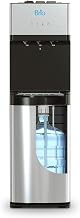
Brio Bottom Loading Water Cooler with LED Display
Brio remains the reference point for hot-water performance, delivering near-boiling output that holds up to repeated pours without a long recovery lag. The LED display and empty-bottle alert are legible without being showy, and the stainless finish photographs well in a styled space.
Tehanld Bottom Loading Water Cooler, Matte Black
This is the pick for dark interiors, where the matte black shell reads as intentional cabinetry instead of a stray appliance. Bottle compatibility across three- and five-gallon sizes gives you flexibility if you switch delivery services, and the child lock is straightforward enough that guests will not defeat it by accident.
Satin Silver Bottom Loading Dispenser with Child Lock
A quietly versatile option for transitional kitchens, the satin silver cabinet avoids the mirror-bright look of cheaper stainless and hides smudges better than either extreme. Nothing here is flashy, which is the point in a shared home-and-office setting.
Stainless Steel Bottom Loading Dispenser, Deep Black
Deep black over a stainless body gives you durability with a darker visual weight, useful when the unit needs to anchor a corner rather than recede. Dedicated five-gallon sizing keeps the interior cavity snug, which reduces bottle rattle during pump cycles.
Frequently Asked Questions
How much power do these dispensers actually draw?
Most run between 300 and 500 watts when the hot tank is heating and far less during idle compressor cycles. Energy Star certified models like the Avalon are the ones to choose if the unit will be plugged in year-round.
Can I use a bottom loader with filtered tap water?
Yes, provided you buy refillable three- or five-gallon bottles and fill them yourself. The probe assembly is agnostic about where the water came from, though you should sanitize refillable bottles more often than delivery jugs.
How often should the unit be cleaned?
Plan on a full cleaning cycle every three to six months, more frequently in humid climates. Models with a self-cleaning ozone function shorten the task but do not eliminate the need to wipe spouts and the drip tray.
Will it fit under a standard countertop?
No. These are freestanding units in the 40 to 42 inch range, designed to stand beside cabinetry rather than tuck beneath it. Treat them as a piece of floor furniture and plan sightlines accordingly.
Final Thoughts
For most homes, the Avalon A4BLWTRCLR is the balanced choice: certified, quiet, and finished in a stainless that plays well with existing appliances. Choose the Brio if hot-water throughput drives your decision, and the Tehanld matte black if the dispenser needs to blend into a darker, more curated room rather than announce itself.