Key takeaways
- Loading style: Bottom-load models conceal the bottle behind a door and spare you the overhead lift, which matters if the dispenser lives in a sightline or if anyone in the household would rather not hoist 42 pounds. Top-load is cheaper and simpler, but the bottle becomes part of the silhouette.
- Footprint and placement: Freestanding units generally want a 12–14 inch square of floor plus rear clearance for airflow. Countertop versions trade capacity for the ability to tuck into a coffee station or butler’s pantry, where they read as intentional rather than incidental.
- Finish: Brushed stainless reads well against professional-style ranges and warm woods; matte black disappears into darker cabinetry and handles fingerprints more graciously. Choose the one that echoes hardware you already own.
- Temperature range: Tri-temp models add a room-temperature spout, which sounds minor until you’re filling a pet bowl, a French press, or a glass for someone who dislikes cold water. Adjustable temperature settings are worth seeking out if you’re particular about tea.
- Maintenance and safety: Self-cleaning ozone cycles handle interior sanitizing without disassembly. A child lock on the hot tap is non-negotiable in a home with small kids, and an empty-bottle indicator saves the guesswork of peering into a cabinet.
What's inside
A five-gallon bottle is one of the least forgiving objects in a home. It’s heavy, it’s glossy blue, and it tends to end up wherever there’s floor space rather than wherever it looks right. Most people solve the hydration question and then quietly live with a plastic column parked beside the fridge, visible from the sofa, disrupting an otherwise considered room. That’s the real design problem with water dispensers: the utility is obvious, the object is not.
Brio has spent the last several years narrowing that gap, largely by hiding the bottle inside the cabinet and treating the exterior like a small appliance rather than an office fixture. This guide looks at six Brio dispensers across bottom-load, top-load, and countertop formats, and sorts them by how they actually behave in a home: footprint, finish, noise, cleaning effort, and how convincingly they sit next to your other appliances.
As an Amazon Associate we earn from qualifying purchases.


How to Choose a Brio Water Dispenser (2026)
- Loading style: Bottom-load models conceal the bottle behind a door and spare you the overhead lift, which matters if the dispenser lives in a sightline or if anyone in the household would rather not hoist 42 pounds. Top-load is cheaper and simpler, but the bottle becomes part of the silhouette.
- Footprint and placement: Freestanding units generally want a 12–14 inch square of floor plus rear clearance for airflow. Countertop versions trade capacity for the ability to tuck into a coffee station or butler’s pantry, where they read as intentional rather than incidental.
- Finish: Brushed stainless reads well against professional-style ranges and warm woods; matte black disappears into darker cabinetry and handles fingerprints more graciously. Choose the one that echoes hardware you already own.
- Temperature range: Tri-temp models add a room-temperature spout, which sounds minor until you’re filling a pet bowl, a French press, or a glass for someone who dislikes cold water. Adjustable temperature settings are worth seeking out if you’re particular about tea.
- Maintenance and safety: Self-cleaning ozone cycles handle interior sanitizing without disassembly. A child lock on the hot tap is non-negotiable in a home with small kids, and an empty-bottle indicator saves the guesswork of peering into a cabinet.
The Best Brio Water Dispenser (2026)s Reviewed
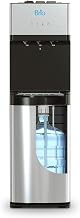
Brio Bottom Loading Tri-Temp, Stainless Steel
The most quietly architectural option in the range: a brushed stainless column with three spouts, an LED display with empty-bottle alert, and a child safety lock, all wrapped around a concealed bottle bay. If you want a dispenser that looks like it was specified alongside the kitchen rather than added later, start here.
Brio Moderna Bottom Load
Touch dispense, adjustable temperature, self-cleaning, and a soft LED-lit dispensing recess make this the most refined interaction of the group. It’s the pick for open-plan homes where the dispenser is on display and small details like a capacitive panel over a mechanical lever genuinely register.
Brio 130 Series Bottom Load, Black
An Energy Star 3.0 workhorse in matte black, with the same tri-temp layout, child lock, and empty-bottle alert as its stainless siblings. Practical, unfussy, and the better neighbor for dark cabinetry or a home office where you’d rather the appliance recede.
Brio Self-Cleaning Bottom Loading, Limited Edition
Built around a low-effort ozone sanitizing cycle across three temperature settings, this one suits households that want the hygiene handled automatically rather than scheduled. A sensible middle ground between the base bottom-loader and the Moderna.
Brio Limited Edition Top Loading
Hot and cold water, a child safety lock, and compatibility with both 3- and 5-gallon bottles at the friendliest price in the lineup. Best kept in a utility room, garage, or workshop where the exposed bottle reads as honest rather than out of place.
Frequently Asked Questions
Is a bottom-load dispenser worth the extra cost?
For most homes, yes. You’re paying for a concealed bottle and no overhead lifting, which is both an ergonomic and a visual upgrade. If the unit is going somewhere you don’t look at often, a top-loader is perfectly sound.
Do these units need a water line?
No. Every model here is bottle-fed, so placement is limited only by a nearby outlet. That flexibility is why dispensers work well in rooms a plumber never reached.
Is there a smaller option for tight kitchens?
The Brio Limited Edition Top Loading Countertop model offers hot, cold, and room-temperature water in a form that fits on a counter or bar cart, at the cost of floor-standing capacity.
How often should the interior be cleaned?
Plan on sanitizing every three to six months. Self-cleaning models automate the interior cycle, but you should still wipe the drip tray and spout area regularly.
Final Thoughts
For a dispenser that belongs in a designed room, the Brio Bottom Loading Tri-Temp in stainless steel is the most versatile choice, while the Brio Moderna earns its premium through touch dispense and adjustable temperature control. If budget leads the decision, the 130 Series delivers nearly all of the same function in a finish that knows how to stay quiet.