Key takeaways
- Width, depth and height: HGTV notes depths of about 17 to 25 inches and heights of 30 to 36 inches as typical. Comfort-height vanities sit toward the top of that range.
- Door and drawer swing: Make sure doors open fully without hitting the toilet or tub.
- Plumbing position: Drawer-style cabinets often have a cutout for the trap. Read the maker’s diagrams and confirm that your drain location is compatible.
- Faucet type: Match single-hole, centerset or widespread faucets to the drilled holes on the top.
- Existing floor and wall: Check for level and for studs where the cabinet will be anchored.
The vanities most worth buying are a pre-assembled Glacier Bay or Project Source model for a guest bath, an allen + roth or Home Decorators Collection cabinet for a family bathroom, and a Kohler piece when you want a matched suite. The right pick depends less on the brand and more on your wall width, sink count, storage needs and how much humidity the room sees. This guide breaks the choice down by room type, material and tier so you can narrow the field quickly.
Our top picks
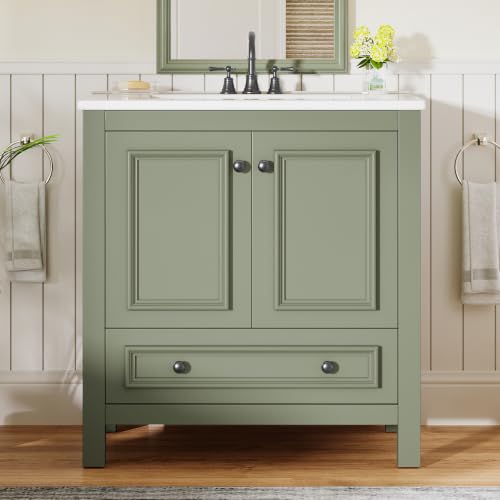
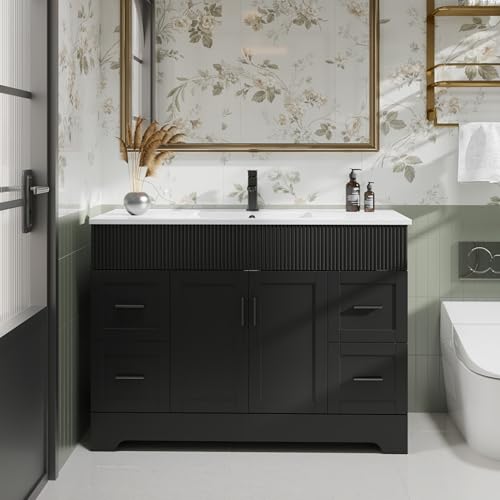
As an Amazon Associate we earn from qualifying purchases at no extra cost to you.
Quick Comparison: Which Vanity Suits Which Bathroom
| Line | Tier | Best for | Notable stated or reported traits | Limits |
|---|---|---|---|---|
| Glacier Bay (for example Bannister 30 in.) | Budget | Rentals, guest baths | A rental-property roundup cites pre-assembled design and three full-extension drawers | Basic hardware; limited finishes |
| Project Source Dover | Budget | First-time buyers | Named a budget pick in Bob Vila’s retailer guide | Simple styling; sold in few sizes |
| Style Selections Ellenbee | Budget to mid | Small family baths | Listed as a lower-cost pick in a Yahoo roundup | Top and faucet details vary by size |
| allen + roth Canterbury and Moravia | Mid-range to premium | Primary baths wanting furniture styling | Appear in retailer-guide roundups as step-up options | Heavier; larger sizes need two people |
| Home Decorators Collection Aberdeen | Mid to premium | Larger or double-sink layouts | Cited as a higher-end pick in a roundup | Lead times and options vary |
| OVE Decors Navata, Tahoe | Mid-range | Compact to freestanding layouts | Listed in warehouse-club and big-box roundups | Confirm what is included with the top |
| Kohler | Premium | Matched suites | One outlet notes that a single brand can match sink, faucet, toilet and tub | Highest budget |
| Foremost | Budget | Flips and rentals | Ranked as a functional, budget-friendly option in a vendor-published guide | That guide comes from a vanity seller, so treat as one view |
Outlets rank these lines differently, and many roundups are affiliate-driven. Use them to build a short list, then compare each maker’s own spec sheet for dimensions, materials and warranty.
Step 1: Choose by Room Type
Powder room or half bath
Prioritize footprint. A compact cabinet of about 18 to 24 inches, or a narrow-depth model, keeps walkways clear. A top with an integrated basin simplifies cleaning. Storage matters less here, so a single door is usually enough.
Guest or kids’ bath
Durability and easy upkeep come first. Look for a sealed top, a cabinet whose edges are finished against splashes, and hardware that resists daily use. A 30 to 36 inch single-sink vanity with drawers works for most layouts.
Primary bath
If two people share the room, a 60 inch or wider double-sink vanity is the main upgrade. Look for soft-close hinges, full-extension drawers and a stone-look top. Confirm that your drains and supply lines can serve two basins.
Step 2: Check Fit and Compatibility
- Width, depth and height: HGTV notes depths of about 17 to 25 inches and heights of 30 to 36 inches as typical. Comfort-height vanities sit toward the top of that range.
- Door and drawer swing: Make sure doors open fully without hitting the toilet or tub.
- Plumbing position: Drawer-style cabinets often have a cutout for the trap. Read the maker’s diagrams and confirm that your drain location is compatible.
- Faucet type: Match single-hole, centerset or widespread faucets to the drilled holes on the top.
- Existing floor and wall: Check for level and for studs where the cabinet will be anchored.
Step 3: Know the Materials
| Part | Common options | What to know |
|---|---|---|
| Cabinet box | Solid wood, plywood, MDF, particleboard | Solid wood and plywood handle humidity better. Check the maker’s stated material. |
| Top | Cultured marble, vitreous china, engineered stone, quartz, natural marble or granite | Integrated tops are simplest to clean; natural stone may need sealing per the maker. |
| Finish | Painted, stained, laminated | Thicker factory finishes protect better against splashes. Wipe water promptly. |
| Hardware | Standard hinges or soft-close, standard or full-extension slides | Soft-close and full-extension add daily convenience. |
Pick X If… Decision Table
| If you… | Pick | Reason |
|---|---|---|
| Want the simplest budget option | Glacier Bay or Project Source | Pre-assembled and widely available |
| Need lots of drawer storage | A drawer-based 30 to 36 inch model | Easier to organize than a deep open cabinet |
| Prefer a furniture look | allen + roth or Home Decorators Collection | Furniture-style legs, finishes and trim |
| Want to match other fixtures | Kohler | Coordinated line across the room |
| Have limited floor space | Compact or wall-mounted vanity | Opens up floor area |
| Are renovating a flip or rental | Foremost or Glacier Bay | Low outlay, easy replacement |
Care and Safety
Clean tops with mild, non-abrasive cleaner and a soft cloth, and follow the maker’s care sheet for stone or cultured marble. Run the exhaust fan during showers and for a while afterward to limit moisture. Shut off water before changing any supply lines. For any new outlet, light or heated mirror, use a licensed electrician and a GFCI-protected circuit as local code requires. If moving pipes, hire a licensed plumber.
Alternatives
- Floating vanity: A wall-mounted cabinet that frees floor space. Needs strong blocking behind drywall.
- Pedestal sink: Smallest footprint but little storage.
- Furniture conversion: A dresser or console converted with a vessel sink. Needs sealed finishes and professional plumbing cutouts.
Budget Tiers Explained
Instead of chasing a particular model, many shoppers decide the tier first. The budget tier covers pre-assembled single-sink cabinets with cultured marble or vitreous china tops, which suit guest baths and rentals. The mid-range tier adds better doors, soft-close hardware and stone-look tops, and fits family bathrooms that get daily use. The premium tier covers furniture-grade cabinets, double-sink layouts and matched suites. Moving up a tier is most worthwhile when it improves the cabinet box and the top, since those parts take the most moisture and wear. Cosmetic upgrades such as hardware can be changed later at little cost.
Questions to Ask Before You Order
- What is the carcass made of, and are the edges sealed?
- Does the price include the top, sink, faucet and drain?
- Is it assembled or flat-packed, and how long is the lead time?
- What are the exact outside dimensions, including the backsplash and any overhang?
- What does the warranty cover, and does it exclude water damage?
- Are replacement parts such as hinges and drawer slides available?
Style and Finish Notes
White and light gray finishes brighten small rooms but show soap film clearly. Dark finishes show water spots and toothpaste, so they may need more frequent wiping. Matte hardware hides fingerprints better than polished chrome. Open-leg designs make a small bathroom feel larger and are easier to clean around, while closed-base cabinets give more storage. Match the vanity height to the people who use it: taller comfort-height models reduce stooping for adults, while a lower unit can suit children or accessibility needs.
Installation Checklist
- Turn off the water supply and drain the lines, then disconnect and remove the old vanity.
- Check the wall for damage, mold or soft spots and repair them before the new cabinet goes in.
- Mark stud locations and the level line for the cabinet top.
- Dry-fit the cabinet, mark the plumbing cutouts, and trim only as the maker’s instructions allow.
- Shim until level, anchor into studs, then set the top and seal the back edge with bathroom-grade silicone.
- Connect the faucet and drain, turn on the water slowly, and check every joint for leaks over the next day.
Allow time for caulk to cure before using the sink. If the old plumbing is corroded or the shut-off valves do not close fully, ask a licensed plumber to replace them first.
Final Selection Tips
Narrow the list to two or three models in the right tier, then compare the stated dimensions, drawer layout and warranty line by line. Prefer a maker that publishes a spec sheet and installation guide, since those documents show how the cabinet is built. Photos in roundups are not a substitute for dimensions, and finishes can look different on screen than in the room, so order a sample or door swatch when the maker offers one.
Frequently Asked Questions
Which bathroom vanity brand is best?
No single brand wins every category. Glacier Bay and Project Source are often cited for entry-level value, allen + roth and Home Decorators Collection for mid-range styling, and Kohler for premium suites. Compare materials, warranty and included parts before deciding.
Should I buy a vanity with the top included?
For most first-time buyers, yes. A combo avoids mismatched cutouts and extra shopping. If you want a specific stone or a custom size, buy the cabinet and top separately and confirm the sink cutout dimensions.
How do I know if a vanity will fit my bathroom?
Measure wall width, depth to the door or tub, and the drain and supply positions. Compare these against the maker’s dimension drawings, including drawer clearances around the plumbing.
Are solid wood vanities worth it?
They tolerate moisture better than particleboard and are often more durable, but they sit in a higher tier. In a well-ventilated bath, a plywood cabinet with a good finish can be a reasonable middle path.
How should I clean a bathroom vanity top?
Use a soft cloth and mild non-abrasive cleaner, wipe dry after use, and avoid harsh solvents unless the maker permits them. Natural stone may need periodic sealing according to the manufacturer.
Do I need a professional to install a vanity?
Not always. A straight swap of a similar size is a common do-it-yourself job. Call a licensed plumber if pipes need relocation and an electrician for any wiring.