
Key takeaways
- Length: Tubs between 55 and 60 inches fit smaller bathrooms; 66 to 72 inches give a full-length soak.
- Clearance: Leave room on every side for access and cleaning, and for any faucet position. Check local code for clearances to walls and fixtures.
- Floor load: A filled tub with a bather can exceed 600 pounds in total, as one guide notes. Have a contractor or structural professional evaluate the floor, particularly with cast iron or upper-floor installs.
- Drain and overflow: Some tubs include an integrated overflow; others need a separate kit. Confirm what is included.
- Faucet type: Floor-mounted tub fillers need supply lines through the floor; wall-mount and deck-mount options may need a rough-in change.
- Doorways and stairs: Measure the path to the bathroom before ordering.
For most homeowners, a 60 to 67 inch fiberglass-reinforced acrylic freestanding tub, such as the Signature Hardware Hibiscus, Woodbridge 67-inch or Wyndham Rebecca, offers the best balance of weight, warmth and cost, while cast iron suits buyers who prioritize heat retention and longevity and have a floor that can carry the load. Freestanding tubs also need floor space, plumbing planning and a licensed professional, so the layout and structure often decide the purchase more than the style.
Our top picks

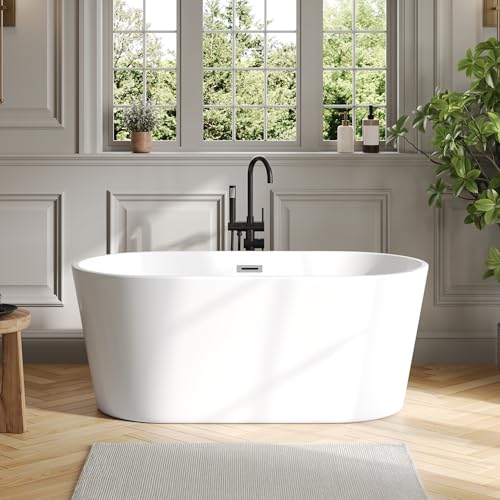

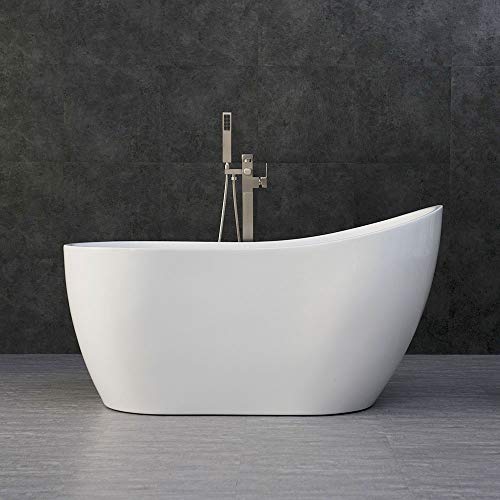
As an Amazon Associate we earn from qualifying purchases at no extra cost to you.
At a Glance: Freestanding Tubs Reviewers Name
| Tub | Material | Size and style | Best for | Limits |
|---|---|---|---|---|
| Signature Hardware Hibiscus | Acrylic | 67 in oval | HGTV’s best overall | Large footprint; premium tier |
| Wyndham Collection Rebecca | Acrylic | 60 in | HGTV’s best value | Fewer finish options |
| Woodbridge 67-inch | Acrylic | 67 in; about 60 gallons per This Old House | Top pick at This Old House for value | Quality varies by model; read specs |
| FerdY Bali 55-inch | Acrylic | 55 in | This Old House’s small-bathroom pick | Shorter soak |
| Randolph Morris Riley | Cast iron | 67 in double-slipper pedestal | HGTV’s best cast iron | Very heavy; premium tier |
| Kohler Stargaze | Acrylic | 72 in fluted | HGTV’s best large tub; about 152 lb as reported | Needs a big room |
Selections are those of HGTV and This Old House, which are more established than the small affiliate-style roundups that also cover this category. Always read the maker’s spec sheet for exact dimensions, water capacity, weight and warranty.
Material Matters: Acrylic vs. Cast Iron vs. Stone Resin
Acrylic
Acrylic reinforced with fiberglass is the most common material for freestanding tubs. Guides describe it as lightweight, warm to the touch, easy to clean and repairable if it chips. Typical empty weights are in the 65 to 120 pound range per one guide, though large tubs like the Kohler Stargaze at about 152 pounds, as HGTV reports, can be heavier. A downside is average heat retention and a surface that can scratch more easily than other materials, so use non-abrasive cleaners as the maker advises.
Cast iron
Cast iron with a porcelain enamel finish holds heat very well and is known for durability. It is also very heavy, often several hundred pounds before water, which can require floor reinforcement. It sits in a higher price tier than acrylic. Slipper and clawfoot shapes are common.
Stone resin and solid surface
Stone resin and solid-surface tubs offer a matte, premium look and decent heat retention, but they are heavy and expensive. HGTV notes the Kohler Stargaze’s lighter acrylic construction compared with stone resin alternatives.
Size, Fit and Structure
- Length: Tubs between 55 and 60 inches fit smaller bathrooms; 66 to 72 inches give a full-length soak.
- Clearance: Leave room on every side for access and cleaning, and for any faucet position. Check local code for clearances to walls and fixtures.
- Floor load: A filled tub with a bather can exceed 600 pounds in total, as one guide notes. Have a contractor or structural professional evaluate the floor, particularly with cast iron or upper-floor installs.
- Drain and overflow: Some tubs include an integrated overflow; others need a separate kit. Confirm what is included.
- Faucet type: Floor-mounted tub fillers need supply lines through the floor; wall-mount and deck-mount options may need a rough-in change.
- Doorways and stairs: Measure the path to the bathroom before ordering.
Professional Installation and Safety
Freestanding tubs involve plumbing connections, waterproofing and sometimes electrical work for heated or jetted options. Use a licensed plumber, and consult an electrician for any powered features, following the manufacturer’s instructions and local building rules. Freestanding tubs have no surround, so a non-slip mat and grab bars can help reduce slipping risk. Talk with a doctor or occupational therapist if mobility is a concern.
Comfort Features Worth Comparing
Look at interior slope and back angle, which determine how well your neck and back are supported. Reviewers often say a gentle back slope on both ends works well for couples. Compare water capacity too; the Woodbridge is described by This Old House as 60 gallons, which affects both fill time and water heater demand. Deep soaking tubs reduce the need for refills but add weight when full. A flat rim is handy for placing a tray or a candle but can make a tub heavier.
Care and Maintenance
Clean acrylic with a soft cloth and non-abrasive cleaner, avoiding harsh solvents. Cast iron with enamel usually tolerates mild cleaners but can chip if heavy items are dropped; touch-up kits exist for enamel chips, per makers. Keep drain hardware tight and re-seal any floor joints at the base per the manual. Follow the warranty guidelines to keep coverage valid.
Pick X If You Want…
| Pick this | If you want… |
|---|---|
| Signature Hardware Hibiscus | An oval acrylic tub that HGTV rated best overall |
| Wyndham Rebecca 60-inch | A value-oriented tub at a lower budget tier |
| Woodbridge 67-inch | A roomy, widely reviewed acrylic tub with solid capacity |
| FerdY Bali 55-inch | A freestanding look in a small bathroom |
| Randolph Morris Riley (cast iron) | Strong heat retention and a classic slipper design |
| Kohler Stargaze 72-inch | A large fluted acrylic tub with lower weight |
Budget Tiers
- Budget to mid-range: Acrylic tubs in the 55 to 67 inch range from makers such as Woodbridge and Wyndham.
- Premium: Large, designer acrylic tubs such as the Hibiscus and Kohler Stargaze.
- Top tier: Cast iron, stone resin and handcrafted slipper tubs, where installation costs also rise.
Alternatives
If a freestanding tub does not fit, consider an alcove soaking tub, a drop-in tub with a deck, or an undermount design for a built-in look. A corner soaking tub can save space. For existing bathrooms with an old tub, reglazing or a liner can refresh the look without a remodel. Walk-in tubs suit mobility needs and are installed by professionals.
Planning the Room Around the Tub
A freestanding tub looks best with space around it, but space has a cost. Designers often suggest allowing room on at least one side for cleaning and for stepping in, and local building codes can set minimum clearances from walls and fixtures. If your bathroom is small, a shorter tub or one with a slimmer rim may preserve walking room better than a large oval model. Try marking the footprint on the floor with painter’s tape to judge how the room will feel before ordering.
Faucet choice drives plumbing decisions. A floor-mounted filler makes a strong visual statement, but it requires supply lines to run beneath the floor, which can be simple in a slab bathroom and complicated over a finished room. Wall-mounted fillers are tidy but need the tub to sit near the wall at a precise distance. Deck-mounted options sometimes need a separate pedestal or a tub with faucet holes. Ask your plumber to confirm the rough-in dimensions against the tub’s spec sheet.
Think about the floor, too. Natural stone, tile and sealed wood all work, but weight and moisture exposure are different for each. Waterproofing beneath and around the tub deserves attention, and a drain access point can save trouble later. Heated floors and adequate ventilation help keep the room comfortable and reduce mildew.
Finally, compare warranty terms. Makers often cover manufacturing defects on the shell and drain parts for a defined period, but coverage can depend on professional installation. Keep the receipts and spec sheet, and follow care instructions to avoid voiding coverage.
Shape and Style Choices
Oval tubs such as the Hibiscus are the most versatile, with symmetrical ends that suit a center-placed faucet. Slipper and double-slipper designs, like the Riley, raise one or both ends for back support and carry a classic look. Fluted or sculpted exteriors, as on the Stargaze, add visual interest but can be harder to wipe clean. Clawfoot styles lift the tub on feet and can show dust beneath, so consider access for cleaning. Pick the shape that matches the room, not just a photograph.
Frequently Asked Questions
Which is better for a freestanding tub, acrylic or cast iron?
Acrylic is lighter, warm to the touch and easier to install, while cast iron retains heat longer and is very durable. Cast iron is heavier and more expensive. Choose based on floor structure, budget and how long you soak.
How much does a filled freestanding tub weigh?
One guide says a filled tub with a bather can exceed 600 pounds. Cast iron tubs weigh even more empty. Have a professional assess the floor before installation.
What size freestanding tub is best for a small bathroom?
This Old House picks the 55-inch FerdY Bali for small bathrooms, and guides say 55 to 60 inches fits compactly. Check clearances on all sides and consider a shorter tub with a deep soaking design.
Do freestanding tubs need special plumbing?
They need a drain and supply connection, and floor-mounted fillers require routing lines through the floor. A licensed plumber should plan and install the work. Local codes may apply to clearances and overflow.
How do I clean a freestanding tub?
Use a soft cloth and a cleaner approved by the tub maker, avoiding abrasive pads on acrylic. Rinse thoroughly and dry. Follow the manual for any special care instructions.
Are freestanding tubs hard to get in and out of?
They can be, because the rim is often higher than an alcove tub and there is no surround to hold. A non-slip mat and grab bars can help. If mobility is a concern, talk with a doctor or occupational therapist.



