Key takeaways
- Measure your reach, then add margin: Standard 8-foot ceilings pair well with a 4-foot pole; vaulted entryways, stairwell landings, and 10-foot-plus rooms need the 6-foot/72-inch class. Extra length you can collapse is far more useful than length you wish you had.
- Sleeve fit over sleeve size: The head should close around the blade with light tension so it cleans top, bottom, and leading edge in a single sweep. Loose sleeves skate over the top surface and leave the underside grey.
- Pole rigidity at full extension: A pole that flexes turns a controlled pass into a wobble that knocks dust loose. Look for locking joints and a shaft that stays reasonably stiff when fully drawn out.
- Washable, and enough of them: Reusable microfiber is the point, but one sleeve means stopping mid-job. Kits with two or more heads let you finish five blades without shaking dust back into the room.
- Second and third jobs: The best of these tools swap heads for cobweb brushes and flat pads, so the same pole handles crown molding, blind slats, and the tops of door casings — the places dust quietly accumulates.
What's inside
Dust on fan blades is the flaw nobody notices until light hits it. You can spend months curating a room — the right plaster tone, a linen sofa, warm brass hardware — and then a low afternoon sun rakes across the ceiling and reveals five furred paddles hovering above it all. Worse, the blades don’t keep the dust. Every time you switch the fan on, that grey film redistributes itself across shelves, art frames, and the bedding you just changed. Chair-and-rag cleaning solves it for a week and puts you on unstable footing while holding something wet above your head.
A dedicated ceiling fan cleaner replaces that whole ritual: a telescoping pole, a slim microfiber sleeve that wraps the blade top and bottom in one pass, and a washable head that traps dust instead of flinging it. This guide breaks down what actually matters when choosing one — reach, sleeve grip, pole rigidity, and how well the tool pulls double duty on baseboards, blinds, and cornice cobwebs — then reviews the models worth your money in 2026.
As an Amazon Associate we earn from qualifying purchases.



How to Choose a Ceiling Fan Cleaner (2026)
- Measure your reach, then add margin: Standard 8-foot ceilings pair well with a 4-foot pole; vaulted entryways, stairwell landings, and 10-foot-plus rooms need the 6-foot/72-inch class. Extra length you can collapse is far more useful than length you wish you had.
- Sleeve fit over sleeve size: The head should close around the blade with light tension so it cleans top, bottom, and leading edge in a single sweep. Loose sleeves skate over the top surface and leave the underside grey.
- Pole rigidity at full extension: A pole that flexes turns a controlled pass into a wobble that knocks dust loose. Look for locking joints and a shaft that stays reasonably stiff when fully drawn out.
- Washable, and enough of them: Reusable microfiber is the point, but one sleeve means stopping mid-job. Kits with two or more heads let you finish five blades without shaking dust back into the room.
- Second and third jobs: The best of these tools swap heads for cobweb brushes and flat pads, so the same pole handles crown molding, blind slats, and the tops of door casings — the places dust quietly accumulates.
The Best Ceiling Fan Cleaners (2026) Reviewed
DRQ Ceiling Fan Cleaner Duster (13–48″)
The most considered design of the group: the sleeve grips confidently, the pole adjusts from 13 to 48 inches so you can work close on bookshelves or extended for standard ceilings, and the removable head washes clean without matting. A strong default for apartments and single-storey homes.
Multi-Functional Fan Cleaner Duster Kit, 6 Ft Pole
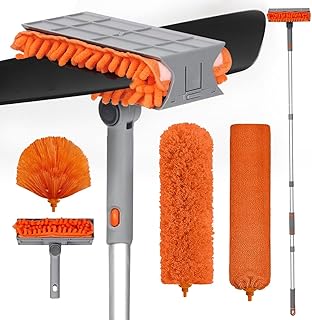
The most versatile pick, with a 77-inch reach and interchangeable heads that move from fan blades to baseboards, blinds, and ceiling cobwebs. If you want one tool to retire three, this is the kit — and the machine-washable pads keep running costs at zero.
72″ Extendable Chenille & Microfiber Duster Kit
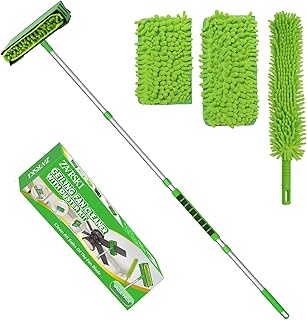
The chenille and microfiber head combination is the differentiator here: chenille grabs heavier lint and cobwebs, microfiber polishes the finish behind it. Best suited to high ceilings and homes where fans have gone a season too long between cleanings.
6 Ft/72″ Microfiber Ceiling Fan Blade Cleaning Tool
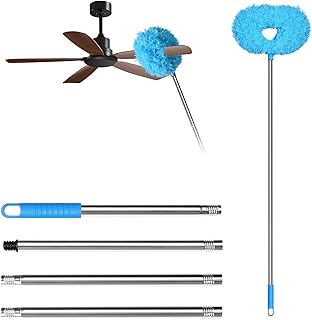
A straightforward, well-balanced 72-inch performer with reusable pads and a stable feel at full extension. It covers molding, blinds, and baseboards competently without the accessory sprawl of larger kits.
Reusable Microfiber Fan Blade Cleaner (13–49.7″)
Nearly 50 inches of adjustment paired with a sleeve that slides cleanly over most standard blade widths, including slim modern profiles. A sensible choice if you also want a tool for furniture tops, window frames, and door casings.
Frequently Asked Questions
How often should I clean ceiling fan blades?
Every four to six weeks keeps buildup from bonding to the finish. In homes with pets, forced-air heating, or open windows in summer, monthly is realistic.
Do these work on all blade shapes?
They handle standard flat and slightly contoured blades well. Very thick tropical-style blades or narrow aerofoil designs on modern DC fans may need a sleeve with more stretch, so check width tolerance before buying.
Should I use cleaning spray with a microfiber sleeve?
Dry is best for routine dusting since microfiber lifts dust electrostatically. For sticky kitchen residue, lightly dampen the sleeve — never spray upward toward the motor housing or wiring.
How do I wash the heads?
Shake outdoors, then machine wash cool with mild detergent and no fabric softener, which coats the fibres and kills their grab. Air dry fully before storing.
Final Thoughts
For most homes, the DRQ Ceiling Fan Cleaner Duster is the cleanest solution — well-fitted sleeve, sensible 13-to-48-inch range, minimal fuss. If your ceilings run high or you want one pole to handle blades, blinds, and cornices, the Multi-Functional 6 Ft Kit is the better investment, while the 72″ Chenille & Microfiber Duster is the one to reach for when there’s real buildup to lift.