Key takeaways
- Downrod Length: Measure from your mounting point to the blade plane. Standard ceilings need 4–6 inches; vaulted or cathedral spaces often demand 36–72 inches. Confirm the included downrod kit covers your ceiling height before you buy.
- Airflow (CFM): Higher CFM doesn’t always mean better cooling, but anything below 3,000 will struggle in a large room. Target 5,000+ for rooms over 300 square feet, and 8,000+ for open-concept or outdoor spaces.
- Motor Type: DC motors run roughly 70% quieter and more efficiently than AC motors and almost always offer six speeds plus reversible airflow for winter. They do cost more up front, but the energy savings and silence are worth it in most homes.
- Noise Level: Check the manufacturer’s decibel rating or user reviews for motor hum. DC motors typically sit under 30 dB—quieter than a whisper—while cheap AC motors can creep past 55 dB on high.
- Certifications and Safety Ratings: ETL or UL listing is non-negotiable for wet or damp locations. DOE certification confirms the fan meets federal efficiency standards. If you’re mounting outdoors or in a garage, always verify damp or wet rating.
What's inside
Buying a ceiling fan for a vaulted great room, cathedral-ceiling bedroom, or covered patio is deceptively tricky. Standard kits rarely include downrods long enough to push the blades past the 8-to-10-foot sweet spot where airflow actually reaches your skin, and mismatched motor specs can turn a quiet afternoon into an irritating hum. The result is a cart full of near-misses and a room that still feels stuffy in August.
This guide cuts through that noise. We evaluated the strongest long-downrod ceiling fans on Amazon for 2026—measuring CFM output, motor type, noise level, smart-home compatibility, and the real-world performance of their included downrod kits—so you can land on the right fan the first time.
As an Amazon Associate we earn from qualifying purchases.




How to Choose a Ceiling Fan With Long Downrod (2026)
- Downrod Length: Measure from your mounting point to the blade plane. Standard ceilings need 4–6 inches; vaulted or cathedral spaces often demand 36–72 inches. Confirm the included downrod kit covers your ceiling height before you buy.
- Airflow (CFM): Higher CFM doesn’t always mean better cooling, but anything below 3,000 will struggle in a large room. Target 5,000+ for rooms over 300 square feet, and 8,000+ for open-concept or outdoor spaces.
- Motor Type: DC motors run roughly 70% quieter and more efficiently than AC motors and almost always offer six speeds plus reversible airflow for winter. They do cost more up front, but the energy savings and silence are worth it in most homes.
- Noise Level: Check the manufacturer’s decibel rating or user reviews for motor hum. DC motors typically sit under 30 dB—quieter than a whisper—while cheap AC motors can creep past 55 dB on high.
- Certifications and Safety Ratings: ETL or UL listing is non-negotiable for wet or damp locations. DOE certification confirms the fan meets federal efficiency standards. If you’re mounting outdoors or in a garage, always verify damp or wet rating.
The Best Ceiling Fan With Long Downrod (2026)s Reviewed
60 Inch Outdoor Ceiling Fan (Black Gold, 8299 CFM)
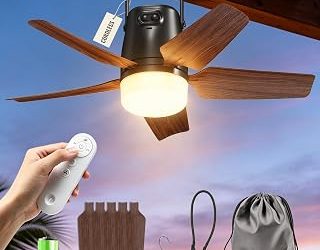
This outdoor-rated unit punches well above its price with 8,299 CFM of airflow and a reversible DC motor that stays nearly silent even on speed six. The black-and-gold colorway reads upscale for a patio setting, and the included long downrods make it practical for vaulted covered porches where most fans fall short.
96 Inch Smart Aluminum Ceiling Fan (10,000+ CFM)
At eight feet across, this fan moves serious air—over 10,000 CFM—while keeping its DOE certification intact. Alexa and smart-home integration come built in, eliminating the need for a separate hub. The aluminum construction and damp rating make it a natural fit for large shops, barns, or sprawling outdoor patios where a standard 52-inch fan simply wouldn’t cut it.
Sevenine 52 Inch White Ceiling Fan
Sevenine’s ETL-listed 52-inch model is the quietest option on this list, thanks to its 6-speed DC motor and thoughtfully dampened blade assembly. The three-color-temperature light and 3-level timer add real versatility for bedrooms and living rooms, while the clean white finish lets it disappear into most ceilings. For the money, it’s the best all-around indoor pick.
Rayqueen 84 Inch Brushed Nickel Fan (Walnut Blades)
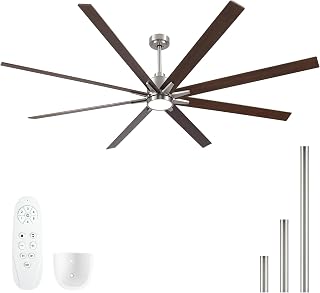
The Rayqueen pairs 84-inch span with three downrod lengths (5.9, 11.8, and 23.6 inches), giving you genuine flexibility in rooms with unusual ceiling heights. Walnut-finished blades against brushed nickel hardware look genuinely premium, and the dimmable three-color LED keeps things functional. It’s a strong choice for dining rooms or master bedrooms where aesthetics matter as much as airflow.
ZMISHIBO 96 Inch Industrial Fan (No Light)
ZMISHIBO strips away frills and focuses on raw performance: eight aluminum blades, three included downrods, and a damp-rated DC motor built for garages, warehouses, and farmhouses. Without a light kit, it mounts lower to the ceiling, which can be an advantage in spaces where every inch of clearance counts. If you need pure, no-nonsense airflow in a large utilitarian space, this is the one.
Frequently Asked Questions
What downrod length do I need for a vaulted ceiling?
Measure from your ceiling mount point down to the desired blade height—typically 8 to 10 feet above the floor. For vaulted ceilings above 12 feet, you’ll generally need a 48-to-72-inch downrod to keep the blades in the effective airflow zone. Most fans on this list include multiple downrod sizes or sell extensions separately.
Are DC motors really worth the premium?
Yes, for most buyers. DC motors use roughly 70% less energy, run significantly quieter (often under 30 dB), and typically offer six speeds compared to the standard three on AC motors. The upfront cost is higher, but lower electricity bills and a quieter living space pay dividends over years of daily use.
Can I use a long-downrod fan outdoors?
Only if the fan carries a damp or wet rating. Look for ETL or UL certification specifically for outdoor use. Fans like the 60 Inch Outdoor and the ZMISHIBO 96 Inch are built for exterior environments, but an indoor-only fan exposed to moisture can corrode and become a safety hazard.
Does blade span really matter in a large room?
Absolutely. A 52-inch fan is adequate for rooms under 200 square feet, but spaces larger than 300 square feet benefit from 60-inch or larger fans. For open-concept areas exceeding 400 square feet, 84-to-96-inch fans like the Rayqueen or ZMISHIBO deliver the volume of air that smaller models simply can’t generate.
Final Thoughts
For most homeowners, the Sevenine 52 Inch hits the sweet spot of quiet operation, versatile lighting, and broad availability at a fair price. If you’re cooling a large outdoor space or commercial area, the 96 Inch Smart Aluminum Fan’s 10,000+ CFM and Alexa integration make it the standout performer. And for budget-minded buyers who need raw power without extras, the ZMISHIBO 96 Inch Industrial delivers the kind of airflow that genuinely changes how a space feels—all without breaking the bank.