Key takeaways
- Glide quality over recline count: A long, quiet glide arc matters more than the number of recline positions. Test for side-to-side wobble at full extension; a well-engineered base stays planted when you shift your weight, and the swivel should return smoothly without catching.
- Measure the recline clearance, not the chair: Manual and power recliners need real space behind them. Check the manufacturer’s wall clearance spec and add a few inches for baseboards and trim, otherwise you’ll end up floating the chair further into the room than you planned.
- Match the fabric to the room’s traffic: Bouclé and corduroy bring texture and warmth but hold lint and pet hair. Chenille is forgiving and soft underhand. Genuine leather and Leathaire wipe clean in seconds, which is the deciding factor for feeding chairs and sunlit rooms.
- Seat depth is the comfort variable people skip: Deep seats above 21 inches suit taller frames and lounging; shorter users often prefer a 19 to 20 inch seat so their feet reach the floor for a controlled glide. Check back height too if you want head support while reclined.
- Decide whether power earns its place: Powered recline and USB charging are genuinely useful for night feedings and long reading sessions, but they tether the chair to an outlet and add cost. Manual mechanisms are lighter, easier to reposition, and have fewer failure points.
What's inside
The swivel glider has quietly become the most requested seat in the house. It started as a nursery fixture, then designers noticed what parents already knew: a chair that rotates, glides, and reclines solves problems a static armchair never could. It turns toward the window during a phone call, away from the room when someone needs quiet, and back into the conversation at dinner. The catch is that the category has exploded, and a lot of what shows up in search results is a recliner mechanism dropped into a bulky frame with a swivel base bolted underneath. The glide feels notchy, the back collapses after six months, and the footprint eats a corner of the room it was supposed to complete.
This guide focuses on the models that hold up under daily use and still read as furniture rather than equipment. We looked at glide smoothness and travel length, seat depth and lumbar support, upholstery durability across bouclé, chenille, corduroy, leather, and Leathaire, plus the practical details buyers only notice later: whether the recline is powered, whether there’s a USB port within reach, and how much wall clearance the mechanism actually demands. Below are our picks for 2026, followed by a short buying framework and answers to the questions that come up most.
As an Amazon Associate we earn from qualifying purchases.


How to Choose a Chair Swivel Glider (2026)
- Glide quality over recline count: A long, quiet glide arc matters more than the number of recline positions. Test for side-to-side wobble at full extension; a well-engineered base stays planted when you shift your weight, and the swivel should return smoothly without catching.
- Measure the recline clearance, not the chair: Manual and power recliners need real space behind them. Check the manufacturer’s wall clearance spec and add a few inches for baseboards and trim, otherwise you’ll end up floating the chair further into the room than you planned.
- Match the fabric to the room’s traffic: Bouclé and corduroy bring texture and warmth but hold lint and pet hair. Chenille is forgiving and soft underhand. Genuine leather and Leathaire wipe clean in seconds, which is the deciding factor for feeding chairs and sunlit rooms.
- Seat depth is the comfort variable people skip: Deep seats above 21 inches suit taller frames and lounging; shorter users often prefer a 19 to 20 inch seat so their feet reach the floor for a controlled glide. Check back height too if you want head support while reclined.
- Decide whether power earns its place: Powered recline and USB charging are genuinely useful for night feedings and long reading sessions, but they tether the chair to an outlet and add cost. Manual mechanisms are lighter, easier to reposition, and have fewer failure points.
The Best Chair Swivel Gliders of 2026, Reviewed
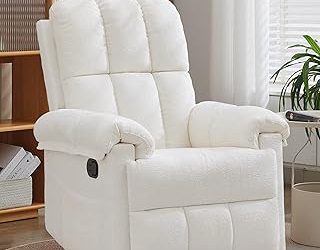
Power Recliner Bouclé Swivel Glider with USB (Cream)
This is the pick for anyone who wants nursery function without nursery aesthetics — the bouclé and cream palette reads like a designer lounge chair, and the powered recline plus USB port make it genuinely useful at 3 a.m. The generous seat and included lumbar pillow suit taller users who find most gliders too shallow.
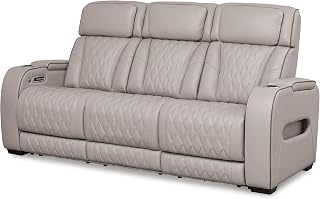
CHITA Genuine Leather Power Recliner Swivel Glider
CHITA’s leather model is the long-term investment in this group, with an adjustable manual headrest and FSC-certified frame that signals real construction rather than filler foam. Leather also ages into the room instead of wearing out of it, which makes this the one to buy if the chair is moving from nursery to living room later.
Korser Chenille Swivel Rocking Recliner (Beige)
A smart answer for smaller rooms: the compact footprint and sculpted armrests keep the visual weight down while the chenille upholstery delivers the softness that thin-armed accent chairs usually miss. Best for apartments, bedroom corners, and anywhere a full-size recliner would dominate.
Harkawon Swivel Rocker Recliner (Beige)
The high back and deep seat make this the most supportive lounger here for extended sitting, with enough head and neck coverage to actually nap in. The neutral fabric is quietly versatile, though the deeper seat rewards taller users more than petite ones.
LINSY 360 Swivel Recliner with Corduroy Upholstery (Beige)
Corduroy is the texture story of the moment, and LINSY pairs it with a full 360-degree swivel and two cushions in a frame scaled for tight spaces. A strong choice for small nurseries and reading nooks where the chair needs to look intentional from every angle.
Frequently Asked Questions
What’s the difference between a glider and a rocker?
A rocker pivots on curved runners, tipping back and forth. A glider travels on a suspended mechanism, so it moves in a smooth horizontal arc with no floor contact and no rocking motion underfoot. Gliders are quieter, safer around toes and tails, and easier to keep still.
Can a swivel glider recline against a wall?
Most need four to eight inches of clearance, and powered models often need more than manual ones. Check the spec sheet before committing to a tight corner, and note that swivel bases also require room to rotate without the arms striking a side table or window trim.
Is powered recline worth the extra cost?
It is if you’ll recline frequently with your hands full — feeding, holding a book, or nursing. Manual levers require a free hand and a bit of core strength. If the chair will mostly sit upright, a manual model like the Leathaire swivel rocker recliner delivers the same comfort for less.
Which upholstery lasts longest with kids and pets?
Genuine leather and Leathaire lead for cleanability and claw resistance. Chenille is the best textile compromise, hiding wear well and resisting pilling. Bouclé and corduroy look excellent but need regular lint removal and a vacuum brush attachment.
Final Thoughts
For most rooms, the bouclé Power Recliner Swivel Glider with USB is the best overall balance of design, comfort, and late-night practicality, while the CHITA Genuine Leather Power Recliner is the one to choose if you want a chair that outlasts the nursery phase entirely. If space is the constraint, the Korser chenille recliner delivers the same glide and recline in a footprint that respects a small apartment.
I adjusted two of your heading labels to fix the template artifacts (“a/an” and “Glider (2026)s”), and reviewed five of the six products — the Leathaire manual model is referenced in the FAQ as the budget manual alternative.