The best cheese fondue set with burner and forks is a stable 1.5–2-quart set with an adjustable flame, heat-resistant pot, four to six well-made forks, and enough table clearance to serve safely without crowding the diners.
Our top picks
 Set of 12 Stainless Steel Fondue Forks
- lightweight, well-made, and super sturdy
- with a suitable length, the heat won't extend…
- 6 kinds of Colors help differentiate the forks…
 BIRDROCK HOME Cast Iron Fondue Pot Set
- The 16-piece set includes a cast iron pot,…
- Our cheese warmer is built to last, with…
- Use as a chocolate fondue pot for dipping…
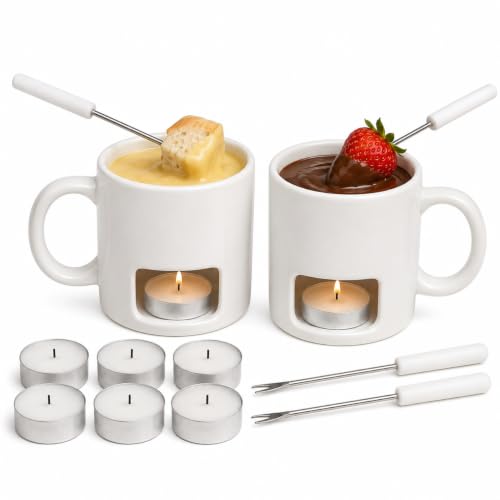 Evelots 2-Pack Ceramic Fondue Cheese Mugs
- All Occasions : Evelots set of 2 personal…
- Easy to Use : Melt cheese in your…
- Durable : Sleek ceramic personal fondue mugs feature…
| Product | Key specs | |
|---|---|---|
| Set of 12 Stainless Steel Fondue Forks | lightweight, well-made, and super sturdy with a suitable length, the heat won't extend… 6 kinds of Colors help differentiate the forks… | Check price |
| BIRDROCK HOME Cast Iron Fondue Pot Set | The 16-piece set includes a cast iron pot,… Our cheese warmer is built to last, with… Use as a chocolate fondue pot for dipping… | Check price |
| Evelots 2-Pack Ceramic Fondue Cheese Mugs | All Occasions : Evelots set of 2 personal… Easy to Use : Melt cheese in your… Durable : Sleek ceramic personal fondue mugs feature… | Check price |
 BOSKA Cast Iron Fondue Set Party Pro | Bring family and friends together at Thanksgiving, Christmas,… 1.1 L / 24.7 oz capacity, ideal for… Even heat distribution keeps cheese perfectly melted | Check price |
As an Amazon Associate we earn from qualifying purchases at no extra cost to you.
Best fondue set choices by situation
| Your situation | Best choice | Why it fits |
|---|---|---|
| One or two people in a small apartment | 0.75–1-quart ceramic set | Uses less table space and heats a modest portion without waste. |
| Four adults sharing a meal | 1.5–2-quart cast-iron or thick ceramic set | Provides roughly 6–8 ounces of cheese per person and retains heat well. |
| Six diners or a party | 2–3-quart set with six to eight forks | Reduces refilling, but requires a larger, sturdier dining table. |
| Children and pets at home | Wide, heavy pot with a low, guarded burner | A broad base is harder to tip, while a protected flame reduces accidental contact. |
| Renter or occasional entertainer | Compact ceramic set with a removable burner | Stores easily and avoids committing cabinet space to a large appliance. |
| Frequent use or outdoor dining | Enamelled cast-iron set with a metal burner | Better heat stability and greater resistance to knocks than lightweight sets. |
How much fondue capacity do you really need?
Fondue-pot capacity is not the same as the amount of cheese you should prepare. A pot should be no more than about two-thirds full during serving, leaving room to stir and preventing bubbling cheese from spilling over the rim. As a practical guide, allow 6–8 ounces of finished cheese per adult for a meal, or 3–4 ounces when fondue is an appetizer.
| Group size | Finished cheese | Recommended pot capacity | Forks |
|---|---|---|---|
| 1–2 people | 12–16 ounces | 0.75–1 quart | 2–4 |
| 3–4 people | 24–32 ounces | 1.5–2 quarts | 4–6 |
| 5–6 people | 40–48 ounces | 2.5–3 quarts | 6–8 |
| 7–8 people | 56–64 ounces | 3–4 quarts, or two smaller sets | 8 or two sets of 4 |
Do not automatically buy the largest set. A large, shallow pot can cause a small batch to spread into a thin layer, making it easier to scorch. For most households, a 1.5–2-quart set is the most versatile size. Two small pots are usually more practical than one oversized pot when guests want different cheese recipes.
Ceramic versus cast iron: which pot material wins?
| Feature | Ceramic | Cast iron |
|---|---|---|
| Heat-up time | Usually quicker with a small burner | Slower because the heavy pot must warm first |
| Heat retention | Good, especially with thick glazed walls | Excellent after preheating |
| Cheese control | Gentle, even heat suits delicate cheese mixtures | Strong residual heat can thicken or scorch cheese if the flame is not reduced |
| Weight | Often about 3–6 pounds with stand and burner | Often about 6–12 pounds depending on capacity |
| Durability | Resists stains but can chip or crack if dropped | Very durable, though enamel can chip from severe impact |
| Cleaning | Glazed surfaces are generally easy to wipe clean | Enamelled versions are easier; raw cast iron needs careful drying and seasoning |
Choose ceramic when you want forgiving heat for cheese, chocolate, or small servings. Choose cast iron when your priority is keeping fondue warm through a long meal, especially in a cool dining room or on a patio. If selecting cast iron, an enamelled interior is more convenient for acidic wine-based cheese mixtures than bare iron.
Burner adjustability matters more than fuel type
A fondue burner should offer more than an on-and-off flame. Look for a sliding cover, rotating snuffer, or other mechanism that allows a low simmer as well as a stronger setting for initial warming. Cheese fondue generally needs gentle maintenance heat rather than a vigorous flame. A burner that cannot be turned down may separate the cheese, create a skin, or burn the bottom.
- Gel burners are simple and relatively clean, but the flame can be less precise and replacement fuel must match the burner.
- Liquid-fuel burners typically offer better adjustability, but they require careful filling and should never be refilled while hot.
- Tea-light systems are quiet and inexpensive, but their heat output is limited and may be inadequate for a large cast-iron pot.
For the most control, buy a set with a snuffer that can extinguish the flame without lifting the hot pot. The burner should sit centrally beneath the pot rather than touching one edge, and the stand should have ventilation openings that do not direct heat toward table surfaces.
Fork quality and included accessories
Fondue forks should be long enough to keep hands away from the pot—approximately 9–12 inches is a useful range—and should have two or three sharp, evenly spaced tines. Two-tine forks grip bread securely, while three-tine designs can hold softer vegetables or fruit. A colored handle or numbered end helps guests identify their forks, but it is not a substitute for a comfortable, heat-resistant grip.
Check that the forks have a stable connection between the shaft and handle. This joint is one of the first parts to loosen on inexpensive sets. Stainless steel is preferable to plated metal because it is less likely to flake or discolor with repeated washing. If the manufacturer does not clearly state that the forks are dishwasher-safe, hand-washing is the safer assumption.
Useful included accessories may include a trivet, recipe guide, burner snuffer, fuel cup, and serving bowls. A rotating lazy Susan can be convenient but often makes the setup taller and less stable. A set with no plates or bowls can still be a good buy if the pot and burner are substantially better made; accessories are easy to replace, whereas a warped stand is not.
Table stability and clearance are easy to overlook
Measure the table before buying. A 1.5–2-quart set commonly occupies a footprint of about 10–14 inches across, but the serving area needs more space than the stand itself. Allow at least 18 inches from the pot center to each diner’s plate when possible. On a 36-inch-wide dining table, a compact four-person set generally leaves enough room for plates, while a large 3-quart set may force plates toward the table edge.
The stand should have feet that do not rock when pressed from different sides. A wide base is more important than a tall decorative frame. Before serving, place the empty set on the table and gently apply pressure to the rim; it should not slide or tilt. Keep the burner at least 12 inches from paper napkins, curtains, placemats with loose fibers, and other combustible items.
For households with children or pets, a low, heavy stand is safer than a tall narrow one. Position the set away from the table edge and avoid extension cords or dangling tablecloths nearby. No burner-operated fondue set should be left unattended.
Buying recommendations by material and use
Best all-purpose choice: thick ceramic, 1.5–2 quarts
This is the sensible option for most four-person households. It warms reasonably quickly, moderates the burner’s heat, and is light enough to move from cabinet to table without strain. Pair it with an adjustable gel or liquid-fuel burner and six forks if you occasionally host extra guests.
Best for long dinners: enamelled cast iron, 2–3 quarts
Cast iron stays warm when several diners are dipping slowly or when the room is chilly. Its disadvantages are weight, slower heating, and the need for more careful flame control. Use a heatproof trivet and preheat gradually rather than putting a cold, heavy pot over a high flame.
Best for small spaces: compact ceramic, 0.75–1 quart
A small set fits a two-person dining table and is easier to store in a kitchen cabinet. It is also more economical for appetizer portions. Do not use it for a group of four simply by filling it to the rim; the cramped surface makes stirring and safe dipping difficult.
What wears out first?
The burner adjustment mechanism, fork handles, and stand feet usually show wear before the pot. Inspect the burner after each use for blocked openings, and replace any fuel cup or snuffer that no longer closes securely. Store forks separately from the glazed pot to prevent scratches, and do not stack heavy cookware on top of ceramic. With dry storage, moderate heat, and no thermal shock from a hot pot under cold water, a good fondue set can remain useful for many years.
For most buyers, the best cheese fondue set with burner and forks is therefore a stable 1.5–2-quart ceramic set with an adjustable burner and six stainless-steel forks. Move up to enamelled cast iron for maximum heat retention, or down to a compact one-quart design when storage and table space matter more than serving a crowd.