Key takeaways
- Read your light first: South- and west-facing patios wash out mid-tones, so saturated shades like peacock blue or terracotta hold their character. Shaded north-facing spaces need lighter, warmer cushions to avoid looking gray and damp.
- Match the house, not the trend: Pull one undertone from your siding, brick, or stone and stay in its family. Cool gray siding pairs cleanly with blues and greens; warm beige or tan brick wants cream, rust, or olive.
- Mind surface temperature: Dark navy and black absorb serious heat on uncovered patios. If you have no pergola or awning, keep cushions mid-tone or lighter and save the drama for pillows.
- Check the fade story: Solution-dyed olefin and acrylic keep color far longer than printed polyester. Removable, washable covers with anti-slip backing matter more over five seasons than the shade itself.
- Plan for the green backdrop: Lawns and shrubs act like a giant reflector. Blue-greens and clean whites read crisp against foliage, while yellow-based tans can look dingy once the garden fills in.
What's inside
Color is the decision most patio shoppers make last and regret first. You measure the deck, settle on a sectional size, then pick a cushion shade from a thumbnail on your phone — and three months later the set reads muddy against your siding, or the deep charcoal you loved turns into a heat trap nobody wants to sit on in July. Outdoor color behaves differently than indoor color. Full sun flattens saturation, green foliage pushes warm tones orange, and UV exposure quietly drains anything that wasn’t pigment-solution dyed.
This guide approaches patio color the way a designer would: as a relationship between your house, your light, and your landscape rather than a standalone preference. Below you’ll find the shades holding up best in 2026 — led by the peacock blue family that has become the default “safe but interesting” choice — plus a framework for judging color before you commit, honest notes on five popular sets, and a restorer worth keeping in the garage for the frames that inevitably chalk.
As an Amazon Associate we earn from qualifying purchases.


How to Choose a Color For Outdoor Patio Furniture (2026)
- Read your light first: South- and west-facing patios wash out mid-tones, so saturated shades like peacock blue or terracotta hold their character. Shaded north-facing spaces need lighter, warmer cushions to avoid looking gray and damp.
- Match the house, not the trend: Pull one undertone from your siding, brick, or stone and stay in its family. Cool gray siding pairs cleanly with blues and greens; warm beige or tan brick wants cream, rust, or olive.
- Mind surface temperature: Dark navy and black absorb serious heat on uncovered patios. If you have no pergola or awning, keep cushions mid-tone or lighter and save the drama for pillows.
- Check the fade story: Solution-dyed olefin and acrylic keep color far longer than printed polyester. Removable, washable covers with anti-slip backing matter more over five seasons than the shade itself.
- Plan for the green backdrop: Lawns and shrubs act like a giant reflector. Blue-greens and clean whites read crisp against foliage, while yellow-based tans can look dingy once the garden fills in.
The Best Color For Outdoor Patio Furniture (2026)s Reviewed
Aoxun 7-Piece Wicker Sectional, Peacock Blue
The strongest argument for peacock blue at scale — the tone stays vivid across a large sectional footprint instead of flattening the way navy does. Waterproof covers come included, which is the practical detail that keeps that color looking intentional past season two.
Rattaner 6-Piece Set, Peacock Blue
A well-proportioned middle option for medium decks, with anti-slip cushions that stay put on the resin wicker frame. The blue leans slightly green here, which flatters gray and white exteriors particularly well.
Rattaner 5-Piece Set, Peacock Blue
Best pick for balconies, courtyards, and narrow side patios where a full sectional would crowd the walkway. Same fade-resistant cushion program as the larger sets, just scaled down sensibly.
Rattaner 7-Piece Set, Peacock Blue
The most flexible layout of the Rattaner line, letting you split the sectional into a conversation arrangement or push it into an L against a railing. Waterproof covers and the coffee table are included, so the color stays consistent across every piece.
May in Color 7-Piece Sectional, Light Blue
A softer, coastal read for shaded or covered patios where a saturated blue would go dull. The pale cushions show pollen and dirt faster than mid-tones, so plan on more frequent washing.
Frequently Asked Questions
What patio furniture color hides dirt best?
Mid-tone grays, taupes, and blue-greens like peacock are the sweet spot. They conceal pollen, dust, and light staining better than either cream or true black, which shows every water spot.
Is peacock blue going to feel dated?
It reads as a blue-green teal rather than a novelty brights, which keeps it closer to a neutral in outdoor settings. Pair it with natural wicker, wood, and stone and it ages gracefully.
Can I revive faded frames and cushions?
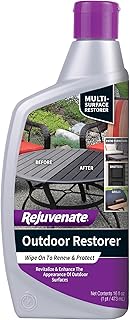
Frames, yes. Rejuvenate Outdoor Restorer brings color back to weathered vinyl, plastic, resin, and metal, covering up to 800 square feet per 16-ounce bottle. Sun-bleached fabric is harder to restore, so replacement covers are usually the better call.
Should the cushions or the frame carry the color?
Keep the frame neutral and put the color in the cushions. It’s cheaper to change, easier to replace, and lets you shift the palette seasonally with pillows and a rug.
Final Thoughts
For most patios, the Aoxun 7-Piece in peacock blue is the confident choice — enough saturation to hold up in full sun, enough restraint to work against nearly any siding. Tight spaces are better served by the Rattaner 5-Piece, and shaded or coastal settings suit the May in Color light blue set. Whichever you choose, a bottle of Rejuvenate Outdoor Restorer keeps the frames looking new long after the first season.