Key takeaways
- Output vs. actual demand: Ratings run from roughly 3 gallons per hour to nearly 8. For family use and weekend entertaining, anything above 5 Gal/h is surplus capacity — useful headroom if you host, wasted energy and footprint if you don’t.
- Flavor count and hopper volume: Three-flavor machines with twin hoppers (typically 2 x 6L or 2 x 8L) give you two bases plus a twist, but they’re wider and deeper. Single-flavor units are markedly easier to place and to clean.
- Soft serve or hard serve: Soft serve machines dispense continuously and hold product in a chilled cylinder. Hard serve and gelato batch freezers churn a fixed batch you then transfer to a freezer — better texture control, more hands-on.
- Footprint and sightlines: Countertop models need roughly 8 to 12 inches of rear and side clearance for airflow, which quietly eats more counter than the base dimensions suggest. Freestanding towers free your surfaces but claim a permanent floor position.
- Cleaning, cooling, and power: Prioritize auto-clean cycles, pre-cooling to hold mix safely overnight, and night mode. Most 110V units in this class draw 1400W to 2200W, so plan a dedicated circuit rather than sharing with a kettle or toaster.
What's inside
Ice cream machines have quietly crossed over from the back of house into the rooms we actually design. Open-plan kitchens, butler’s pantries, basement bars, and pool-house kitchenettes all want a piece of equipment that performs like a shop unit but doesn’t read like one. The trouble is that the spec sheets are still written for commissary kitchens: gallons per hour, hopper liters, gravity versus pump feed, expansion rates. None of that tells you whether the thing will look right on a walnut counter or drown out conversation at a dinner party.
This guide sorts six commercial-grade machines by the two questions that matter in a residential setting: what it can produce, and where it can live. We cover single-flavor and three-flavor builds, soft serve and hard serve gelato batch freezers, countertop units and freestanding towers, plus the practical details buyers tend to discover too late — circuit load, cleaning cycles, cabinet clearance, and how much stainless steel you’re committing to visually.
As an Amazon Associate we earn from qualifying purchases.


How to Choose a Commercial Ice Cream Maker (2026)
- Output vs. actual demand: Ratings run from roughly 3 gallons per hour to nearly 8. For family use and weekend entertaining, anything above 5 Gal/h is surplus capacity — useful headroom if you host, wasted energy and footprint if you don’t.
- Flavor count and hopper volume: Three-flavor machines with twin hoppers (typically 2 x 6L or 2 x 8L) give you two bases plus a twist, but they’re wider and deeper. Single-flavor units are markedly easier to place and to clean.
- Soft serve or hard serve: Soft serve machines dispense continuously and hold product in a chilled cylinder. Hard serve and gelato batch freezers churn a fixed batch you then transfer to a freezer — better texture control, more hands-on.
- Footprint and sightlines: Countertop models need roughly 8 to 12 inches of rear and side clearance for airflow, which quietly eats more counter than the base dimensions suggest. Freestanding towers free your surfaces but claim a permanent floor position.
- Cleaning, cooling, and power: Prioritize auto-clean cycles, pre-cooling to hold mix safely overnight, and night mode. Most 110V units in this class draw 1400W to 2200W, so plan a dedicated circuit rather than sharing with a kettle or toaster.
The Best Commercial Ice Cream Makers (2026), Reviewed
GSEICE 3-Flavor Countertop Soft Serve Machine
The most livable of the three-flavor units: magnetic mixing keeps the drive quieter than belt-driven rivals, and wash-assist plus night mode make daily upkeep genuinely realistic in a home kitchen. Twin 8L hoppers and 6.8–8.4 Gal/h output mean it handles a full party without a refill.
VEVOR 3-Flavor Freestanding, 20-28L/H
A proper floor-standing tower with a puffing pump, which forces air into the mix for that light, structured soft serve you can’t quite replicate with gravity feed. At 2200W it’s the most demanding install here, but it also delivers the most convincing shop-counter result.
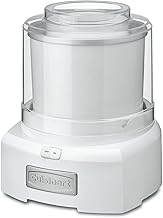
10.4-20 QT/H Compact Soft Serve with 4L Hopper
The one to specify when space and finish matter more than volume. The white cabinet reads as an appliance rather than equipment, and the 4L hopper with 1.6L cylinder suits a household that wants dessert on demand without dedicating a full bay to it. Touch LCD, pre-cooling, and auto clean are all included.
3-4 Gallon Hard Serve and Gelato Machine, 1400W
A batch freezer for people who care about density and overrun. You get dense, scoopable gelato with real textural control, at the cost of a more involved workflow: churn, extract, harden, repeat. Auto clean and an LED panel keep the process straightforward.
VEVOR 1400W Single-Flavor Hard Serve
The most restrained option, and often the smartest first purchase. One flavor, an auto shut-off timer, and a simple LED display strip away the complexity of multi-hopper systems while still producing genuinely commercial-quality hard serve.
Frequently Asked Questions
Do these need a dedicated electrical circuit?
Yes, in practice. Units drawing 1400W to 2200W on 110V should have their own 20-amp circuit. Sharing with other high-draw appliances will trip breakers and can shorten compressor life.
Countertop or freestanding for a residential kitchen?
Countertop if you have a pantry, island end, or bar run with clearance to spare. Freestanding if you want your work surfaces back and have a defined zone — a basement bar or garden kitchen — where a tower reads as intentional.
Is soft serve or hard serve better at home?
Soft serve is the crowd-pleaser and the lower-effort option: load the hopper, dispense as needed. Hard serve and gelato machines reward attention and produce a denser, more refined result you can store and scoop later.
How much daily maintenance is realistic?
With auto clean and pre-cooling, a soft serve unit needs a rinse cycle after use and a full teardown sanitation every few days. Machines without pre-cooling require the mix emptied and cleaned daily, which is the single biggest predictor of whether a machine gets used or abandoned.
Final Thoughts
For most homes, the GSEICE 3-flavor countertop is the balanced choice — quiet, well-featured, and easy enough to clean that it stays in rotation. Step up to the VEVOR 3-flavor freestanding tower if you entertain seriously and have the floor space and circuit to support it, or scale down to the compact 4L soft serve machine when the design brief calls for something that disappears into the cabinetry.