Key takeaways
- Plumbed or gravity-fed: Bottleless models tap your cold line and never need refilling, but they commit you to a spot near the sink. Gravity pitchers go anywhere and move when you move, which matters if you rent.
- Certification, not adjectives: Look for NSF/ANSI 42 or 53 marks and WQA testing. Stage counts are marketing; certifications tell you what was measured and reduced.
- Filter economics: Calculate the annual cost, not the sticker price. A cartridge lasting 40 gallons in a heavy-drinking household is a very different commitment than a six-month sediment-and-carbon block.
- Height clearance: Measure from counter to the underside of your upper cabinets before anything else. Several capable units need 16 to 18 inches, and tall carafes need room to lift out.
- Material and finish: Glass and wood read as objects; molded plastic reads as an appliance. If the dispenser lives in an open-plan kitchen, that distinction is the one you’ll notice daily.
What's inside
Water dispensers have quietly become a design problem as much as a plumbing one. Most kitchens now have a small negotiation happening on the counter: the coffee setup, the fruit bowl, the thing you actually drink from. A dispenser that’s ten inches too wide, or finished in that particular shade of medical white, throws the whole surface off balance. Meanwhile the units that look beautiful sometimes filter almost nothing, and the ones that filter brilliantly arrive shaped like office equipment.
This guide sorts the 2026 field by how these machines actually behave in a real kitchen: footprint, finish, filtration depth, and whether you’ll need a line running to your sink. I’ve grouped them into three honest categories, gravity-fed pitchers for renters and small counters, bottleless plumbed-in units for households that drink a lot of water, and instant hot-and-cold systems that quietly replace a kettle. Each pick below earns its space for a specific reason, not because it’s the largest or the most feature-stacked.
As an Amazon Associate we earn from qualifying purchases.


![Waterdrop CT01 Countertop Water Filter System, Hot and Cold Water Dispenser | [𝐍𝐎𝐓 𝐑𝐎] 6-Stage Filtration, 5 Temperature Options, Instant Hot and Cold Water, Touchscreen Control, White](https://m.media-amazon.com/images/I/61WsyAHxPyL._AC_UL320_.jpg)

How to Choose a Countertop Water Dispenser With Filter (2026)
- Plumbed or gravity-fed: Bottleless models tap your cold line and never need refilling, but they commit you to a spot near the sink. Gravity pitchers go anywhere and move when you move, which matters if you rent.
- Certification, not adjectives: Look for NSF/ANSI 42 or 53 marks and WQA testing. Stage counts are marketing; certifications tell you what was measured and reduced.
- Filter economics: Calculate the annual cost, not the sticker price. A cartridge lasting 40 gallons in a heavy-drinking household is a very different commitment than a six-month sediment-and-carbon block.
- Height clearance: Measure from counter to the underside of your upper cabinets before anything else. Several capable units need 16 to 18 inches, and tall carafes need room to lift out.
- Material and finish: Glass and wood read as objects; molded plastic reads as an appliance. If the dispenser lives in an open-plan kitchen, that distinction is the one you’ll notice daily.
The Best Countertop Water Dispenser With Filter (2026)s Reviewed
Waterdrop CT01 Countertop Water Filter System
The most complete package here: six-stage filtration, five preset temperatures, and instant hot water from a touchscreen that doesn’t look like a control panel. It’s the pick for anyone who wants tea, formula, and filtered cold water from a single slim tower, and the reverse-osmosis-free design means no drain line to route.
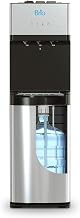
Brio Self-Cleaning Bottleless Cooler
The self-cleaning cycle is the reason to choose this one; ozone sanitizing addresses the tank biofilm issue that most countertop coolers politely ignore. Hot, cold, and room-temperature taps plus extra replacement filters in the box make it the low-maintenance choice for busy households, and the Energy Star rating keeps it honest on running costs.
Avalon B8WHT Bottleless Water Cooler
A restrained, genuinely compact bottleless unit with two-stage filtration, NSF certification, and an installation kit that most people manage in an afternoon. It’s the value proposition in this category, and its narrow white cabinet disappears against a backsplash better than its spec sheet suggests.
PUR 30-Cup Countertop Dispenser
Thirty cups of capacity with no installation, no electricity, and a dishwasher-safe body, which makes it the sensible default for renters and small kitchens. Filters run about two months or 40 gallons, so plan a subscription if your household drinks seriously.
2.1-Gallon Glass Purifier with Wooden Stand
The only unit here that works as an object rather than an appliance: borosilicate glass on a wooden stand, with a gravity filter doing the work underneath. Choose it for open shelving and dinner-party counters, and accept the tradeoff of manual refilling.
Frequently Asked Questions
Do bottleless dispensers require a plumber?
Usually not. Most, including the Avalon B8WHT and Ultra Instant Hot & Cold system, ship with a saddle valve or push-fit adapter and a full installation kit. If your shutoff valve is old or awkwardly placed, a plumber’s half hour is money well spent.
How often should filters be replaced?
Gravity pitchers like the PUR run roughly two months. Plumbed systems typically go six to twelve months per stage. Track it by gallons if your household volume is unusual rather than trusting the calendar.
Does filtration remove fluoride or lead?
Carbon-based filters certified to NSF/ANSI 42 target taste, chlorine, and odor. Lead reduction requires NSF/ANSI 53, and fluoride removal generally needs reverse osmosis. Check the specific certification claim, not the stage count.
Is instant hot water safe around children?
Look for a dedicated child safety lock on the hot tap. Both the Waterdrop CT01 and Brio include one, and it should be engaged by default in any household with small kids.
Final Thoughts
For most kitchens, the Waterdrop CT01 is the strongest all-round choice, combining deep filtration with temperature control and a footprint that behaves. The Brio self-cleaning cooler earns its place for households that want to think about maintenance as little as possible, while the glass-and-wood 2.1-gallon purifier remains the pick when the dispenser needs to look intentional on an open counter.