Key takeaways
- Measure clearance first: Note your finished ceiling height before browsing. Freestanding pyramid towers run 85 to 91 inches and need substantial space above the flame, so anything under a nine-foot ceiling generally points you toward a wall or ceiling-mounted infrared unit instead.
- Match fuel to enclosure: Electric infrared produces no combustion byproducts, making it the safe default for tight, three-walled porches. Propane delivers more heat for large open-sided structures but requires genuine cross-ventilation, never a fully enclosed room.
- Think in coverage, not just output: A 1500W electric heater warms a focused zone of roughly 100 to 150 square feet. A 41,000 to 50,000 BTU propane tower covers a wider radius, which suits dining groups and conversation seating.
- Check the certifications: Look for CSA or ETL listing plus tip-over shutoff, flame failure detection, and oxygen depletion sensing on gas models. IP-rated housings matter on electric units, since wind-driven rain reaches most covered patios.
- Plan for the off-season: Stainless and powder-coated steel resist corrosion, but a fitted vinyl cover is the cheapest longevity insurance you can buy for a freestanding heater.
What's inside
A roofed patio changes the physics of outdoor heating. Under open sky, warmth escapes upward and disappears; under a pergola, gazebo, or solid porch ceiling, that same heat lingers, reflects, and stretches your comfortable season by months. The catch is that most patio heaters are engineered for open air, and the specs that matter under a roof, such as overhead clearance, radiant throw, and combustion venting, rarely appear in the headline copy. Buyers end up choosing on BTU alone and discover too late that their 87-inch tower sits inches from a cedar ceiling.
This guide approaches the problem the way a designer would: matching the heater to the architecture, not the other way around. We look at ceiling-mounted infrared units for low-clearance porches, freestanding pyramid and tabletop towers for airy covered structures, and the clearance and ventilation rules that keep a semi-enclosed space safe. Below are the models worth considering in 2026, followed by the buying criteria that actually predict satisfaction.
As an Amazon Associate we earn from qualifying purchases.


How to Choose a Covered Patio Heater (2026)
- Measure clearance first: Note your finished ceiling height before browsing. Freestanding pyramid towers run 85 to 91 inches and need substantial space above the flame, so anything under a nine-foot ceiling generally points you toward a wall or ceiling-mounted infrared unit instead.
- Match fuel to enclosure: Electric infrared produces no combustion byproducts, making it the safe default for tight, three-walled porches. Propane delivers more heat for large open-sided structures but requires genuine cross-ventilation, never a fully enclosed room.
- Think in coverage, not just output: A 1500W electric heater warms a focused zone of roughly 100 to 150 square feet. A 41,000 to 50,000 BTU propane tower covers a wider radius, which suits dining groups and conversation seating.
- Check the certifications: Look for CSA or ETL listing plus tip-over shutoff, flame failure detection, and oxygen depletion sensing on gas models. IP-rated housings matter on electric units, since wind-driven rain reaches most covered patios.
- Plan for the off-season: Stainless and powder-coated steel resist corrosion, but a fitted vinyl cover is the cheapest longevity insurance you can buy for a freestanding heater.
The Best Covered Patio Heaters (2026), Reviewed
1500W Hanging Infrared Outdoor Heater
Carbon fiber elements deliver near-instant radiant warmth with no fumes, no fuel swaps, and no floor footprint, which makes this the cleanest solution for low-ceiling porches, garages, and gazebos. The waterproof housing and ceiling mount also keep it visually out of the way, an underrated virtue when your patio is also your outdoor living room.
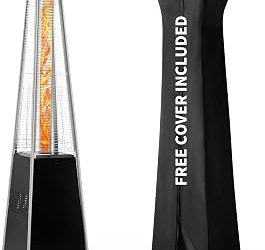
48,000 BTU Flame Pyramid Heater with Cover
The glass flame tube functions as both heat source and light source, giving a covered patio the same focal warmth a fireplace brings indoors. Triple safety protection, wheels for repositioning, and an included cover make it a well-rounded pick for open-sided structures with generous headroom.
Pamapic 50,000 BTU Patio Heater with Round Table
The integrated tabletop is the smart design move here, turning a single-purpose appliance into a functional surface for drinks and small plates. A 304 stainless burner and triple protection system back up the highest output in this group, making it the strongest choice for wide, breezy covered areas.
Pamapic 48,000 BTU Pyramid Flame Heater in Hammered Bronze
At 87 inches with a quartz glass tube and a hammered bronze finish, this is the most architectural option on the list, reading more like a sculptural element than equipment. Confirm your ceiling clearance before ordering, then enjoy one of the better-looking heat sources available at this price.
Pamapic 41,000 BTU Propane Patio Heater in Ink
CSA certification, lockable wheels, and a weather-resistant ink finish make this the practical everyday performer for balconies, backyards, and smaller covered spaces. The lower output is a feature rather than a compromise when your roof is already trapping heat.
Frequently Asked Questions
Can I use a propane heater under a covered patio?
Yes, provided the space is only partially enclosed with open sides that allow continuous airflow, and you observe the manufacturer’s stated clearances to the ceiling and walls. Never operate a propane heater in a fully enclosed room or an unventilated space, and install a carbon monoxide detector nearby.
How much overhead clearance do I need?
Follow the manual, since requirements vary by model, but freestanding towers typically call for several feet above the reflector. If you cannot meet that number, a ceiling or wall-mounted infrared heater is the correct alternative rather than a workaround.
Is electric or propane better for a roofed space?
Electric infrared wins on safety, silence, and low maintenance, and it works well because a roof holds radiant heat in place. Propane wins on raw reach and ambiance, so choose it when the area is large and genuinely open-sided.
Do I still need a heater cover if my patio is covered?
Usually yes. Humidity, blown rain, and dust still reach the unit, so a full-length zippered vinyl cover sized to your reflector, such as a 70-inch cover for a 21-inch reflector, protects the burner and finish between uses.
Final Thoughts
For low-clearance porches and anyone who would rather not manage propane tanks, the 1500W hanging infrared heater is the most sensible and design-friendly choice. If your covered patio is larger and open-sided, the Pamapic 50,000 BTU model with the round table offers the best blend of output and everyday utility, while the 48,000 BTU pyramid flame heater is the pick when ambiance matters as much as warmth.