Key takeaways
- Match capacity to the actual room, not the whole floor: Pint ratings assume open airflow. A 21-pint unit handles a 1,500 sq ft bedroom-and-hall run comfortably, while a damp basement with poured concrete walls wants 32 pints or more. Undersizing means the machine never cycles off.
- Decide now whether you’ll use a drain hose: Tanks between 0.45 and 1 gallon need emptying daily in serious damp. If the unit lives near a floor drain, sink, or sump, continuous gravity drainage turns it into a set-and-forget appliance. Look for a hose port on the rear panel rather than the base.
- Read the noise spec at sleep distance: Peltier and thermoelectric units run near-silent and suit nightstands. Compressor models are more powerful but audible; a dedicated sleep mode that dims the display and drops fan speed is the difference between usable and banished to the hallway.
- Insist on humidistat control and auto shut-off: Intelligent humidity control lets you set a target, typically 45–55%, and the unit modulates instead of running flat out. Auto shut-off at full tank protects floors; auto defrost matters if the space drops below 41°F in winter.
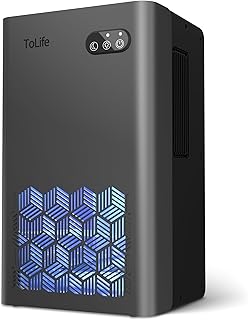
- Treat the finish as part of the specification: Matte black and warm grey shells read as intentional beside walnut or rattan. Ambient LED lighting is a genuine feature in a guest room and a distraction in an office, so check whether it can be switched off independently.
What's inside
Humidity is the one design flaw you can’t see. It shows up sideways: a wardrobe door that suddenly sticks, a chalky bloom on the leather ottoman, that faint cellar smell clinging to the linen sofa in a room you keep immaculate. Anything above roughly 60% relative humidity starts quietly working against solid wood joinery, veneer glue, upholstery foam, and the plaster behind your gallery wall. By the time you notice, the damage has usually been paid for twice.
This guide looks at dehumidifiers the way we look at any piece of hardworking furniture: by footprint, acoustics, and whether it earns its place in a finished room. Below you’ll find compact desiccant-style units sized for bedrooms and closets, mid-capacity compressor models for open-plan living, and high-throughput machines built for basements and lower-level storage. Each pick is judged on extraction rate, tank and drainage design, noise at sleeping distance, and how discreetly it disappears into a considered interior.
As an Amazon Associate we earn from qualifying purchases.



How to Choose a Deal Dehumidifier (2026)
- Match capacity to the actual room, not the whole floor: Pint ratings assume open airflow. A 21-pint unit handles a 1,500 sq ft bedroom-and-hall run comfortably, while a damp basement with poured concrete walls wants 32 pints or more. Undersizing means the machine never cycles off.
- Decide now whether you’ll use a drain hose: Tanks between 0.45 and 1 gallon need emptying daily in serious damp. If the unit lives near a floor drain, sink, or sump, continuous gravity drainage turns it into a set-and-forget appliance. Look for a hose port on the rear panel rather than the base.
- Read the noise spec at sleep distance: Peltier and thermoelectric units run near-silent and suit nightstands. Compressor models are more powerful but audible; a dedicated sleep mode that dims the display and drops fan speed is the difference between usable and banished to the hallway.
- Insist on humidistat control and auto shut-off: Intelligent humidity control lets you set a target, typically 45–55%, and the unit modulates instead of running flat out. Auto shut-off at full tank protects floors; auto defrost matters if the space drops below 41°F in winter.
- Treat the finish as part of the specification: Matte black and warm grey shells read as intentional beside walnut or rattan. Ambient LED lighting is a genuine feature in a guest room and a distraction in an office, so check whether it can be switched off independently.
The Best Deal Dehumidifier (2026)s Reviewed
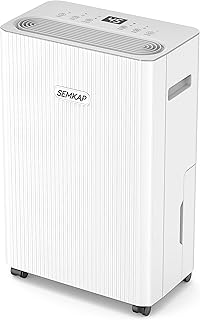
SEMKAP 32-Pint Dehumidifier, 2,500 Sq Ft
The most sensible all-rounder here: a smart compressor with genuine 32-pint output, intelligent humidity targeting, and a 24-hour timer, all running quietly enough for a finished lower level. Include the drain hose and it handles a wet season without a single tank trip.
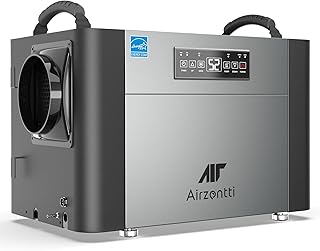
4,500 Sq Ft Compressor Dehumidifier with Drain Hose
Specified for the hardest cases: unfinished basements, workshops, and storage rooms holding furniture you actually care about. Energy-efficient cycling keeps running costs reasonable despite the coverage, and the humidistat prevents the over-drying that can shrink solid timber.
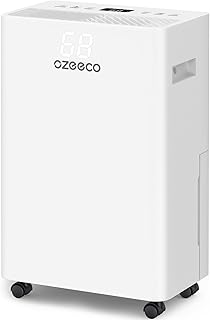
ozeeco 34-Pint Dehumidifier with Ionizer
Strong extraction paired with an ionizer, which helps with the stale note that lingers in below-grade rooms long after the moisture is gone. Child lock, 24-hour timer, and continuous drainage make it a solid choice for a family basement or an RV in storage.
21-Pint Dehumidifier, 1,500 Sq Ft with Drain Hose
The right scale for a bathroom, garage, or primary bedroom where a full-size compressor unit would dominate. Three modes and auto defrost give it more range than the pint rating suggests, and it’s quiet enough to leave running through the evening.
ToLife 95 oz Dehumidifier with Sleep Mode
Near-silent, genuinely portable, and finished in a soft grey that sits well on a shelf or beside a bed. The 7-color LED reads as ambient lighting rather than appliance glare, and sleep mode plus auto shut-off makes it the easiest unit here to live with nightly.
Frequently Asked Questions
What humidity level should I actually target?
Between 45% and 55%. That range protects wood furniture and textiles while staying comfortable and discouraging mold and dust mites. Below 40% for long stretches, solid wood can shrink and joints can loosen.
Will a small tank unit work in a basement?
Only as a supplement. Compact 95 oz models excel in closets, bathrooms, and bedrooms, but a basement’s thermal mass and slab moisture need compressor-based extraction of 30 pints or more.
How much does one add to an electricity bill?
Less than most people expect, provided you use the humidistat. A unit that cycles off at target draws a fraction of one that runs continuously, which is why intelligent humidity control matters more than the wattage on the box.
Where should I place it?
Central, with clear air on all sides and at least 8 to 12 inches from walls and furniture. Avoid tucking it behind a sofa or inside a cabinet, since restricted intake drops performance sharply.
Final Thoughts
For most homes, the SEMKAP 32-Pint is the balanced choice, delivering real basement-grade capacity without turning the room into a utility space. Step up to the 4,500 sq ft compressor model if you’re drying a large unfinished area, and pair either with the ToLife 95 oz for bedrooms, where quiet operation and a warmer finish matter more than raw pint count. The 95 oz ambient-light model in black is a smart alternative if your palette runs darker.