Key takeaways
- Interior volume: Measure your safe in cubic feet before anything else. A 450g desiccant canister comfortably covers roughly 60 cubic feet, while warm-air circulation units are rated for interiors up to 300 cubic feet — undersizing is the single most common mistake.
- Power access: Corded rods and heaters need a factory pass-through or a drilled port with a grommet. If drilling into a fire-rated wall is off the table, choose a rechargeable or renewable desiccant model instead.
- Electric versus desiccant: Electric units raise interior temperature a few degrees so moisture never condenses, running continuously and needing no upkeep. Desiccants physically absorb water and require periodic recharging, but work in any safe, anywhere.
- Maintenance rhythm: Look for a color-change indicator window on desiccant models so you can read status at a glance, and check recharge time — some renew in a few hours in a standard outlet, others take longer.
- Placement and footprint: Rods mount low along the floor to drive convection upward; canisters and pucks sit on a shelf. Confirm the unit will not crowd long guns, and prefer flat or slim profiles that tuck behind stored items.
What's inside
A gun safe does its job so quietly that most people forget it is also a sealed steel box — and sealed steel boxes are where humidity goes to settle in. Every time the door opens, warm room air slips inside, cools against the walls, and leaves behind moisture that has nowhere to go. Weeks later that shows up as freckled bluing, a hazy scope lens, tarnish creeping across a stored watch, or the faint musty note that clings to documents and cased firearms. It is a slow, invisible kind of damage, and it almost always costs more to reverse than to prevent.
This guide looks at gun safe dehumidifiers the way we look at any piece of hardworking home equipment: does it suit the space, does it disappear into the design, and will it still be doing its job in five years? Below you will find plug-in warming rods and circulating heaters for safes with a cord pass-through, plus rechargeable and renewable desiccant units for safes wired to nothing at all. We cover interior volume, placement, maintenance rhythm, and the trade-offs between electric and passive protection so you can match a unit to your safe rather than guessing at a spec sheet.
As an Amazon Associate we earn from qualifying purchases.




How to Choose a Dehumidifier For Gun Safe (2026)
- Interior volume: Measure your safe in cubic feet before anything else. A 450g desiccant canister comfortably covers roughly 60 cubic feet, while warm-air circulation units are rated for interiors up to 300 cubic feet — undersizing is the single most common mistake.
- Power access: Corded rods and heaters need a factory pass-through or a drilled port with a grommet. If drilling into a fire-rated wall is off the table, choose a rechargeable or renewable desiccant model instead.
- Electric versus desiccant: Electric units raise interior temperature a few degrees so moisture never condenses, running continuously and needing no upkeep. Desiccants physically absorb water and require periodic recharging, but work in any safe, anywhere.
- Maintenance rhythm: Look for a color-change indicator window on desiccant models so you can read status at a glance, and check recharge time — some renew in a few hours in a standard outlet, others take longer.
- Placement and footprint: Rods mount low along the floor to drive convection upward; canisters and pucks sit on a shelf. Confirm the unit will not crowd long guns, and prefer flat or slim profiles that tuck behind stored items.
The Best Dehumidifier For Gun Safe (2026)s Reviewed
PEET SafeKeeping Dehumidifier
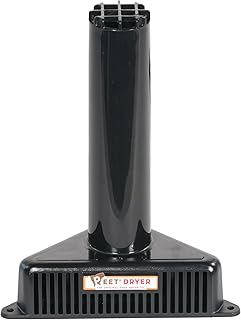
PEET has been building warm-air circulation units for decades, and this one covers safes up to 300 cubic feet without a fan, a filter, or a sound. The five-year warranty and silent 24/7 operation make it the easy recommendation for large safes with an existing power port.
Gun Safe Dehumidifier Rod, 24in
The classic dry rod remains the most cost-effective way to protect a mid-to-large safe: mount it low, plug it in, and let gentle convection keep the interior a few degrees above dew point. ETL approval and a 24-inch span make it a sensible upgrade over shorter, underpowered rods.
XL Gun Safe Dehumidifier, 450g Silica Gel
For safes with no cord access, this 450g reusable canister is the most capable passive option here, rated for roughly 60 cubic feet with an indicating window that tells you exactly when to recharge. No wiring, no heat, no ongoing cost.
Afloia TOPZ 2+1 Rechargeable Dehumidifier
A cordless design with a heating base gives you the convenience of a rechargeable puck plus faster renewal between cycles. Its compact footprint also earns it a place in closets, cars, RVs, and boats, which makes it the most versatile pick if you protect more than one space.
Eva-Dry E-333 Wireless Mini
Small, wireless, and endlessly renewable, the E-333 is the right answer for pistol safes, ammo cabinets, and camera drawers rather than full-size vaults. Buying two and rotating them keeps protection continuous while one recharges.
Frequently Asked Questions
What humidity level should a gun safe hold?
Aim for 30–50% relative humidity. Below 30% can dry out wood stocks and leather; above 50% invites surface corrosion. A small hygrometer inside the safe is worth the few dollars it costs.
Do electric dehumidifiers make the safe hot?
No. Rods and warm-air units raise interior temperature only a few degrees — enough to prevent condensation, not enough to affect ammunition, optics, or finishes.
How often do desiccant units need recharging?
Typically every one to three months, depending on climate and how often the door opens. Indicator windows remove the guesswork entirely.
Can I use both types together?
Yes, and in humid coastal or basement conditions it is a smart layered approach: an electric unit handles baseline circulation while a desiccant canister absorbs the spikes.
Final Thoughts
For most large safes with power access, the PEET SafeKeeping unit is the most complete choice, with the 24-inch Dry Rod close behind as the budget-conscious alternative. If your safe has no cord pass-through, the XL 450g silica gel canister delivers serious passive protection with almost no fuss.