Key takeaways
- Footprint first: Desk real estate is scarce and floor space is scarcer. A cylinder under 9 inches wide fits between a bed frame and a wall; a desktop unit like the Core Mini-P disappears next to a monitor. Measure before you buy.
- Coverage with headroom: A purifier rated for 1,000+ square feet in a 150-square-foot room isn’t overkill, it’s permission to run the quietest setting and still cycle the air several times an hour. Oversizing is the easiest way to buy silence.
- Noise you can sleep through: Look for a stated 22 to 24 dB sleep mode. Anything above roughly 30 dB becomes a presence in the room, and a purifier you switch off at bedtime does nothing during the eight hours you’re breathing most.
- True HEPA, no ozone: An H13 True HEPA filter captures 99.97% of particles at 0.3 microns. Skip anything marketing an ionizer or ozone generator as a feature, and skip UV gimmicks that add cost without adding capture.
- Filter economics and dorm rules: Check replacement filter price and cadence, usually every six to eight months, before committing to a platform. Also confirm your housing policy: most schools allow purifiers, but some restrict units with open heating elements or high wattage draw.
What's inside
A dorm room is the most air-constrained space most people will ever live in: roughly 120 to 180 square feet, a single window that may or may not open, a ventilation system you don’t control, and a roommate whose habits are now your habits. Layer in industrial carpet that traps dust, a shared hallway that carries everyone’s cooking, and a heating system that recirculates the same air all winter, and you get a room that smells lived-in by October and feels stuffy by finals. Design solves a lot of small-space problems. It cannot solve this one without hardware.
This guide covers the air purifiers that actually make sense in a residence hall, judged on the criteria that matter in a tight room: physical footprint, real coverage against a small square footage, noise at the speed you’ll leave it on overnight, and long-term filter cost on a student budget. Below are our picks for 2026, followed by a buying framework and answers to the questions that come up most.
As an Amazon Associate we earn from qualifying purchases.




How to Choose a Dorm Room Air Purifier (2026)
- Footprint first: Desk real estate is scarce and floor space is scarcer. A cylinder under 9 inches wide fits between a bed frame and a wall; a desktop unit like the Core Mini-P disappears next to a monitor. Measure before you buy.
- Coverage with headroom: A purifier rated for 1,000+ square feet in a 150-square-foot room isn’t overkill, it’s permission to run the quietest setting and still cycle the air several times an hour. Oversizing is the easiest way to buy silence.
- Noise you can sleep through: Look for a stated 22 to 24 dB sleep mode. Anything above roughly 30 dB becomes a presence in the room, and a purifier you switch off at bedtime does nothing during the eight hours you’re breathing most.
- True HEPA, no ozone: An H13 True HEPA filter captures 99.97% of particles at 0.3 microns. Skip anything marketing an ionizer or ozone generator as a feature, and skip UV gimmicks that add cost without adding capture.
- Filter economics and dorm rules: Check replacement filter price and cadence, usually every six to eight months, before committing to a platform. Also confirm your housing policy: most schools allow purifiers, but some restrict units with open heating elements or high wattage draw.
The Best Dorm Room Air Purifiers (2026), Reviewed
Levoit Core Mini-P
The smartest use of a cubic foot in this category, small enough to sit on a nightstand and still pull down dust and odor in a standard single. The fragrance sponge is a genuinely nice touch for a room where you can’t open a window, though treat it as scent, not filtration.
Levoit Core 300-P
Still the reference point: H13 True HEPA, AHAM Verifide performance, a 24 dB sleep mode, and coverage far beyond what a dorm needs, which is exactly why it stays quiet. Filters are widely available and cheap, which matters more over four years than any spec on the box.
VOOPNU DH-JH12
A 360-degree intake and 22 dB floor make this a strong pick for awkward layouts where the purifier has to live in a corner rather than out in the room. Three speeds, a timer, and an aroma option cover the basics without a subscription or an app.
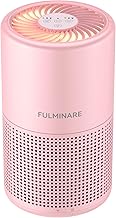
FULMINARE H13 True HEPA (Pink)
The one that earns its spot on aesthetics without giving up the filter that matters, and the built-in night light quietly replaces a second device on a crowded desk. Best suited to bedside duty in a small room rather than whole-suite cleaning.
YADU Dorm Room Air Purifier
App control is the differentiator here: you can start a cycle from class so the room is clear when you get back, and monitor filter life without guessing. The 3-stage filter and 536-square-foot rating are well matched to a double, and 22 dB keeps it viable overnight.
Frequently Asked Questions
Are air purifiers allowed in dorm rooms?
Nearly always, since they’re low-wattage sealed appliances with no heating element. Check your housing handbook for wattage caps or restrictions on additional appliances, and look for a UL or ETL listing on whatever you buy.
Where should I place it?
Off the floor if possible, at least six inches from walls and furniture, and near where you sleep rather than by the door. Blocking the intake against a bed frame or under a desk shelf is the most common reason a good purifier underperforms.
How often do filters need replacing?
Every six to eight months with continuous use, sooner if you’re in a smoky region or have pets visiting. Vacuum the pre-filter mesh monthly to extend filter life, and never wash a HEPA filter, water destroys the media.
Will it help with mold, smoke, or roommate cooking smells?
It captures airborne mold spores, wildfire smoke particulate, and much of the odor load through the activated carbon stage. It won’t fix an active mold problem behind a wall, which is a maintenance request, not a hardware purchase.
Final Thoughts
For most rooms, the Levoit Core 300-P is the safe, oversized, quiet default with the cheapest long-term filter supply. If your desk is your only free surface, the Core Mini-P does more than its size suggests, and the YADU is the better buy if app scheduling and filter tracking fit how you actually live.