Key takeaways
- Top depth and surface width: A standard contoured pad measures roughly 16 by 32 inches. Look for a top of at least 18 inches deep so the pad sits fully supported with no overhang, and confirm the changing tray or raised rails are secured to the frame rather than resting loose.
- Working height: The sweet spot is 34 to 38 inches from floor to pad surface. Too low and you’ll be hunched during ten changes a day; too high and it becomes awkward for shorter caregivers. Measure against your own waist before committing.
- Anchoring and tip resistance: Every unit should ship with a wall strap, and you should use it. Fabric-drawer designs are lighter and more dependent on anchoring, so treat the hardware as required rather than optional.
- Storage that matches your routine: Open fabric bins let you grab wipes one-handed but show clutter. Enclosed wood drawers look tidier and store folded clothes better. Mixed configurations, with open shelving near the pad and drawers below, tend to be the practical compromise.
- Second-life design: Ask whether the changing top lifts off and whether the remaining piece reads as a real dresser. A neutral finish, solid legs, and clean drawer fronts will carry the piece into a toddler room without looking like leftover baby gear.
What's inside
The nursery is the one room where furniture has to earn its keep twice. You need a surface at hip height for diaper changes now, and a piece that still looks intentional in a ten-year-old’s bedroom later. Most shoppers discover the tension too late: the dedicated changing station gets outgrown in eighteen months, while the handsome dresser they loved turns out to be three inches too shallow to hold a contoured pad safely. Add in tight square footage, drawer hardware small hands can pinch, and finishes that off-gas in a closed room, and a simple purchase becomes a research project.
This guide narrows the field to dressers that genuinely function as changing tables, with the depth, weight distribution, and anchoring hardware to do it safely. I’ve weighed storage layout against footprint, fabric drawers against wood, and mobility against stability, then flagged which pieces convert cleanly once the diaper years end. Below you’ll find current picks, a short checklist of what actually matters in 2026, and answers to the questions that come up most often after the box is open.
As an Amazon Associate we earn from qualifying purchases.


How to Choose a Dresser For Changing Table (2026)
- Top depth and surface width: A standard contoured pad measures roughly 16 by 32 inches. Look for a top of at least 18 inches deep so the pad sits fully supported with no overhang, and confirm the changing tray or raised rails are secured to the frame rather than resting loose.
- Working height: The sweet spot is 34 to 38 inches from floor to pad surface. Too low and you’ll be hunched during ten changes a day; too high and it becomes awkward for shorter caregivers. Measure against your own waist before committing.
- Anchoring and tip resistance: Every unit should ship with a wall strap, and you should use it. Fabric-drawer designs are lighter and more dependent on anchoring, so treat the hardware as required rather than optional.
- Storage that matches your routine: Open fabric bins let you grab wipes one-handed but show clutter. Enclosed wood drawers look tidier and store folded clothes better. Mixed configurations, with open shelving near the pad and drawers below, tend to be the practical compromise.
- Second-life design: Ask whether the changing top lifts off and whether the remaining piece reads as a real dresser. A neutral finish, solid legs, and clean drawer fronts will carry the piece into a toddler room without looking like leftover baby gear.
The Best Dresser For Changing Table (2026)s Reviewed
BOLUO Baby Dresser with Changing Table Top, 6 Fabric Drawers
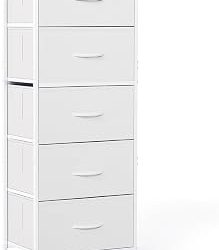
This is the balanced pick for most nurseries: a proper changing top with a lower storage shelf, six soft-sided drawers, and a footprint that fits a standard wall without dominating it. The white finish and simple lines keep it from reading as novelty furniture, and the fabric drawers make it light enough to reposition during setup.
BOLUO Changing Table Dresser with Storage, 7 Fabric Drawers
Essentially the higher-capacity sibling, trading a bit of visual simplicity for one extra drawer and more usable storage volume. Choose this version if the nursery doubles as your linen or overflow storage, since the seventh compartment absorbs the bulky items that otherwise migrate to the floor.
YeTom Changing Table, 6-Drawer with Adjustable Shelves
The adjustable shelving is the differentiator here, letting you reconfigure interior height as bottle warmers give way to books and bins. It arrives with a waterproof pad and safety strap, and the casters make cleaning behind it genuinely easy, though you’ll want to lock them before use.
White 6 Drawer Dresser with Solid Wood Legs
The best long-term investment of the group, and the one most likely to survive into a shared bedroom or guest room. There’s no integrated changing top, so plan on a contoured pad with non-slip backing, but the wood legs and enclosed drawers give you a real furniture piece rather than a phase.
YeTom Baby Changing Table, 9 Fabric Boxes
Maximum visible storage in a compact frame, ideal for small nurseries or closet nooks where every item needs a designated home. Nine open boxes reward organized households and punish messy ones, so pair it with labeled liners if you want the look to hold.
Frequently Asked Questions
Can I use any dresser as a changing table?
Only if the top is at least 18 inches deep, the height suits you, and the unit is anchored to the wall. Add a contoured pad with a safety strap and non-slip base, and never leave the baby unattended regardless of how secure the setup feels.
How long will I actually use the changing function?
Most families stop using an elevated surface between 18 and 24 months, once a toddler is strong enough to roll or climb. That short window is exactly why a convertible dresser beats a dedicated changing station.
Are fabric drawers durable enough?
They hold up well for clothing and soft goods but sag under heavy or sharp-cornered items. If you plan to store books, toy bins, or anything dense, choose a model with enclosed wood drawers or reinforce the fabric bases with cut hardboard.
Do these require assembly?
Yes, nearly all flat-pack nursery dressers do. Budget 45 to 90 minutes, use a second set of hands for the frame stage, and check every fastener again after two weeks of use as the joints settle.
Final Thoughts
For most nurseries, the BOLUO 6-drawer changing dresser hits the right balance of surface depth, storage, and restrained styling, with the 7-drawer version worth the upgrade if you need extra capacity. If you’re buying once and thinking a decade ahead, the white 6-drawer dresser with solid wood legs paired with a quality contoured pad is the pick that will still look deliberate long after the diapers are gone.