Key takeaways
- Footprint before features: Measure your depth under the upper cabinets, then add four inches for the water tank lid and portafilter swing. A machine you can’t open is a machine you won’t use.
- Milk matters more than pressure: Nearly every pump machine hits 15–20 bar, which is plenty. What separates them is steam power — look for a swiveling wand or automatic texturing if cappuccinos are your daily order.
- Grinder in or out: A built-in burr grinder costs more upfront but replaces a second appliance and a second patch of counter. Skip it only if you already own a quality grinder.
- Reservoir access and size: A removable 1.2–1.5L tank you can fill at the sink beats a larger fixed one. Front- or side-access tanks are essential under low cabinets.
- Finish that ages well: Brushed stainless disappears into most modern kitchens and hides fingerprints better than gloss black or chrome. Consider it a design decision, not a spec.
The best espresso machine overall is the CASABREWS CM5418 Compact Espresso Machine, with the Breville BES870XL Barista Express as runner-up. The CASABREWS wins on the metric most kitchens actually care about — real 20-bar extraction and a steam wand in a footprint the width of a cookbook — while the Barista Express is the machine to buy when you want a built-in grinder and café-grade control.
Espresso machines are the hardest appliance to shop for because the marketing sells pressure numbers while the disappointment comes from somewhere else entirely: a machine that swallows your counter, a steam wand too weak to texture milk, or a drip tray you have to move the whole unit to empty. As someone who specs appliances into real kitchens, I judge espresso machines on three things — footprint and finish, milk performance, and how forgiving they are on day one. Below are the six machines worth your counter space, plus a comparison table and a buying framework you can apply to any model.
Our top picks






As an Amazon Associate we earn from qualifying purchases at no extra cost to you.
Quick Comparison
| Product | Best For | Standout Feature | Rating |
|---|---|---|---|
| CASABREWS CM5418 Compact | Most kitchens | 20-bar pump in a slim footprint | Editor’s Choice |
| CASABREWS 3700 Essential | First espresso machine | Stainless housing at an entry price | Best Value |
| Breville BES870XL Barista Express | Serious home baristas | Integrated conical burr grinder | Exceptional |
| atatix 20 Bar Espresso Maker | Milk-drink lovers | Dedicated frother for lattes | Strong |
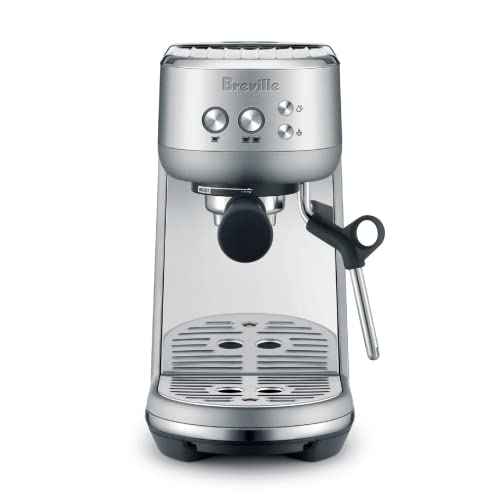
| Breville BES450BSS Bambino | Small kitchens and speed | 3-second heat-up, auto milk texturing | Excellent |
How to Choose an Espresso Machine
- Footprint before features: Measure your depth under the upper cabinets, then add four inches for the water tank lid and portafilter swing. A machine you can’t open is a machine you won’t use.
- Milk matters more than pressure: Nearly every pump machine hits 15–20 bar, which is plenty. What separates them is steam power — look for a swiveling wand or automatic texturing if cappuccinos are your daily order.
- Grinder in or out: A built-in burr grinder costs more upfront but replaces a second appliance and a second patch of counter. Skip it only if you already own a quality grinder.
- Reservoir access and size: A removable 1.2–1.5L tank you can fill at the sink beats a larger fixed one. Front- or side-access tanks are essential under low cabinets.
- Finish that ages well: Brushed stainless disappears into most modern kitchens and hides fingerprints better than gloss black or chrome. Consider it a design decision, not a spec.
The Best Espresso Machines Reviewed
Best Overall: CASABREWS CM5418 Compact Espresso Machine
This is the machine I recommend to nearly everyone: a genuine 20-bar pump and a usable steam wand in a slim stainless body that tucks beside a kettle. Best for anyone who wants café-quality shots without redesigning their countertop layout.
Best Budget: CASABREWS 3700 Essential
The 3700 strips things back to the essentials — stainless housing, steam wand, straightforward controls — at a price that makes espresso a low-risk experiment. Ideal for first-time buyers or a guest kitchen, casita, or office break room.
Best Premium: Breville BES870XL Barista Express
The Barista Express remains the benchmark for home espresso because it pairs a conical burr grinder with real control over dose, grind, and extraction. Buy it if you want to learn the craft properly and are willing to give it the counter space it commands.
Best for Lattes and Cappuccinos: atatix 20 Bar Espresso Machine
The dedicated milk frother makes this the easiest pick for households that drink espresso mostly as a milk drink. Best for families where one person wants a flat white and another wants a mocha, without fussing over wand technique.
Best for Small Kitchens: Breville BES450BSS Bambino
The Bambino delivers Breville’s thermojet heating and automatic milk texturing in a genuinely narrow chassis that heats in seconds. Perfect for apartment kitchens and anyone whose espresso window is the eight minutes before leaving the house.
Frequently Asked Questions
Is 20 bar better than 15 bar?
Not meaningfully. Espresso extracts at roughly 9 bar; higher figures describe the pump’s maximum, not the brew pressure. Prioritize temperature stability, grind quality, and steam power instead.
Do I need a separate grinder?
If your machine lacks one, yes — pre-ground coffee is the single biggest cause of weak, fast-running shots. Machines like the Barista Express solve this internally; pair the CASABREWS and Bambino with a burr grinder.
Are compact machines a compromise?
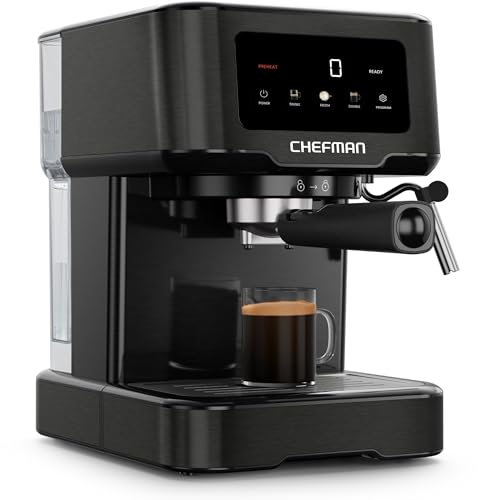
Less than they used to be. Models like the CM5418, the Bambino, and the Chefman CraftBrew deliver full pump pressure and steam in reduced footprints, trading only tank capacity and simultaneous brew-and-steam ability.
How much maintenance is involved?
Purge and wipe the steam wand after every use, backflush or rinse the group weekly, and descale every one to three months depending on water hardness. Filtered water dramatically ext