Key takeaways
- Pump pressure over marketing numbers: Anything from 9 to 20 bar can pull good espresso — 9 bar is what actually hits the puck. Treat 15-bar and 20-bar claims as headroom, not quality.
- Steam wand vs. auto-frother: A manual wand teaches you real microfoam and scales with your skill. An automatic frother is faster and more forgiving if you only want a weekday latte.
- Footprint and sightlines: Measure depth under upper cabinets and check whether the water tank fills from the top. A rear-fill tank on a shallow counter means dragging the machine forward every morning.
- Finish that ages well: Brushed stainless and matte black hide fingerprints and water spots far better than gloss plastic, which is why they read as “cafe” rather than “gadget” on an open shelf.
- Grinder now or later: Fresh grinding is the single biggest upgrade to shot quality. Either buy a machine with one built in or budget separately for a burr grinder — pre-ground coffee caps your ceiling immediately.
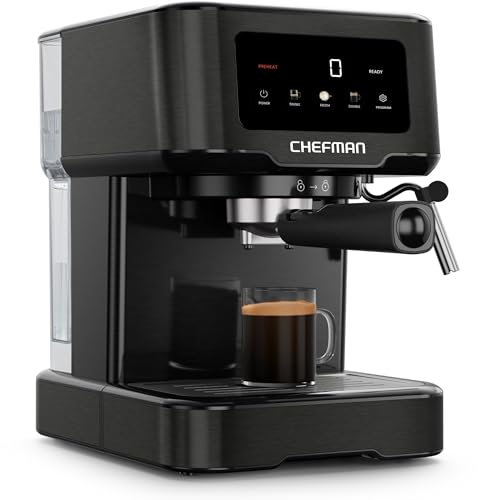
The Chefman CraftBrew 15-Bar Espresso Machine is the best overall espresso machine for beginners chasing real cafe shots at home, with the CASABREWS CM5418 Compact Espresso Machine as the runner-up. Both deliver genuine pressurized extraction and steam-wand milk texturing without the intimidating learning curve of a prosumer setup.
The problem most first-time buyers run into is that “espresso machine” covers everything from a $90 steam toy to a $900 dual-boiler. Add the fact that these machines live permanently on your counter — visible, in a small footprint, next to everything else you own — and the decision becomes part kitchen engineering, part interior design. This guide narrows the field to five beginner-friendly machines that actually pull espresso with crema, texture milk properly, and look intentional on an open shelf or a narrow coffee station.
Our top picks




As an Amazon Associate we earn from qualifying purchases at no extra cost to you.
Quick Comparison
| Product | Best For | Standout Feature | Rating |
|---|---|---|---|
| Chefman CraftBrew 15-Bar | All-around first machine | Digital controls + 1.5L removable tank | See current rating |
| CASABREWS CM5418 Compact | Tight budgets | Slim body with real steam wand | See current rating |
| AERCANA 20-Bar Espresso Machine | Design-led kitchens | Full stainless shell, 34oz tank | See current rating |
| atatix 20-Bar Espresso Maker | Milk drink fans | Dedicated frother for lattes | See current rating |
| AMZCHEF Espresso Machine with Grinder | Grind-to-cup workflow | 44 grind settings + temp control | See current rating |
How to Choose an Espresso Machine for Beginners Who Want Real Cafe Shots at Home
- Pump pressure over marketing numbers: Anything from 9 to 20 bar can pull good espresso — 9 bar is what actually hits the puck. Treat 15-bar and 20-bar claims as headroom, not quality.
- Steam wand vs. auto-frother: A manual wand teaches you real microfoam and scales with your skill. An automatic frother is faster and more forgiving if you only want a weekday latte.
- Footprint and sightlines: Measure depth under upper cabinets and check whether the water tank fills from the top. A rear-fill tank on a shallow counter means dragging the machine forward every morning.
- Finish that ages well: Brushed stainless and matte black hide fingerprints and water spots far better than gloss plastic, which is why they read as “cafe” rather than “gadget” on an open shelf.
- Grinder now or later: Fresh grinding is the single biggest upgrade to shot quality. Either buy a machine with one built in or budget separately for a burr grinder — pre-ground coffee caps your ceiling immediately.
The Best Espresso Machines for Beginners Who Want Real Cafe Shots at Home, Reviewed
Best Overall: Chefman CraftBrew 15-Bar Espresso Machine
The digital interface takes the guesswork out of shot volume, and the 1.5L removable reservoir means fewer refills during weekend brunch service. Best for the beginner who wants one machine to learn on, keep, and not fuss over — in a stainless-and-black finish that disappears into most modern kitchens.
Best Budget: CASABREWS CM5418 Compact Espresso Machine
A genuinely narrow body with a working steam wand, which is a rare combination at this price. Best for renters, dorm kitchens, and anyone testing whether the espresso habit will stick before committing real money.
Best Premium: AERCANA 20-Bar Stainless Steel Espresso Machine
The all-stainless shell and 34oz removable tank give it a light, considered presence — closer to a small appliance you’d display than one you’d hide. Best for design-conscious buyers furnishing a coffee corner where the machine is part of the visual composition.
Best for Latte and Cappuccino Drinkers: atatix 20-Bar Espresso Machine with Milk Frother
The frothing setup is the point here, producing consistent foam without a long practice curve. Best for households that drink milk-based coffee almost exclusively and want repeatable results on a rushed weekday morning.
Best for Fresh-Ground Shots: AMZCHEF Espresso Machine with Grinder and Temp Control
Forty-four grind settings plus temperature control turn dialing in from a mystery into an adjustable process, and skipping a separate grinder saves counter real estate. Best for the beginner who already knows they want to go deep on technique.
Frequently Asked Questions
Do I really need a separate grinder?
If your machine doesn’t include one, yes — a burr grinder matters more than upgrading the machine itself. Pre-ground coffee stales within days and removes your ability to fix a sour or bitter shot.
Is 20 bar better than 15 bar?
No. Espresso extracts at roughly 9 bar; higher numbers describe maximum pump capacity, not brewing pressure. Build quality, temperature stability, and your grind matter far more.
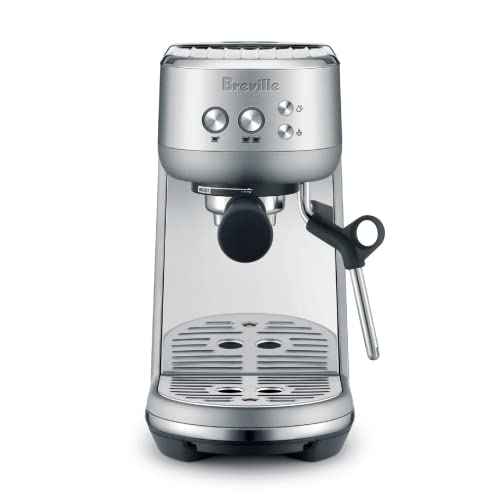
When is it worth stepping up to a Breville Bambino?
Once you’re comfortable with grind adjustment and milk texturing. The Bambino’s fast heat-up and better steam power reward technique you’ve already built, which makes it a smart second machine rather than a first.
How much counter space should I plan for?
Allow roughly 14 inches of depth including the tank and clearance to swing the steam wand, plus a small tray area for your cups, tamper, and beans so the station stays visually tidy.
Final Thoughts
For most beginners, the Chefman CraftBrew is the right balance of control, capacity, and restrained styling; the CASABREWS CM5418 is the smartest low-risk entry point; and the AMZCHEF with its built-in grinder is the pick if you’d rather learn on a complete grind-to-cup setup from day one.