Our Short List of 3
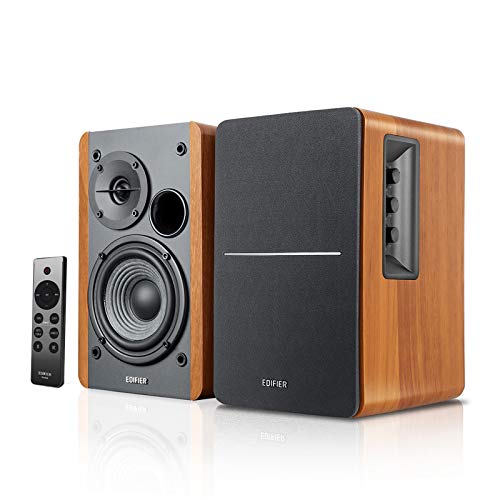
- Best for: A small room where the listener wants warm bass and clear voices from a single pair of speakers with no subwoofer.
- 42W RMS total output
- 55Hz to 20kHz frequency response
- 4-inch woofer and 0.5-inch silk dome tweeter
- Bluetooth 5.0 wireless connection

- Best for: A desktop setup where the listener wants strong bass and clear highs from a compact system with a separate subwoofer.
- 200W peak power
- 6.5-inch subwoofer
- 3-inch satellite drivers
- THX Certified
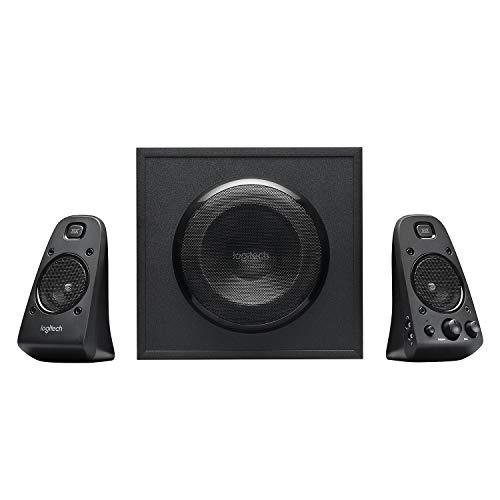
- Best for: A living room or large bedroom where movies and games need room-filling sound from a simple two-piece system.
- 200W RMS total output
- 7-inch subwoofer
- THX Certified
- Multiple inputs for computer, console, and phone
All 4 Picks at a Glance
| Product | Specs | Action |
|---|---|---|
| Edifier R1280DBs |
| Check price on Amazon |
| Klipsch ProMedia 2.1 THX |
| Check price on Amazon |
| Logitech Z623 |
| Check price on Amazon |
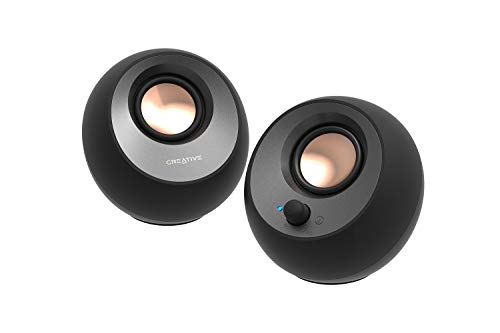 Creative Pebble V3 |
| Check price on Amazon |
Key takeaways
- Our best frequesncy range for hight speakers guide compares wide-response bookshelf and desktop models, so you can match the speaker to your room and your ears.
The frequency range of a speaker decides which sounds it can actually reproduce, and that decides whether music sounds full or thin. A speaker that reaches low into the bass and high into the treble gives drums weight, voices warmth, and cymbals air, while a narrow-range speaker leaves gaps that no volume setting can fill. The real decision is not the biggest number on the box but the range that fits the room, the listening distance, and the kind of sound the buyer wants to hear every day.
This guide is for home listeners setting up a first speaker system, for desk workers who want better sound than a laptop gives, and for anyone replacing a speaker that sounds flat or boomy. The four models below were chosen from the names and specifications on their Amazon product pages, with the stated frequency response, driver sizes, and power figures as the starting point for every comparison.
Quick Picks
As an Amazon Associate we earn from qualifying purchases
| Product | Best for | Key spec from title |
|---|---|---|
| Edifier R1280DBs | Small-room listening with warm bass | 42W RMS and 55Hz to 20kHz response |
| Klipsch ProMedia 2.1 THX | A desktop setup that needs real low end | 200W peak power with a 6.5-inch subwoofer |
| Logitech Z623 | A room-filling system for movies and games | 200W RMS with THX certification |
| Creative Pebble V3 | A compact desk speaker with clean highs | USB-C powered with Bluetooth 5.0 |
How to Choose
Read the frequency response before the brand name
The frequency response is the single most useful figure on a speaker listing, because it states the lowest and highest sounds the speaker is built to reproduce. A response that starts around 55Hz reaches into the bass that gives music its body, while a response that stops at 100Hz or higher leaves the low end to a subwoofer or to nothing at all. At the top end, most listings reach 20kHz, which covers the highest sounds most listeners can hear. Compare the full range, not just one end, and treat a listing that hides the response as a warning sign. The response tells the buyer more than the wattage does.
Match the speaker to the room and the listening distance
A speaker that fills a living room can overwhelm a small desk, and a compact desk speaker can sound lost in an open room. Bookshelf speakers with four-inch woofers suit a bedroom or office where the listener sits a few feet away, while a system with a separate subwoofer suits a larger room where the bass needs to travel. The listening distance matters as much as the room size, because a near-field desk setup needs clarity at low volume rather than raw output. Measure the space, note where the listener sits, and pick the system sized for that distance rather than the largest one available.
Check the drivers behind the numbers
The drivers are the parts that move air, and their size and type explain why two speakers with similar responses sound different. A larger woofer moves more air and reaches lower notes with less strain, while a separate tweeter handles the high notes that a single full-range driver must split its attention across. A two-way design with a woofer and a tweeter usually gives cleaner highs than a single-driver speaker of the same size. Look for the driver sizes on the listing, check whether the design is two-way or single-driver, and remember that a bigger driver is not automatically better if the cabinet is too small for it.
Think about connections and placement together
A speaker is only useful if it connects to the devices the buyer already owns, and placement decides how much of its range actually reaches the ears. Bluetooth suits a phone or tablet, a wired input suits a computer or turntable, and a system with both covers more setups without extra adapters. Placement matters just as much: speakers pushed against a wall gain bass but can sound muddy, while speakers on a desk at ear height sound clearer than speakers tucked under a shelf. Check the inputs on the listing, plan the spot on the desk or shelf, and leave a little space behind the speaker for the bass to breathe.
The 4 Best Options
Edifier R1280DBs
- Best for: A small room where the listener wants warm bass and clear voices from a single pair of speakers with no subwoofer.
- 42W RMS total output
- 55Hz to 20kHz frequency response
- 4-inch woofer and 0.5-inch silk dome tweeter
- Bluetooth 5.0 wireless connection
A small room where the listener wants warm bass and clear voices from a single pair of speakers with no subwoofer.
The response starts at 55Hz, so the deepest bass notes in movies and electronic music will be softer than on a system with a subwoofer. Check the low end against the music the buyer plays most.
The Edifier R1280DBs fits the listener who wants a warm, full bookshelf sound in a small room without adding a subwoofer. Its four-inch woofer and half-inch tweeter give it a two-way design that keeps voices clear and bass present, and the stated 55Hz to 20kHz response reaches low enough for most music without a separate bass unit. Bluetooth connects a phone in seconds, while the dual RCA inputs take a computer or turntable at the same time. It suits a bedroom, office, or study where the listener sits close and wants a speaker that sounds complete on its own.
Watch out for: The response starts at 55Hz, so the deepest bass notes in movies and electronic music will be softer than on a system with a subwoofer. Check the low end against the music the buyer plays most.
Klipsch ProMedia 2.1 THX
- Best for: A desktop setup where the listener wants strong bass and clear highs from a compact system with a separate subwoofer.
- 200W peak power
- 6.5-inch subwoofer
- 3-inch satellite drivers
- THX Certified
A desktop setup where the listener wants strong bass and clear highs from a compact system with a separate subwoofer.
The subwoofer needs floor space and a little distance from the wall, so measure the space under or beside the desk before ordering. A cramped corner can make the bass sound boomy.
The Klipsch ProMedia 2.1 THX fits the desk listener who wants real low end from a compact system. Its 6.5-inch subwoofer carries the bass that small satellites cannot, while the two satellite speakers handle the mids and highs, and the THX certification on the listing signals that the system was built to a set of performance standards for home use. The control pod puts volume and subwoofer level within reach, so the bass can be turned down late at night without reaching behind the desk. It suits a desktop setup for music, movies, and games where the bass matters.
Watch out for: The subwoofer needs floor space and a little distance from the wall, so measure the space under or beside the desk before ordering. A cramped corner can make the bass sound boomy.
Logitech Z623
- Best for: A living room or large bedroom where movies and games need room-filling sound from a simple two-piece system.
- 200W RMS total output
- 7-inch subwoofer
- THX Certified
- Multiple inputs for computer, console, and phone
A living room or large bedroom where movies and games need room-filling sound from a simple two-piece system.
The subwoofer is large and heavy, so check the floor space and the route the cables must take before ordering. The system is built for a room, not a crowded desk.
The Logitech Z623 fits the listener who wants a room-filling system for movies, games, and music without a complicated setup. Its 200 watts RMS drives a seven-inch subwoofer and two satellite speakers, and the THX certification on the listing signals a system built for clear, powerful sound at higher volumes. Multiple inputs take a computer, a console, and a phone, so the system can serve the whole room rather than a single device. It suits a living room or a large bedroom where the speakers need to reach across the space, not just across a desk.
Watch out for: The subwoofer is large and heavy, so check the floor space and the route the cables must take before ordering. The system is built for a room, not a crowded desk.
Creative Pebble V3
- Best for: A small desk where the listener wants clear voices and clean highs from a compact speaker that runs on USB power.
- 16W peak power
- 2-inch full-range drivers
- 45-degree elevated angle
- USB-C powered
A small desk where the listener wants clear voices and clean highs from a compact speaker that runs on USB power.
The small drivers cannot reproduce deep bass, so music with heavy low end will sound lighter than on a larger speaker. Check the low end against the music the buyer plays most.
The Creative Pebble V3 fits the desk worker who wants clean, clear sound from a speaker that takes almost no space. Its two-inch full-range drivers sit at a 45-degree angle that points the sound up toward the ears, which keeps voices and high notes clear at low volume. USB-C power means the speaker runs from the same cable that charges a laptop, and Bluetooth connects a phone without a wire. It suits a small desk, a dorm room, or a shared office where the listener wants better sound than built-in speakers without a large box on the desk.
Watch out for: The small drivers cannot reproduce deep bass, so music with heavy low end will sound lighter than on a larger speaker. Check the low end against the music the buyer plays most.
Which One Fits Your Situation
A small desk with close listening
Pick the Creative Pebble V3 when the desk is small and the listener sits an arm’s length from the speakers. Its angled drivers point the sound at the ears, its USB-C power keeps the cable clutter down, and its compact size leaves room for a keyboard and a monitor. The Edifier R1280DBs is the step up when the desk has room for bookshelf speakers and the listener wants fuller bass without a subwoofer.
Movies and games in a living room
Pick the Logitech Z623 when the room is large and the sound needs to reach a sofa rather than a desk chair. Its 200 watts RMS and seven-inch subwoofer give movies and games the weight they need, and its multiple inputs cover a computer, a console, and a phone. The Klipsch ProMedia 2.1 THX is the alternative when the room is smaller and the system must fit on or under a desk.
A bedroom or office with limited space
Pick the Edifier R1280DBs when the room is small and the listener wants a complete sound from one pair of speakers. Its two-way design and 55Hz low end cover most music without a subwoofer, and Bluetooth keeps the phone connection simple. The Creative Pebble V3 is the fallback when even bookshelf speakers are too large for the desk.
A first speaker system that must do everything
Pick the Klipsch ProMedia 2.1 THX when the buyer wants one system for music, movies, and games on a desk. Its subwoofer covers the bass, its satellites cover the highs, and the control pod makes it easy to adjust the balance. The Logitech Z623 is the pick when the same buyer has a larger room and wants more output for movies and games.
Common Mistakes
- Judging a speaker by watts alone, when the frequency response and driver sizes say more about how it sounds
- Ignoring the low end of the response, then wondering why the bass sounds thin
- Placing speakers flat against a wall without checking how the bass changes
- Buying a subwoofer system for a room with no floor space for the subwoofer
- Forgetting to check the inputs, then finding the speaker cannot connect to the device the buyer uses most
Frequently Asked Questions
What frequency range is best for home speakers?
A range from 50Hz to 20kHz covers most music well, because it includes the bass that gives drums weight and the highs that give cymbals air. A subwoofer can reach lower, near 30Hz, for movies and electronic music. Match the low end to the music played most.
Does a wider frequency range always sound better?
Not always. The stated range does not say how evenly the speaker reproduces each frequency, so a wide-range speaker can still sound harsh in the highs or muddy in the bass. A narrower speaker with even output can sound smoother. Driver design, cabinet, and placement shape the final sound too.
Do I need a subwoofer for full-range sound?
It helps when the main speakers cannot reach below 60Hz, which is common for compact desk speakers and small bookshelf models. It carries the deepest bass for movies and electronic music. A good pair of bookshelf speakers can sound complete without one for most music.
What does 20kHz mean for everyday listening?
20kHz is the top of the range most listings quote, covering the highest sounds most listeners can hear, such as the shimmer of a cymbal. Most adults hear less than 20kHz in practice, so reaching it is not automatically better than reaching 18kHz. The low end matters more, because the difference is easier to hear there.
More from Amazon
Programs that pair well with the guide above. Offers and eligibility are set by Amazon and may change.
Collect the home and kitchen items you want in one registry that guests can shop from.
Create a wedding registrySet up recurring deliveries of everyday items on eligible products. Terms and savings are set by Amazon.
Explore Subscribe & SaveFree shipping on eligible items, Prime Video and more. Eligible new members can start with a free trial.
Start a Prime free trialAudiobooks and podcasts to listen to on the go. Eligible new members can start with a free trial.
Try Audible freeAs an Amazon Associate we earn from qualifying purchases.