Key takeaways
- Frame material sets the ceiling: Powder-coated aluminum resists rust indefinitely and is the safest default for humid or coastal yards. Galvanized steel is stronger but needs an intact coating. Cedar is the premium choice aesthetically and handles weather beautifully with occasional sealing.
- Post dimensions over stated wind ratings: Wind numbers are self-reported and rarely comparable. A measurable spec like a 4.7-inch post tells you far more about rigidity than a marketing figure ever will.
- Double roofs earn their premium: The vented gap between two galvanized panels lets hot air escape instead of pooling under the canopy. On a still summer afternoon, the temperature difference underneath is genuinely noticeable.
- Ask where the water goes: Integrated gutters and internal downspouts route runoff away from the seating zone. Without them, every rainfall drips off the perimeter exactly where your chairs sit.
- Match permanence to your plans: Renting or reconfiguring the yard each season? A pop-up canopy is the honest answer. Staying put and pouring a patio? Buy the anchored hardtop and skip the intermediate purchase.
What's inside
Most gazebo shopping goes sideways for the same reason: the photos are shot in July. Every listing shows a shaded lounge, a linen throw, and someone pouring something cold. What the photos never show is February, when a foot of wet snow settles on a roof, or the first real gust of an August thunderstorm testing whether the posts were ever properly anchored. The gap between a structure that looks good on a screen and one that still looks good in year four comes down to unglamorous details — post thickness, roof venting, drainage, fastener quality — and almost none of it is spelled out plainly.
This guide sorts the current gazebo market by what the frame is actually built to do. We cover the three real categories worth your money in 2026 — soft-top pop-ups for temporary shade, aluminum-framed hardtops for year-round permanence, and cedar pavilions for homeowners treating the structure as architecture — then break down the specs that predict longevity. Below, you’ll find the models we’d put in a client’s yard, with honest notes on where each one belongs.
As an Amazon Associate we earn from qualifying purchases.


How to Choose a Gazebo Brand (2026)
- Frame material sets the ceiling: Powder-coated aluminum resists rust indefinitely and is the safest default for humid or coastal yards. Galvanized steel is stronger but needs an intact coating. Cedar is the premium choice aesthetically and handles weather beautifully with occasional sealing.
- Post dimensions over stated wind ratings: Wind numbers are self-reported and rarely comparable. A measurable spec like a 4.7-inch post tells you far more about rigidity than a marketing figure ever will.
- Double roofs earn their premium: The vented gap between two galvanized panels lets hot air escape instead of pooling under the canopy. On a still summer afternoon, the temperature difference underneath is genuinely noticeable.
- Ask where the water goes: Integrated gutters and internal downspouts route runoff away from the seating zone. Without them, every rainfall drips off the perimeter exactly where your chairs sit.
- Match permanence to your plans: Renting or reconfiguring the yard each season? A pop-up canopy is the honest answer. Staying put and pouring a patio? Buy the anchored hardtop and skip the intermediate purchase.
The Best Gazebo Brands of 2026, Reviewed
PURPLE LEAF 10′ x 14′ Gazebo
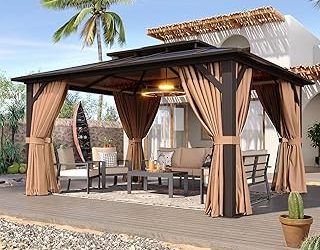
The 4.7-inch posts and built-in drainage system put this in a different structural class than most soft-top gazebos, and the 260 GSM Textilene netting holds its shape instead of sagging into the mesh-curtain look that ages a patio fast. The rustproof, snow-rated build makes it the most confident all-season pick at this footprint.
Backyard Discovery Arcadia 14′ x 12′ Cedar Gazebo
This is the one that reads as part of the house rather than an accessory to it — real cedar, a sloped galvanized hardtop with engineered snow support, and a built-in PowerPort so you can run lighting or a speaker without an extension cord crossing the lawn. Budget a full weekend and a second set of hands, then enjoy it for a decade.
AirWire 10′ x 12′ Aluminum Hardtop Gazebo
An all-aluminum frame under a double galvanized roof, finished in a dark gray that flatters modern stone and composite decking. It’s the low-maintenance choice: nothing to rust, nothing to re-stain, and the included curtains and netting arrive with the structure instead of as an upsell.
Aoxun 14×10 Hardtop Gazebo
The best value in genuinely large hardtops — 140 square feet is enough for a full dining set plus circulation space, with the same breathable double-roof venting found on pricier models. The metal frame favors durability over refinement, which is the right tradeoff at this price.
COOS BAY 11×11 Pop-Up Gazebo
For anyone who needs shade this weekend rather than this season, the instant setup, UPF 50+ canopy, and full mesh netting cover 121 square feet without tools or permits. Take it down before winter and it will serve you for years.
Frequently Asked Questions
Do hardtop gazebos need to be anchored?
Yes, always. Anchoring is what makes the wind rating meaningful. Concrete or paver surfaces take masonry anchors; for decks, bolt through into the joists rather than the surface boards alone.
Aluminum or steel frame?
Aluminum for anywhere humid, salty, or rainy, since it cannot rust. Steel for maximum load strength in dry climates — just inspect the galvanized coating annually and touch up any scratches promptly.
Can a hardtop gazebo stay up through winter?
Most are designed to, provided they’re anchored and you clear heavy accumulation from the roof. Remove fabric curtains and netting before the first freeze; they wear far faster than the frame does.
How much assembly help do I need?
Plan on two people minimum for any hardtop, three for the 14-foot models and cedar pavilions. Roof panels are unwieldy rather than heavy, and a third pair of hands mostly prevents scratched finishes.
Final Thoughts
If you want one structure to handle every season without fuss, the PURPLE LEAF 10′ x 14′ is the most complete package on this list, with the AirWire 10′ x 12′ close behind for anyone who prefers an all-aluminum frame and a more contemporary profile. For homeowners ready to commit to a true architectural addition, the Backyard Discovery Arcadia in cedar is worth the extra effort and expense.