Key takeaways
- Frame material: Powder-coated steel gives you the most rigidity per dollar and suits fixed installations. Aluminum weighs less, shrugs off coastal humidity, and won’t bleed rust onto pale decking — worth the premium if your patio sits near salt air or under sprinklers.
- Roof construction: A vented double roof lets hot air escape instead of pooling under the canopy, which is the single biggest comfort difference in soft-top models. Hardtops trade that airflow for genuine rain shelter and year-round standing power.
- Footprint versus furniture: Measure your seating group, then add three feet of clearance on every side. An 8×8 covers a bistro set comfortably. A six-seat dining table needs 11×13 or larger before it stops feeling like a tent.
- Anchoring reality: Concrete pads take expansion bolts, wood decks take lag screws, and pavers or grass need auger anchors plus weight bags. Confirm the mounting hardware matches your surface before ordering, not after.
- Netting and privacy panels: Zippered mesh turns a shade structure into a usable evening room. Look for full-perimeter panels with sewn-in weight channels at the hem so they hang straight instead of billowing into your drink.
What's inside
A patio without shade is a patio you use for about twenty minutes a day. Most of us discover this the hard way: the furniture gets bought, the planters get filled, and then July arrives and the whole setup sits empty until dusk. Gazebos solve that, but the category is genuinely confusing to shop. One listing shows a featherweight pop-up you can pack in a duffel; the next shows a galvanized steel pavilion that needs anchor bolts and a free Saturday. Both are called gazebos. They are not remotely the same purchase.
This guide sorts the 2026 lineup by how people actually live outdoors — quick weekend shade, three-season lounging, permanent architecture, or a dedicated cover for the grill. Below you’ll find our current picks, followed by the specification details that separate a gazebo you’ll still love in year three from one that gets folded away after a windy night.
As an Amazon Associate we earn from qualifying purchases.


How to Choose a Gazebo For Patio (2026)
- Frame material: Powder-coated steel gives you the most rigidity per dollar and suits fixed installations. Aluminum weighs less, shrugs off coastal humidity, and won’t bleed rust onto pale decking — worth the premium if your patio sits near salt air or under sprinklers.
- Roof construction: A vented double roof lets hot air escape instead of pooling under the canopy, which is the single biggest comfort difference in soft-top models. Hardtops trade that airflow for genuine rain shelter and year-round standing power.
- Footprint versus furniture: Measure your seating group, then add three feet of clearance on every side. An 8×8 covers a bistro set comfortably. A six-seat dining table needs 11×13 or larger before it stops feeling like a tent.
- Anchoring reality: Concrete pads take expansion bolts, wood decks take lag screws, and pavers or grass need auger anchors plus weight bags. Confirm the mounting hardware matches your surface before ordering, not after.
- Netting and privacy panels: Zippered mesh turns a shade structure into a usable evening room. Look for full-perimeter panels with sewn-in weight channels at the hem so they hang straight instead of billowing into your drink.
The Best Patio Gazebos of 2026, Reviewed
Driftalia 13×13 Pop Up Gazebo
The one-push frame mechanism genuinely works, which puts this well ahead of the crank-and-pray pop-ups that dominate the budget tier. At 13×13 with a vented roof and full mesh sides, it’s the most shade you can deploy in ten minutes, and the beige-and-coffee palette reads far more considered than typical tent colorways.
Patio Gazebo 11’x13′ with LED Lights & Bluetooth Speaker
Integrated lighting and audio in the frame sound gimmicky until you host once and realize you’re not running extension cords across the lawn. The heavy metal frame and double-roof design carry the structure on their own merits; the electronics are a legitimately useful bonus rather than the whole pitch.
Aoxun 8’x10′ Lean-To Gazebo Pergola
A wall-mounted lean-to is the smart answer for narrow patios, side yards, and townhouse decks where a freestanding gazebo would eat the entire slab. The sloped aluminum roof sheds water away from the house, and mounting to existing structure means fewer posts interrupting your floor plan.
Aoxun 12′ X 16′ Hardtop Gazebo
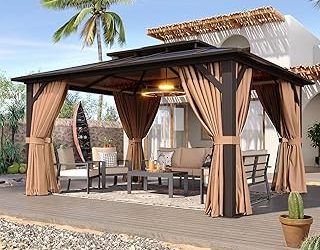
This is the permanent-architecture option: galvanized steel double roof, aluminum frame, and an integrated drainage system that channels runoff through the posts instead of sheeting off the edges onto your seating. At 12×16 it hosts a full dining setup plus a lounge corner, and the included netting makes it usable well into mosquito season.
Tangkula 7ft Grill Gazebo
Purpose-built shelters for the grill are underrated — this one keeps smoke venting properly through the curved canopy while the serving shelf and storage hooks solve the perpetual problem of nowhere to set the platter. The heavy-duty steel frame handles year-round outdoor placement without complaint.
Frequently Asked Questions
Can a gazebo stay up through winter?
Hardtop models with aluminum or steel frames are designed to, provided you’re properly anchored and clear heavy snow from the roof. Soft-top canopies should come down — fabric plus ice load is how frames bend.
How much wind can these handle?
Anchoring matters more than the frame itself. A properly bolted hardtop handles sustained gusts fine; an unweighted pop-up can lift in 20 mph wind. Always stake or weight every leg, even for a single afternoon.
Do I need a permit?
Freestanding structures over a certain footprint sometimes require one, and anything attached to your house often does. A quick call to your local building department costs nothing and avoids an expensive removal order.
How long do canopy fabrics last?
Expect three to five seasons from quality polyester with UV coating, longer if you store it over winter. Replacement tops are widely available for popular sizes like 8×8 and 11×13, which is worth verifying before you buy.
Final Thoughts
For most patios, the Aoxun 12’x16′ hardtop is the purchase that changes how you use your outdoor space — it’s genuine architecture with drainage engineered in. If you’d rather not commit to a permanent footprint, the Driftalia 13×13 pop-up delivers serious shade with a setup you can manage alone, while the Aoxun 8’x10′ lean-to remains the sharpest solution for tight side patios and narrow decks.