Key takeaways
- Roof system: Galvanized steel hardtops are the standard now, and a double-layer roof is worth the premium — the air gap vents rising heat and drops the temperature under the canopy noticeably. Skip soft-top canopies unless you plan to store them each fall.
- Frame material: Powder-coated aluminum resists rust indefinitely and suits contemporary, minimal exteriors. Cedar reads warmer against landscaping and traditional siding, but expect to seal it every couple of seasons to keep the color from graying.
- Footprint versus grill size: Measure your grill including the side shelves and lid clearance when fully open, then add at least a foot on each side. A 6×8 handles one grill comfortably; two full-size units need 12 feet or more of width.
- Power and storage: Built-in outlets, USB strips, hooks, and paper towel holders sound like marketing filler until you’re cooking after dark with a rotisserie motor and a phone at 4%. These features are difficult to retrofit cleanly, so decide upfront.
- Wind and snow engineering: Look for explicit snow-support bracing and anchor hardware, especially in northern climates. Check what surface the anchors are rated for — a deck installation often requires different fasteners than a concrete pad.
What's inside
A grill deserves better than a tarp and good intentions. Anyone who has flipped burgers under an August sun or abandoned a half-cooked brisket to a surprise downpour knows the real limitation of outdoor cooking isn’t the equipment — it’s exposure. Yet most shoppers hit the same wall: the cheap steel canopies buckle after one winter, the pretty pergolas offer no heat clearance, and the listings blur together into a wall of identical black roofs and vague weight ratings.
This guide sorts the field by what actually matters over a five-year lifespan: roof construction, frame material, usable prep surface, and whether the thing can handle snow load and gusts without a trip to the hardware store. Below you’ll find six grill gazebos worth considering in 2026, spanning compact 6×8 footprints for tight decks up to 12- and 13-foot pavilions built for two full-size grills, plus a buying framework you can apply to anything else you come across.
As an Amazon Associate we earn from qualifying purchases.



How to Choose a Grill Gazebo (2026)
- Roof system: Galvanized steel hardtops are the standard now, and a double-layer roof is worth the premium — the air gap vents rising heat and drops the temperature under the canopy noticeably. Skip soft-top canopies unless you plan to store them each fall.
- Frame material: Powder-coated aluminum resists rust indefinitely and suits contemporary, minimal exteriors. Cedar reads warmer against landscaping and traditional siding, but expect to seal it every couple of seasons to keep the color from graying.
- Footprint versus grill size: Measure your grill including the side shelves and lid clearance when fully open, then add at least a foot on each side. A 6×8 handles one grill comfortably; two full-size units need 12 feet or more of width.
- Power and storage: Built-in outlets, USB strips, hooks, and paper towel holders sound like marketing filler until you’re cooking after dark with a rotisserie motor and a phone at 4%. These features are difficult to retrofit cleanly, so decide upfront.
- Wind and snow engineering: Look for explicit snow-support bracing and anchor hardware, especially in northern climates. Check what surface the anchors are rated for — a deck installation often requires different fasteners than a concrete pad.
The Best Grill Gazebos (2026), Reviewed
Modern Shade Aluminum Grill Gazebo 6×8
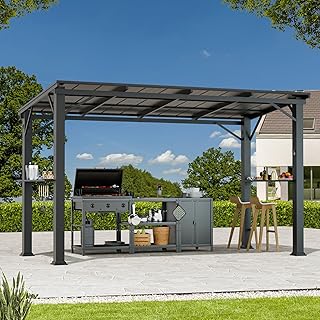
This is the pick for anyone whose backyard leans architectural: clean black aluminum, extra-wide columns that give it visual weight without bulk, and a galvanized steel double roof that genuinely moves heat upward. The integrated USB power strip plus shelves and hooks make it feel like a designed cook station rather than a shelter parked over a grill.
Sunjoy Wooden Grill Gazebo 8 x 12 ft.
The most generous footprint here relative to its price, with a cedar-framed structure, steel hardtop, and a decorative fence detail that softens the industrial look considerably. Built-in electrical outlets and an AC power port make this the strongest choice if your grilling setup includes a smoker controller, string lights, or a small fridge.
Backyard Discovery Saxony XL 12′ x 6′
Backyard Discovery builds this one like a permanent structure — snow support, documented wind resistance, and bar tops on both sides that turn the pavilion into a serving zone rather than just a cover. The cedar and galvanized steel combination is the most livable option for four-season climates.
MUPATER 6 x 13 FT Wooden Grill Gazebo
At 13 feet wide, this is the outlier for serious setups: two full-size grills fit side by side with room to work between them. The sloping metal roof sheds rain and debris efficiently, and the heavy-duty wood frame gives it a substantial presence that suits larger lawns and open patios.
Grill Gazebo 6’x12′ with Side Shelf
A pragmatic middle ground — twelve feet of coverage, a rustproof steel build, and a side shelf that solves the perennial “where do I put the platter” problem. The bottle opener and hook set are small touches, but they signal a design team that has actually cooked outdoors.
Frequently Asked Questions
Is it safe to grill under a gazebo?
With a hardtop gazebo that has adequate vertical clearance and an open or vented roof design, yes — that’s precisely what these are engineered for. Keep at least three feet of headroom above the closed lid, never operate a grill under a closed soft-top canopy, and confirm your model’s specific clearance spec before firing up.
Do grill gazebos need to be anchored?
Always. Even heavy cedar-and-steel structures act like sails in a storm. Use the manufacturer’s anchor kit and match the hardware to your surface — concrete anchors for a pad, structural lag screws into joists for a deck, and ground augers or a poured footing for turf.
Aluminum or cedar — which lasts longer?
Powder-coated aluminum wins on pure longevity and demands almost no maintenance beyond an occasional rinse. Cedar is naturally rot-resistant and looks better in most landscapes, but it needs sealing every one to two years to avoid graying and surface checking.
How long does assembly take?
Plan on four to eight hours with two people for a 6×8, and a full day for a 12- or 13-foot model. Lay out and sort all hardware before you start, and don’t fully tighten fasteners until the frame is squared — that single habit prevents most alignment headaches.
Final Thoughts
For most buyers, the Modern Shade Aluminum 6×8 hits the best balance of low maintenance, contemporary styling, and genuinely useful integrated power. If you’re in snow country or want something that reads as permanent architecture, the Backyard Discovery Saxony XL is the more durable investment, while the MUPATER 6 x 13 FT is the clear answer for anyone running two grills and hosting at scale.