Key takeaways
- Leave the floor a border: Measure your corridor, then subtract 4 to 9 inches from each side and end. That visible margin of bare floor is what makes a runner read as intentional rather than as wall-to-wall carpet that shrank.
- Watch your door swing: Anything over about half an inch of pile will catch on interior doors, closet doors, and baseboard heaters. Low-pile and flatweave constructions are the safe default in tight passages.
- Confirm it fits your machine: “Washable” means little if a 14-foot runner won’t fit a residential drum. Check the manufacturer’s stated capacity, and plan on a front-loader or a laundromat machine for anything 10 feet and longer.
- Backing over rug pads: Integrated rubber or TPR backing grips better than a separate pad in narrow spaces, where a pad tends to shift independently. On radiant-heated or freshly finished floors, check the seller’s guidance first.
- Choose pattern as camouflage: Vintage-distressed and abstract prints hide crumbs, paw prints, and traffic lanes far better than solid neutrals. If you want a light runner, pick one with tonal variation rather than a flat cream.
What's inside
Hallways are the least forgiving rooms in the house. They are narrow, they get walked on more than anywhere else, and they almost never match the dimensions a rug company decided to manufacture. Most people end up with something a foot too short, a pile too thick for the coat closet door, or a backing that migrates sideways every time someone comes in with groceries. Add pets, wet boots, and the fact that a corridor floor collects everything tracked in from outside, and the average runner starts looking tired within a season.
The good news is that the category has quietly matured. Machine-washable low-pile runners now come in lengths up to 20 feet, with rubber backings that actually stay put on hardwood and vinyl plank. This guide covers what to measure before you buy, how to read pile height and backing specs, and six runners worth considering in 2026 — from a compact 2×6 for a galley kitchen to a full-length 3×20 for a long central corridor.
As an Amazon Associate we earn from qualifying purchases.



How to Choose a Hallway Runner (2026)
- Leave the floor a border: Measure your corridor, then subtract 4 to 9 inches from each side and end. That visible margin of bare floor is what makes a runner read as intentional rather than as wall-to-wall carpet that shrank.
- Watch your door swing: Anything over about half an inch of pile will catch on interior doors, closet doors, and baseboard heaters. Low-pile and flatweave constructions are the safe default in tight passages.
- Confirm it fits your machine: “Washable” means little if a 14-foot runner won’t fit a residential drum. Check the manufacturer’s stated capacity, and plan on a front-loader or a laundromat machine for anything 10 feet and longer.
- Backing over rug pads: Integrated rubber or TPR backing grips better than a separate pad in narrow spaces, where a pad tends to shift independently. On radiant-heated or freshly finished floors, check the seller’s guidance first.
- Choose pattern as camouflage: Vintage-distressed and abstract prints hide crumbs, paw prints, and traffic lanes far better than solid neutrals. If you want a light runner, pick one with tonal variation rather than a flat cream.
The Best Hallway Runners of 2026, Reviewed
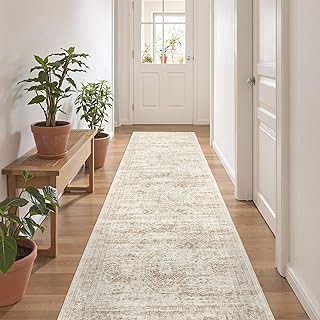
Washable Vintage Runner, 2’6″ x 14′ (Beige)
The length is the story here: 14 feet covers most standard upstairs landings and long entry halls without a seam or an awkward gap. The soft vintage print and 2’6″ width suit older homes with narrower corridors, and the thin profile clears interior doors easily.
Non-Slip Washable Runner, 2×8 (Beige)
A quiet, versatile workhorse for shorter halls, kitchen galleys, and the strip beside a bed. The neutral beige is genuinely neutral rather than yellow-leaning, and the thin, stain-resistant construction makes it one of the easier runners in this list to throw in a home washer.
Madane Washable Runner, 3×10 (Beige/Blue)
The extra width is what sets this one apart — 3 feet reads as a proper furnishing rather than a mat, which matters in wider foyers and open kitchens. The faded blue-on-beige medallion pattern brings enough color to anchor a plain white hallway without committing to a statement.
Long Hallway Runner, 3×20 (Cream/Beige)
Built for the genuinely long corridor, apartment entry hall, or center-hall colonial where two shorter runners would look like a compromise. The low pile and stain-resistant fibers are essential at this size, since a 20-foot runner is not something you’ll want to wash casually.
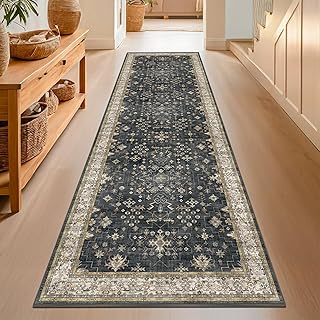
Dark Boho Runner, 2’6″ x 8′ (Ashen/Multi)
The most practical pick for households with pets, kids, or a north-facing entry that never fully dries out. The darker ashen palette and busy boho print absorb everyday mess visually, and the rubber backing holds firm on hard flooring.
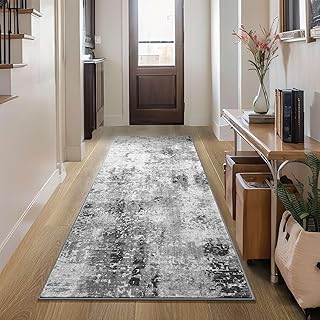
Ompaa Abstract Runner, 2×6 (Grey)
A tidy short-run option for the space between a kitchen island and the sink, or a small entry landing. The soft grey abstract pattern is modern without being loud, and the rubber backing makes it a sensible choice for a spot that sees standing traffic.
Frequently Asked Questions
How long should a hallway runner be?
Aim to cover the walkway while leaving 4 to 9 inches of bare floor at each end. If your hall falls between standard sizes, size down rather than up — a runner that stops short looks deliberate, while one that crowds a doorway does not.
Do washable runners actually survive the machine?
Low-pile washable runners generally do, provided you use cold water, a gentle cycle, and skip the dryer. The most common failure point is heat damaging the rubber backing, so air-drying flat is worth the extra time.
Do I still need a rug pad if it has rubber backing?
Usually not in a hallway, where the runner is hemmed in by walls. A thin pad can add cushioning if you want it, but adding height also increases the chance of catching a door or a toe.
Light or dark in a high-traffic hall?
Dark or heavily patterned runners hide wear better between washes. If you prefer light, choose a distressed vintage print with tonal variation instead of a solid — flat pale colors show traffic paths within weeks.
Final Thoughts
For most homes, the 2’6″ x 14′ washable vintage runner is the sweet spot of length, price, and forgiving pattern. Choose the Madane 3×10 if your hallway is wide enough to carry the extra width, or the 3×20 cream runner if you’re covering a genuinely long corridor in one clean sweep.