Key takeaways
- Roof geometry: Peaked and double-tier roofs shed accumulation far better than low-slope designs. A steeper pitch lets snow slide before it consolidates, which matters more than any single material claim on the box.
- Frame material and gauge: Powder-coated aluminum resists corrosion and won’t rot, but thin-walled extrusions flex under vertical load. Look for reinforced posts, gusseted corners, and cross-bracing at the roof beams; kiln-dried cedar with steel roofing is a strong alternative where you want warmth in the material palette.
- Drainage integration: Built-in gutters and downspouts move meltwater away from posts and footings. Without them, freeze-thaw cycles pool at the base and undermine whatever you’ve anchored into.
- Anchoring surface: Concrete pads and reinforced decks accept lag bolts and carry load properly. Soft ground demands poured footings below the frost line. Skipping this step is the single most common cause of winter failure.
- Honest sizing: Larger spans concentrate more load on fewer supports. If your winters are severe, a compact 10-foot footprint with dense bracing often outperforms an oversized structure with the same post count.
What's inside
Snow doesn’t arrive politely. It settles, compacts, refreezes, and by February a fluffy eight inches on your roof panels has turned into a dense slab pressing down at forty pounds per square foot. That’s the number most backyard structures were never engineered to meet, and it’s why the gazebo aisle looks so different once you shop from a cold-climate mindset. A canopy that reads as generous shade in July becomes a liability in January, and the failure point is almost never the fabric or the panel itself. It’s the frame geometry, the roof pitch, and the anchoring beneath it all.
This guide approaches the category the way a designer would specify a permanent outdoor room: structure first, style second, and no tolerance for spec sheets that stay vague about load ratings. Below you’ll find hardtop and heavy-frame gazebos worth considering for regions that see real accumulation, from wall-mounted lean-to shelters for tight decks to 12-by-16 aluminum pavilions built to live outdoors year-round. Each pick is evaluated on roof construction, drainage behavior, and how honestly it handles winter.
As an Amazon Associate we earn from qualifying purchases.




How to Choose a Hardtop Gazebo For Snow Load (2026)
- Roof geometry: Peaked and double-tier roofs shed accumulation far better than low-slope designs. A steeper pitch lets snow slide before it consolidates, which matters more than any single material claim on the box.
- Frame material and gauge: Powder-coated aluminum resists corrosion and won’t rot, but thin-walled extrusions flex under vertical load. Look for reinforced posts, gusseted corners, and cross-bracing at the roof beams; kiln-dried cedar with steel roofing is a strong alternative where you want warmth in the material palette.
- Drainage integration: Built-in gutters and downspouts move meltwater away from posts and footings. Without them, freeze-thaw cycles pool at the base and undermine whatever you’ve anchored into.
- Anchoring surface: Concrete pads and reinforced decks accept lag bolts and carry load properly. Soft ground demands poured footings below the frost line. Skipping this step is the single most common cause of winter failure.
- Honest sizing: Larger spans concentrate more load on fewer supports. If your winters are severe, a compact 10-foot footprint with dense bracing often outperforms an oversized structure with the same post count.
The Best Hardtop Gazebo For Snow Load (2026)s Reviewed
Aoxun 12′ x 16′ Hardtop Gazebo with Drainage System
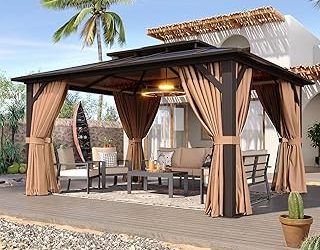
The most complete package here for serious winters: a galvanized steel double roof that vents heat in summer and sheds accumulation in winter, paired with an integrated drainage system that keeps meltwater off the posts. At 12 by 16 feet it’s a genuine outdoor room, and the aluminum frame stays sharp-looking through years of freeze-thaw.
10′ x 12′ Cedar Wood Gazebo with Galvanized Steel Peak Roof
Cedar posts bring a material warmth that aluminum can’t fake, and the steep galvanized peak roof is explicitly built for snow support and wind resistance. Expect to reseal the wood every few seasons, which is a fair trade for a structure that reads as architecture rather than accessory.
Domi 10′ x 10′ Lean-To Wall-Mounted Gazebo
Mounting to the house solves half the structural problem outright, transferring load into your wall framing instead of four freestanding posts. The galvanized steel roof and drainage channel make it a clean answer for narrow decks and side patios where a full pavilion won’t fit.
Aoxun 12′ x 16′ Hardtop Gazebo with Netting and Curtains
Same galvanized double-top platform as Aoxun’s flagship, with breathable netting and curtains that extend the season on both ends. The soft goods come off in minutes for winter, leaving a bare aluminum-and-steel shell that handles cold weather without fuss.
Grill Gazebo 6′ x 12′ with Side Shelf
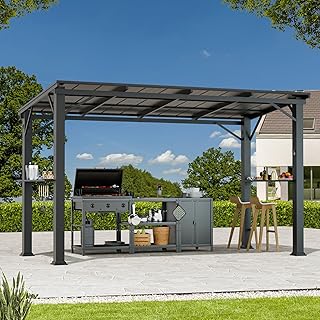
A purpose-built cooking shelter with a rustproof frame, side shelf, bottle opener, and hooks, sized to sit against a wall or fence line. The narrow footprint concentrates load efficiently, making it a smart pick for year-round grilling in snowy climates.
Frequently Asked Questions
What snow load rating should I look for?
Check your local building department’s ground snow load figure, then match or exceed it. Much of the northern US falls between 30 and 50 pounds per square foot; mountain regions run considerably higher.
Should I clear snow off the roof myself?
Yes, and do it before it compacts. Use a soft-bristle roof rake from the ground rather than climbing, and never chip at ice on polycarbonate or steel panels.
Do soft-top gazebos work in snow country?
Only seasonally. Models like the 11′ x 13′ LED and Bluetooth canopy are excellent three-season structures, but the fabric top should be removed before the first real storm.
Can I install one on pavers instead of concrete?
Interlocking pavers over a compacted base can work with expansion anchors, though a poured pad or footings below frost line remains the more durable choice.
Final Thoughts
For most cold-climate buyers, the Aoxun 12′ x 16′ with drainage is the strongest all-round investment, delivering double-roof venting, real span, and proper water management in one structure. Choose the 10′ x 12′ cedar gazebo if you want the material to carry the design, or the Domi lean-to when space is tight and wall mounting is available.